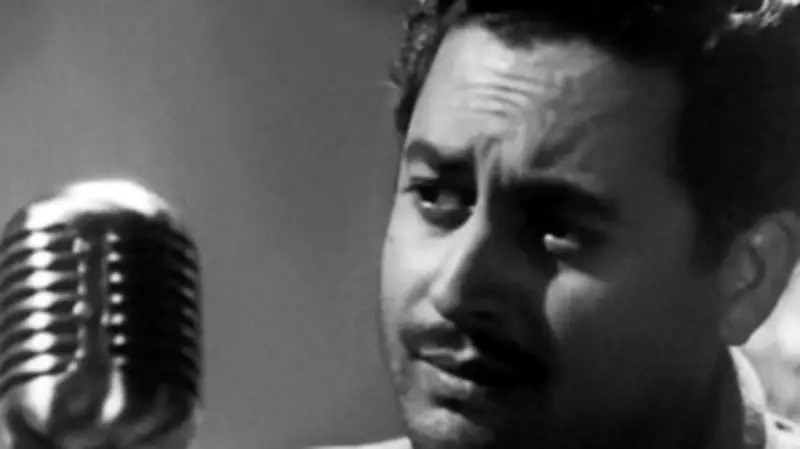
On July 9, 2026, Indian cinema commemorates the 101st birth anniversary of Guru Dutt, a filmmaker and actor whose work continues to resonate with audiences worldwide. Known for his melancholic portrayals and innovative storytelling, Dutt remains an enigmatic figure—a flawed genius, a misunderstood man, or perhaps someone simply ahead of his time.
The Man Behind the Myth
Born on July 9, 1925, in Bangalore, Guru Dutt entered the film industry as a dancer and choreographer before transitioning to acting and directing. His career, though spanning only about a decade, produced timeless classics like Pyaasa (1957), Kaagaz Ke Phool (1959), and Sahib Bibi Aur Ghulam (1962). These films explored themes of alienation, artistic struggle, and societal hypocrisy, often mirroring Dutt's own inner turmoil.
According to film historian Sajith B Warrier, Dutt's personal life was marked by emotional complexity. His marriage to singer Geeta Dutt faced strains, and his professional relationships—notably with writer Abrar Alvi—were both collaborative and contentious. Alvi, who co-wrote many of Dutt's films, once described him as "a perfectionist who could be both gentle and ruthless."

A Legacy of Innovation
Dutt's directorial style was groundbreaking. He used deep focus, chiaroscuro lighting, and lyrical song sequences to convey psychological depth. Pyaasa, for instance, is celebrated for its poignant critique of a materialistic society, while Kaagaz Ke Phool employed innovative flashback structures that were ahead of their time. Despite initial commercial failures, these films gained cult status posthumously.
Statistics from the National Film Archive of India show that Dutt's films have been restored and screened at international festivals, including Cannes and Berlin. In 2024, Pyaasa was ranked among the top 100 films of all time by the British Film Institute.
The Melancholic Hero
Dutt's on-screen persona often reflected his own struggles. Characters like Vijay in Pyaasa and the disillusioned filmmaker in Kaagaz Ke Phool resonated with audiences for their raw vulnerability. This melancholic archetype became a hallmark of his work, influencing later filmmakers like Sanjay Leela Bhansali and Anurag Kashyap.
Geeta Dutt, in a rare interview, once said, "He was not just a filmmaker; he was a poet who painted with light and sound. His sadness was not weakness—it was his strength." This duality—of being both a commercial entertainer and an artist—defined his career.
Remembering a Genius
Today, as fans and scholars revisit his films, new interpretations emerge. Some view him as a victim of the studio system, while others see him as a visionary who challenged cinematic norms. Regardless, his influence endures. The Guru Dutt Memorial Trust, established in 2005, continues to preserve his works and promote film education.
On this 101st birth anniversary, it is worth reflecting on his own words from Pyaasa: "Yeh duniya agar mil bhi jaye toh kya hai?" (What if I get this world?). For Guru Dutt, the answer lay not in possession but in expression—a legacy that remains immortal.