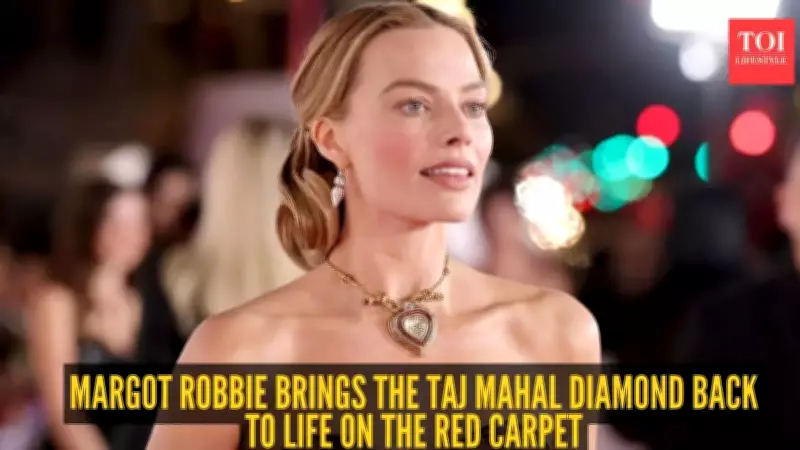
Australian actress Margot Robbie created a fashion moment that transcended mere celebrity glamour at the world premiere of Wuthering Heights in Los Angeles on Wednesday, January 28. While her sculptural Schiaparelli couture gown commanded attention with its dramatic silhouette, it was the historic jewellery she selected that truly captivated observers and whispered tales of centuries past.
A Legendary Piece of Hollywood History
The 35-year-old actor graced the red carpet adorned with a piece of cinematic royalty - a magnificent heart-shaped diamond necklace once cherished by screen legend Elizabeth Taylor. Suspended from an exquisite gold-and-ruby Cartier chain, this extraordinary jewel carries an estimated value of approximately $8 million, which translates to a staggering ₹74 crore in Indian currency, according to reports from People magazine.
More Than Monetary Worth: A Symbol of Passionate Romance
Beyond its astronomical price tag, this necklace embodies a rich narrative of legendary love and royal heritage. The piece was originally presented to Elizabeth Taylor by her then-husband, actor Richard Burton, as a gift for her 40th birthday over five decades ago. As one of the most iconic tokens from their famously turbulent and passionate relationship, the jewel has become forever associated with Hollywood excess, dramatic romance, and timeless glamour.

Speaking at the premiere event, Robbie acknowledged the profound emotional resonance of wearing such a historically significant piece. She remarked that the necklace "felt filled with romantic history" and perfectly complemented the evening's atmosphere, creating a meaningful connection between past and present.
The Mughal Connection: India's Imperial Legacy
The diamond at the heart of this necklace possesses a lineage far older than Hollywood itself. As documented by Natural Diamonds, the heart-shaped, table-cut stone bears a Parsi inscription that translates to "Love is Everlasting" and also carries the name of Mughal empress Nur Jahan. Historical experts believe this precious gem once belonged to Emperor Shah Jahan, the visionary behind the Taj Mahal, who later passed it down to his son.
This royal Mughal lineage gives the diamond its celebrated name - the Taj Mahal Diamond - creating a powerful connection to India's imperial history and craftsmanship traditions that span centuries.
Cartier's Transformation and Taylor's Enthusiasm
Luxury jeweler Cartier acquired the diamond in 1971 and masterfully reimagined it for contemporary wear while meticulously preserving its historical essence. The maison surrounded the central stone with vibrant red gemstones and additional table-cut diamonds, incorporating jade elements and suspending the creation from an authentic Indian silk cord.
Cartier designer Alfred Durante later enhanced the piece with a meticulously woven gold-and-ruby chain, complete with adjustable rondelles and elegant tasselled detailing at the back, creating the version that exists today.
The necklace made its triumphant return to Elizabeth Taylor in 1972 during an unforgettable moment. Cartier president Michael Thomas presented the reimagined jewel to Burton and Taylor during a stopover at the International Hotel near Kennedy Airport. Taylor's reaction was immediate and enthusiastic - she reportedly exclaimed, "I love this, tell me more about it," embracing both the beauty and history of the piece.
Bridging Eras Through Jewellery
By selecting this extraordinarily storied necklace for her red carpet appearance, Margot Robbie accomplished more than a simple homage to classic Hollywood glamour. She effectively bridged multiple historical eras, connecting a contemporary film premiere to centuries of romance, exceptional craftsmanship, and layered cultural narratives woven into a single, extraordinary jewel.
This fashion choice represents how jewellery can serve as a tangible link between different periods, cultures, and stories, transforming a red carpet moment into a meaningful dialogue between past and present, between Mughal India and modern Hollywood, and between legendary romances of different generations.