Supreme Court Emphasizes Proper Credit for India's Classical Music Heritage
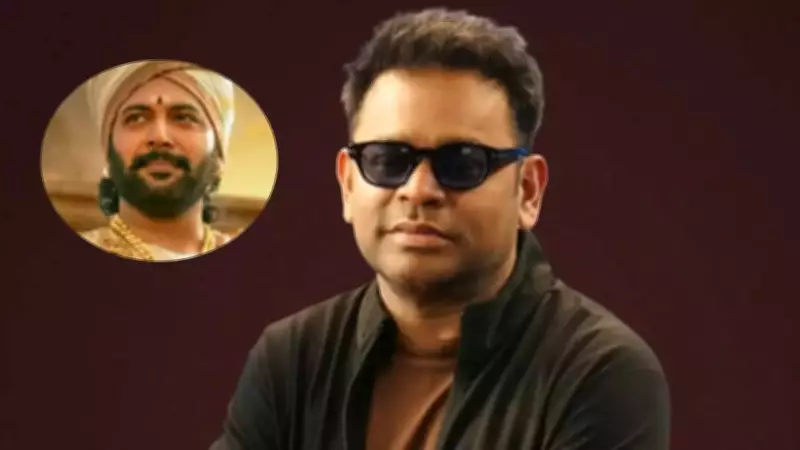
In a significant ruling that underscores the deep roots of India's classical music heritage, the Supreme Court on Friday stressed that traditional contributions must be properly recognized in modern creative works. The court directed renowned music composer A.R. Rahman and the producers of the blockbuster film 'Ponniyin Selvan 2' to provide due credit to the Dagarwani tradition for the song 'Veera Raja Veera.' The bench, led by Chief Justice Surya Kant and Justice Joymalya Bagchi, firmly underlined that long-standing musical traditions and classical gharanas form the essential backbone of Indian music and deserve formal acknowledgement in contemporary adaptations.
Legal Battle Over Musical Authorship and Tradition
The case was initiated by noted Dhrupad vocalist Faiyaz Wasifuddin Dagar, who challenged a September 2025 Delhi High Court ruling. The High Court had previously observed that there was no clear prima facie evidence to establish that the Junior Dagar Brothers were the original authors of the classical composition 'Shiv Stuti.' During the Supreme Court proceedings, the judges critically examined the nuances of authorship, noting that merely being the first to perform a musical piece does not automatically confer authorship rights. The Court delved into whether the work in question was an original creation or an adaptation stemming from the broader Dagarwani tradition.
The petitioner's counsel argued that the copyright application was specifically for an individual piece of music composed by his father and uncle, rather than for the raga, gharana, or the tradition itself. This distinction became a focal point in the legal discourse, highlighting the complex interplay between individual creativity and collective cultural heritage.

Court's Emphasis on Gharana Recognition and Legacy
The Supreme Court made a profound observation regarding the role of gharanas in the evolution of Indian classical music. It stated that these traditional schools of music are pivotal contributors to the art form's development and should not be disregarded when presenting music to modern audiences. The bench suggested that some form of acknowledgement must be given to respect the legacy and contributions of the Dagarwani tradition, ensuring that its historical significance is preserved and honored.
During the hearing, senior advocate Abhishek Singhvi, representing A.R. Rahman, requested additional time to take instructions from his client. Consequently, the matter has been scheduled for further hearing on February 20, allowing both parties to prepare their arguments more thoroughly.
Background on 'Ponniyin Selvan 2' and Its Success
'Ponniyin Selvan 2', directed by the acclaimed filmmaker Mani Ratnam, featured a star-studded cast including Vikram, Aishwarya Rai Bachchan, Jayam Ravi, Karthi, and Trisha. The song 'Veera Raja Veera,' composed by A.R. Rahman with lyrics by Ilango Krishnan, became a standout track in the film's soundtrack. Commercially, the film achieved remarkable success, garnering a total revenue of approximately Rs 300 crore worldwide. This impressive figure places it among the highest-grossing Tamil films of 2023, reflecting its widespread popularity and cultural impact.
This legal development not only addresses specific copyright concerns but also raises broader questions about the integration of classical traditions in contemporary media. It serves as a reminder of the need to balance innovation with respect for India's rich musical heritage, ensuring that future works appropriately acknowledge their foundational influences.