Women-Led Play 'Something Like Truth' Premieres on International Women's Day
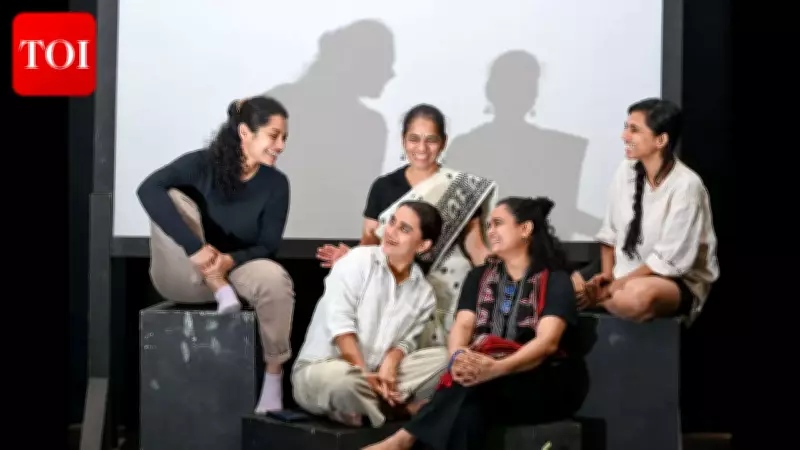
Last Sunday marked a significant milestone for the creative team behind Something Like Truth. This women-led theatrical production was staged on International Women's Day in the very city where it was conceived and developed. As audiences immersed themselves in the performance, directed by Parna Pethe and written by Shanta Gokhale, a profound question emerged: what truly constitutes truth?
Exploring Truth Through Multiple Perspectives
Through the compelling performances of its four central characters—portrayed by Ashwini Giri, Sharvari Deshpande, Dusha Madhav, and Kalyanee Mulay—the play navigates a complex landscape of memories, relationships, and past moments. It vividly illustrates how a single incident can be remembered and experienced in vastly different ways by different individuals. As each character recounts their personal version of events, the boundaries between objective facts and subjective feelings begin to blur, prompting viewers to reconsider the notion that truth is a fixed and unchanging entity.
Characters Rooted in Complicated Realities
When the actors discuss their process of character development, the conversation naturally gravitates toward themes of empathy, understanding lives that may seem distant from one's own, and the emotional labor required to authentically bring these stories to the stage. This was a central focus in a dialogue with the women of Something Like Truth, who have deeply embodied characters shaped by intricate social realities.

For director Parna Pethe, this project represents her official directorial debut on a professional platform. She reflects, "As an actor, your focus is primarily on your own role, but as a director, you gain a bird's-eye view of the entire production. It's a position of significant responsibility, and it's incredibly exciting."
Pethe further elaborates on the play's relevance in contemporary times: "We are living through so many unexpected and tumultuous events today. Often, it becomes challenging to distinguish between what is true and what is false. In many ways, Something Like Truth is an artistic endeavor to seek meaning and clarity amidst this chaos."
Beyond Gender Labels: A Humanist Narrative
While the stories in the play revolve around women's experiences, Pethe emphasizes the importance of not confining the narrative solely to gender-specific labels. She shares, "Sometimes, when people hear that a play is about women or created by women, they assume it is intended exclusively for a female audience. However, we view this as a humanist story. These are experiences rooted in women's lives, but they are universal tales that anyone can relate to and connect with on a fundamental level."
The Emotional Weight of Authentic Storytelling
Most of the cast members reported feeling the emotional intensity of the material early in the rehearsal process. Actress Ashwini Giri notes, "My character originates from a very different historical and social context. When you engage with such stories, they can be quite daunting and unsettling as a fellow human being."
As rehearsals advanced and research deepened, this emotional connection only grew stronger. Giri adds, "When you begin to empathize more profoundly and truly experience what the character might have endured, the narrative becomes emotionally more resonant and weighty."
The Power of Live Performance
Kalyanee Mulay highlights the unique impact of live theatre: "Live performance creates an experience that technology cannot replicate. When you sit in a theatre and witness a living person undergoing something right in front of you, you can feel your own breathing patterns shift. That shared, collective moment fosters a genuine sense of community and connection."

Searching for Universal Connections
Sharvari Deshpande discusses her character's divergence from her real-life self: "My character in the play is nowhere close to who I am in reality." She found a breakthrough in a universal theme: "Interestingly, the search for common ground culminated in the concepts of love and connection. Much of what we pursue in this world—whether it's power, survival, or other ambitions—often stems from a fundamental need for human connection."
This idea of shared empathy also influenced discussions surrounding the other characters. Deshpande reflects on the team dynamics: "Over the past year and a half of collaborative work, a very strong and honest sense of sisterhood has developed within our team. This connection extends far beyond our rehearsal sessions."
Questioning Societal Labels and Identity
Dusha Madhav adds a philosophical dimension to the conversation: "The overarching theme of our work repeatedly brings me back to a simple yet profound question: are people willing to understand each other beyond superficial labels and categories? Individuals are often far more complex and multifaceted than the boxes society attempts to place them in."
Kalyanee Mulay elaborates on issues of identity and societal expectations: "Society frequently dictates what you should be, where you should position yourself, and how you should behave. Yet, within those constraints, there exists your own inner voice and your personal choices—these elements ultimately shape and define your true identity."