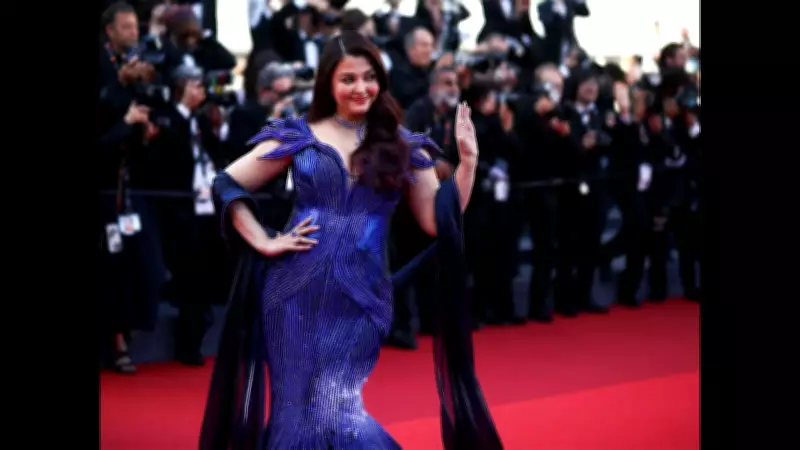
Body shaming is an ancient practice, but Aishwarya Rai Bachchan remains the greatest of all time. It is time for trolls to retreat into the dark crevices from which they emerge every time a woman over 40 steps onto the red carpet. Like clockwork, at Cannes 2026, as Aishwarya Rai Bachchan walked the red carpet—as she has done for over 20 years—the trolls arrived with their nasty judgments in droves. It did not matter that Aishwarya exuded confidence, grace, and a sense of occasion. She should know; she has been a brand ambassador for one of the biggest global beauty brands for almost two decades. Yet, social media reacted in a sadly predictable manner. Instead of focusing on her fashion, her long history with Cannes, or the significance of the moment, online users began analyzing her weight, face, and appearance.
The comments were oh-so-familiar. Some took the time to search for older photographs and compare them with those from 2026. Others discussed whether she had “changed too much.” What exactly is too much here? And who decides it? A few questioned why she no longer looked like she did in the early 2000s. I wouldn’t even know where to begin with that. As usual, very little attention was given to the fact that she remains one of the most recognized Indian faces in global fashion and cinema.
A Mother-Daughter Moment That Deserved Better
This year’s Cannes appearance carried extra emotional weight for Aishwarya as her daughter, Aaradhya Bachchan, joined her on the red carpet for the first time. Aaradhya wore a ruby-red gown with a matching cape, and the two walked together in a moment that could have become one of Cannes’ warmest stories of the year. It was a rare public image of continuity: a global star sharing the spotlight with her daughter, not as a fashion spectacle but as a deeply personal moment. However, this too became overshadowed by conversations about Aishwarya’s body. The trolls focused on her face shape, weight, and signs of ageing instead of the larger meaning of the moment. Motherhood, which transforms women emotionally and physically, was treated almost like an inconvenience that needed correction.

The response reflected a larger social problem. Women are often celebrated for becoming mothers but are rarely allowed to visibly look like mothers afterwards. If they do, they are criticized. This is a shame because Aishwarya’s Cannes journey truly changed India’s fashion presence globally.
Aishwarya’s Fashion Legacy at Cannes
Her relationship with the French Riviera is bigger than yearly fashion commentary. She helped shape India’s place at the festival long before Cannes became a major social media event in our country. When she first appeared in 2002, wearing a bright yellow saree by Neeta Lulla with heavy gold jewellery, the look stood out immediately. At a time when western gowns dominated the red carpet, Aishwarya went Indian—as traditional as India gets. She arrived in unmistakably Indian clothing and brought Indian craftsmanship into the global spotlight. That appearance became one of the defining Cannes moments for Indian fashion.
Over the years, she continued taking risks instead of choosing predictable glamour. In 2016, her dramatic purple lipstick paired with a floral gown created intense debate online. Some mocked the look, while others praised her willingness to experiment. Either way, it became unforgettable. In 2017, she appeared in an icy blue Cinderella-inspired gown by Michael Cinco that quickly entered pop culture memory. The following year, she wore an elaborate butterfly-inspired outfit with a sweeping cape that required enormous craftsmanship.

Aishwarya has always been ahead of the curve. She has experimented with bold gowns and makeup at the Cannes red carpet. In 2016, she famously paired a romantic, vine-embroidered dress with a sleek ponytail and a viral purple lipstick. Then came 2025, when she returned to Indian textiles in an ivory Banarasi saree designed by Manish Malhotra with real silver zari work. The look blended heritage with international grandeur and reminded audiences that Indian fashion could command the same attention as couture from Paris or Milan. Across these years, one thing remained consistent: Aishwarya rarely played safe. Yet despite this remarkable fashion legacy, public conversations about her appearances have always been less about creativity and more about body scrutiny. This became worse after she became a mother in 2011.
The Cruel Obsession with Before/After
Then and Now, Before and After—the prompts are endless, and we have hardly any control to unsee them. That is probably why women in public life are often expected to remain unchanged forever. This feeling has strengthened over the last two decades as social media has taken over our lives completely. No woman is allowed to gain weight, age visibly, or look different from her early 20s. The internet reacts as though she has somehow failed. The language used around these discussions is especially revealing, if not downright rude and unacceptable: “let themselves go,” “lost their charm,” or “changed too much.” As if women’s bodies are public properties open for analysis and judgment. Meanwhile, men with grey hair are “distinguished,” and wrinkles become signs of “maturity.” Weight gain is brushed aside or even ignored.
Writer and feminist thinker Susan Sontag described this decades ago in her famous essay about the “double standard of ageing.” She argued that society allows men to gain authority as they age, while women lose social value if they no longer appear youthful. That idea feels even more relevant today in the age of social media, where every photograph can be endlessly zoomed into, reposted, and criticized. The pressure on women to look permanently youthful has existed for generations, but social media has intensified it dramatically. Celebrities today live under constant visual surveillance. Every public appearance becomes content. Every close-up photograph becomes material for discussion threads, memes, and reaction videos. The internet rewards harshness because outrage travels faster than empathy.
Aishwarya belongs to a generation of stars who became famous before this culture existed. Her early fame was built through films, pageants, and carefully chosen appearances. There was mystery around celebrities then. Public figures were not expected to share every detail of their lives online.
From Admiration to Surveillance
But today’s celebrity culture thrives on constant visibility. Stars are photographed relentlessly, and audiences often feel entitled to comment on every aspect of their appearance. In many ways, Aishwarya’s Cannes journey also reflects the changing nature of fame itself—from admiration to surveillance. The problem does not begin when women grow older; it starts much earlier. Young actresses entering the industry are already taught that their appearance will be constantly evaluated. Teenage stars are criticized for gaining or losing weight, changing hairstyles, or simply growing into adulthood. Women are conditioned to fear ageing long before ageing even begins. By the time actresses become mothers or enter their forties, they are already carrying years of pressure about preserving an ideal version of themselves. Any visible change then becomes magnified.
This pressure extends beyond celebrities. Ordinary women experience it too—after pregnancy, some illness, because of stress, or simply as they move through life. That is why conversations around actresses like Aishwarya resonate so widely. These are issues worth talking about every day.
Patralekha and the Postpartum Scrutiny
The scrutiny directed at Aishwarya is not an isolated case. In early 2026, actress Patralekha faced similar comments after paparazzi photographs focused heavily on her postpartum body. Instead of letting her be—she had given birth while continuing to work—conversations online centred around her appearance. Patralekha clapped back at the paps, expressing her anger openly over how casually people discussed women’s bodies after childbirth. Her response resonated with many women because it addressed something deeply common but rarely acknowledged openly: postpartum bodies are still treated like problems to be fixed rather than evidence of a major life experience. The entertainment industry magnifies this pressure because actresses are expected to return quickly to public life looking exactly as they once did.
Now, coming back to Cannes, Aishwarya’s significance in Indian popular culture goes far beyond beauty or fashion. She represents a generation that carried Indian cinema and identity confidently onto global platforms. Long before international representation became a mainstream conversation, she was already attending Cannes, appearing in international media, and bringing Indian fashion into global conversations. For many Indians growing up in the 1990s and 2000s, her Cannes appearances symbolized aspiration and visibility. She stood beside Hollywood stars while remaining unmistakably Indian in style and presence. That cultural impact cannot be reduced to whether she still looks identical to photographs taken 20 years ago. But modern internet culture often struggles with continuity. It values viral moments over long-term legacy. Fame becomes tied to youth, novelty, and perfection rather than endurance. In that environment, ageing becomes wrongly associated with decline.
The Pushback Is Here, and It’s Getting Louder
Women are pushing back, though. They are openly resisting unrealistic expectations set by society. During Cannes 2026, actress Kangana Ranaut publicly defended Aishwarya against the criticism. She said fashion is a form of self-expression and that women do not exist to satisfy public expectations. Kangana also argued that society needs to become comfortable seeing older women confidently occupy glamorous spaces. This shifted the discussion away from approval and toward autonomy. Actor Renuka Shahane also criticized the cruelty of online commentary. She questioned why people proudly celebrate Aishwarya as an international icon while simultaneously mocking her for ageing naturally. Her remarks exposed the contradiction at the centre of celebrity culture: society benefits from women’s achievements and visibility but often punishes them for the realities of living full lives.
There are signs that conversations around beauty and ageing are beginning to shift. More women today openly discuss motherhood, ageing, health changes, and body image without shame. Fashion campaigns increasingly include older women. Audiences are slowly becoming more aware of the emotional damage caused by constant body policing. The idea of beauty itself is expanding. For decades, mainstream beauty standards focused heavily on youth, thinness, and perfection. But women are now rejecting those expectations and embracing the idea that beauty can also include maturity, experience, and individuality. Women in public life still face enormous pressure, but there is growing resistance too. Aishwarya’s continued presence at Cannes reflects this shift. She does not appear to prove she still looks 25. She appears as someone secure in her legacy. That confidence itself unsettles people who are used to seeing women disappear quietly from glamorous spaces as they age.
Some may dismiss discussions around celebrity body shaming as superficial. But these conversations reveal larger social attitudes. The way society talks about famous women influences how ordinary women are treated too. When the world constantly criticizes celebrities for ageing or gaining weight, it reinforces impossible standards for everyone else. Women absorb these messages from a young age. They learn that their worth may always remain connected to appearance. That is why the reaction to Aishwarya matters beyond celebrity culture. It reflects how society views womanhood itself.
In a Culture Obsessed with Perfection, Aishwarya Chose Self-Possession
Aishwarya’s story at Cannes is ultimately not just about fashion or celebrity. It is about visibility. It is about whether women are allowed to continue occupying public space as they age without apology. For more than two decades, the Indian actor and beauty queen has walked the Cannes red carpet carrying not only glamour but also cultural memory. Generations have watched her represent India on one of the world’s most visible stages. Today, her presence carries another meaning too. She represents resistance to the idea that women must disappear once they no longer fit narrow beauty standards. The internet may continue to dissect faces, bodies, and photographs. But none of that changes what she has already built—a legacy shaped by talent, longevity, confidence, and cultural impact.
And perhaps that is the real discomfort behind the criticism. Aishwarya continues to take up space with complete self-possession, refusing to apologize for changing, ageing, or living fully. In a culture obsessed with perfection, that may be the boldest statement of all.