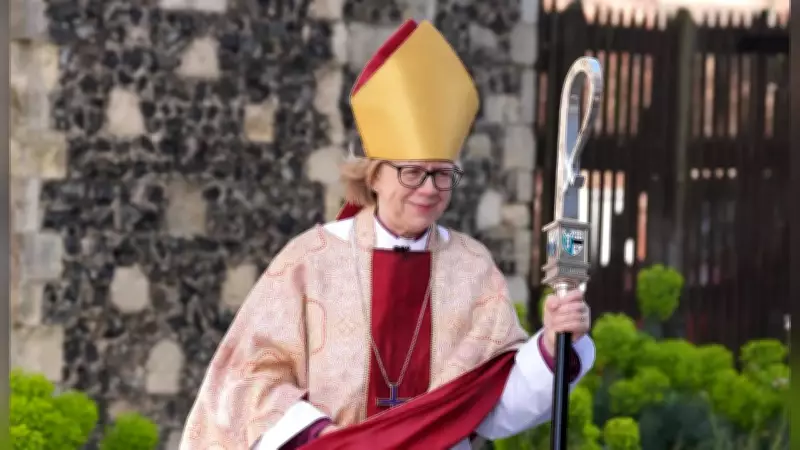
Almost eight decades after World War II, the Archbishop of Canterbury, Sarah Mullally, apologised on Thursday for the Church of England's involvement in forcibly separating 185,000 children from unmarried mothers and putting them up for adoption in the years following the war.
Church Expresses Profound Regret
"We are profoundly sorry for the pain, trauma and stigma experienced - and still carried - by many people because of historical adoption practices in homes affiliated to the Church of England," Mullally was quoted as saying in a Church of England statement, reported Reuters.
The system, created by Christian churches and the British state, forced young unmarried mothers to give up their children in the name of complying with the "prevailing social norms." The women were sent to so-called "mother and baby homes" during pregnancy or after giving birth, in an attempt to separate them from their babies. A similar scheme ran in Ireland by the Catholic Church.

Government Expected to Apologise
The government is also expected to apologise on behalf of the state for the practice. Other countries, including Ireland and Australia, have in recent years issued similar apologies.
Criticism from Adoptee Group
The Adult Adoptee Movement, an organisation representing the adoptees, criticised the Church of England statement for what it said was "minimising, passive and distancing language," adding that the Church failed to recognise specific harms.
A report published by the Church said that life in mother and baby homes was marked by "domestic work, prayer and penitence" and there could have been as many as 200 such homes in the period 1949 to 1976.
Inhumane Treatment Revealed
The lives of young girls bearing children were miserable in these homes, as per a separate government report. Many were under the age of 18 and were subjected to inhumane treatment. Adoptees also suffered lifelong impacts from separations.
Confirming the findings, Mullally acknowledged that women and girls were at times made to carry out menial and manual work as a form of "correction" in these homes.
"Today, we say to each of you: the shame you were made to feel was wrong. You have nothing to be ashamed of. Rather, we are deeply ashamed that this happened to people in the care of Christian communities," she said.