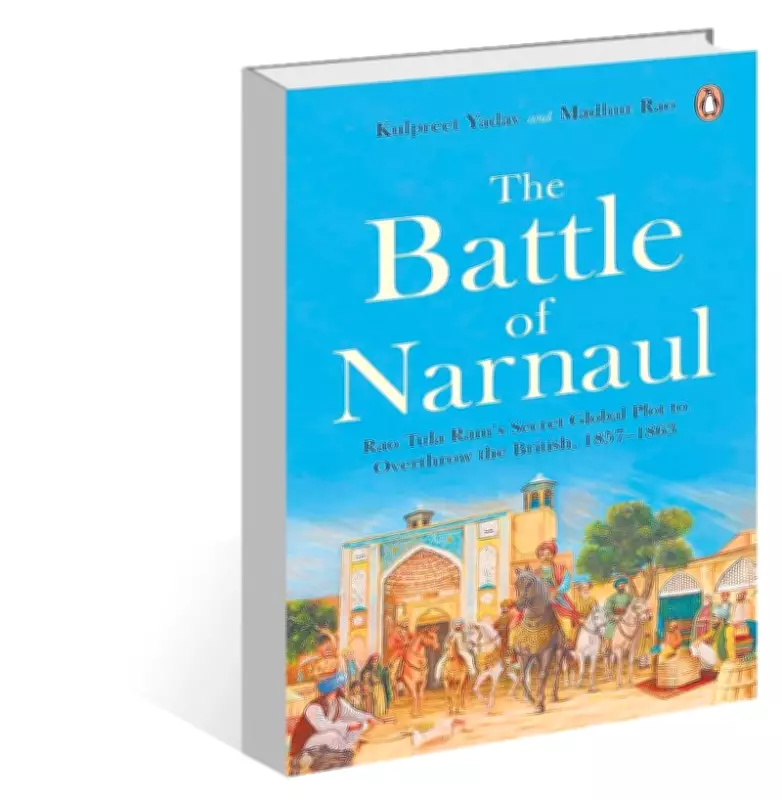
The Battle of Narnaul: A Fresh Perspective on 1857
The book 'The Battle of Narnaul' by Kulpreet Yadav and Madhur Rao offers a compelling shift from colonial chronicles to indigenous storytelling, focusing on the courage, strategy, and vision of Rao Tula Ram. Published by Penguin Random House, the 304-page book is divided into three parts: Tula Ram's rise to power in Rewari, his role during the 1857 Mutiny culminating in the fierce battle at Narnaul, and his subsequent diplomatic efforts to engage Russia against the British in the Great Game.
Rewari's Strategic Importance
Rewari, a kingdom with ancient origins, came under British control after the Marathas' defeat in 1803. By 1839, when Rao Tula Ram inherited the throne at age 14, the kingdom had been reduced to just 87.5 villages generating Rs 5 lakh in annual revenue, due to East India Company machinations and family disputes. Located a day's journey from Delhi, Rewari controlled access to south Haryana and Rajasthan, making it strategically vital during the 1857 uprising.
The Battle of November 16, 1857
On November 10, 1857, a British column of 1,500 troops under Colonel JG Gerrard departed from Delhi, swelling to 3,500 en route. On November 16, while the column rested at Nasibpur near Narnaul, a hastily assembled Rewari force of 5,000 launched a surprise attack. Tula Ram personally conceived the opening cavalry charge, which mauled the British right flank, killing Colonel Gerrard and other officers. However, firm British leadership, superior firepower, and tactics turned the tide in the three-hour battle. The Rewari force suffered 400-500 casualties, compared to 80 British losses. Tula Ram narrowly escaped capture.

Balanced Historical Account
The book avoids hagiography, correctly identifying religion as a unifying factor in 1857 and candidly listing princely states that sided with the British. It acknowledges discordant leadership and poor preparedness of the Rewari force while highlighting Tula Ram's extraordinary vision and grit. According to the authors, the battle was of medium intensity, not among the Mutiny's fiercest, but Tula Ram's choice to strike a complacent British force demonstrates intuitive military thinking.
Global Plot and Legacy
The book's third part discusses Tula Ram's attempt to engage Russia in a "Great Game" against Britain, proposing a Russian attack through Persia and Afghanistan on British India. His early death left many "what if" possibilities. The book's 53 chapters, 19 appendices, and scholarly notes are packed into a readable 304 pages without impeding narrative flow. This genre helps Indians rediscover their true military history.