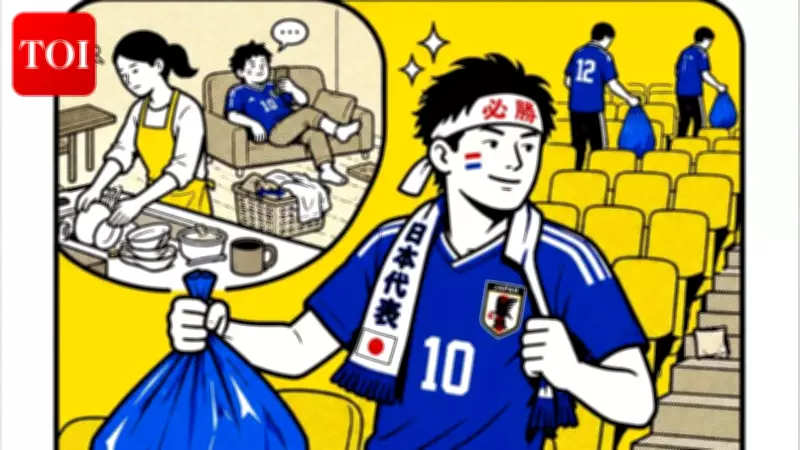
Japanese football fans have a long-standing tradition of cleaning up stadiums after World Cup matches. This practice was once again observed by Samurai Blue supporters at the World Cup 2026. However, this time, the cleanup tradition has sparked backlash back home.
Double Standards Exposed
When photos of Japanese fans picking up rubbish and cleaning the stadium after a match flooded the internet, some pointed out the double standards: where is this same conscientiousness when it comes to household responsibilities? The men who clean after themselves in public seldom do so at home. In fact, many leave that responsibility to their wives.
Gender Inequality at Home
While cleanliness is an integral part of Japanese culture, the responsibility for household chores and cleaning often falls on women. As the internet lauded Japanese fans for cleaning up the stadium, another post from a Japanese user soon went viral. It showed a man picking up litter at a match, then the same man reclined on a sofa, scrolling through his phone at home near a basket of laundry, while his wife did the dishes.

The user added that men in Japan should 'pitch in more at home', noting that they spend the least time on housework internationally. The post has since gone viral, with over 60,000 likes. “Please do it at home,” one comment read. “Everyone wants to save the world, but no one wants to help mum do the dishes,” an X user quipped, referencing a quote by American author PJ O’Rourke.
Another said, “There’s probably a guy among these people picking up trash who has a young child at home and has left his wife to look after them so he can come and watch the World Cup.”
Unpaid Work Disparity
Japanese women spend more than three hours per day on unpaid work, which is more than five times that of men, who spend about 47 minutes daily, according to Organisation for Economic Co-operation and Development (OECD) data. This disparity highlights the broader issue of gender inequality in household responsibilities.
The debate underscores a growing awareness of the need for men to share domestic duties, even as their public acts of cleanliness are praised. The viral post has sparked conversations about the importance of equality at home, not just in public spaces.