Book Review: 'Ticket to Kerala' by SR Praveen
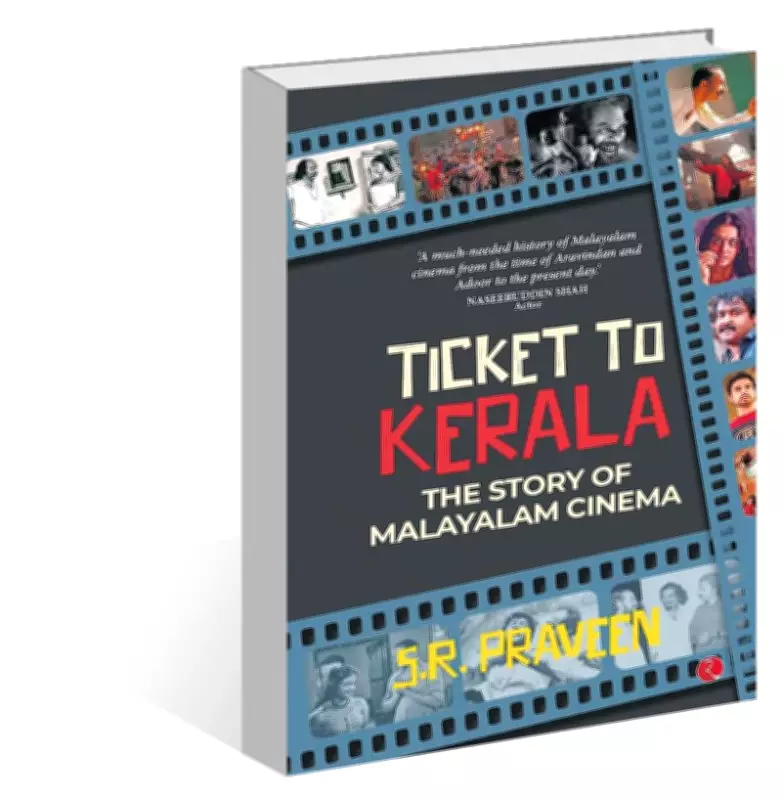
SR Praveen's 'Ticket to Kerala' (Rupa, Rs 495, 320 pages) serves as a generous and thoughtful guide for anyone who has recently discovered Malayalam cinema and wishes to explore further. The book does not merely catalogue films or filmmakers; it situates and contextualizes the experience of a Malayalam film within a longer history, starting from the present ongoing wave that has travelled beyond Kerala and then tracing how this came to be.
Personal Entry Points and the New Wave
The reviewer, Eshan Sharma, notes that his own introduction to Malayalam cinema began with films like 'Bangalore Days' and 'Premam', rather than auteurs like Adoor Gopalakrishnan or John Abraham. During the pandemic, OTT platforms provided access to a range of Malayalam films, sparking conversations about filmmakers such as Dileesh Pothan, Lijo Jose Pellissery, and Anjali Menon. Sharma observes that these films resist scale, treating ordinary situations with attention and sensitivity rarely found in contemporary Bollywood. Films like 'Bramayugam', a folklore thriller set in 17th century Kerala, exemplify the industry's radical creativity.
Praveen's Approach and Key Chapters
Praveen acknowledges entry points like 'Premam' and 'Bangalore Days' to map the new wave, then delves into the people who shaped it. His interview with filmmaker Rajeev Ravi is particularly insightful, exploring how Ravi moved beyond his identity as Anurag Kashyap's cinematographer to become a distinct voice in Malayalam cinema. The chapter on music is notable, as little work has been done on the sound of the new wave film movement. Praveen masterfully introduces the evolution of music in the new-new wave.

Another crucial chapter addresses the Women in Cinema Collective and the aftermath of the Hema Committee report, which forced the industry to confront issues of power, labour, class, caste, and gender. Praveen treats these topics with seriousness, emphasizing that a book claiming to introduce a film industry must also discuss its problems.
Historical Context and Film Society Movement
The second half of the book moves into history, covering the origins of Malayalam cinema, the studio era, the emergence of progressive and parallel cinema, and the roles of figures like Adoor Gopalakrishnan, John Abraham, Bina Paul, and MT Vasudevan Nair. The discussion of the film society movement is engaging, showing how a culture of spectatorship was built through collective effort, training audiences to watch cinema differently. This contrasts with the present, where algorithms and OTT recommendations shape discovery.

Unresolved Questions and Plurality
Sharma notes that the book leaves one question unresolved: what exactly is the Malayalam new wave? The distinction between mainstream and parallel cinema becomes untrustworthy here. However, this ambiguity is also the charm of research. 'Ticket to Kerala' opens up many questions, making readers aware of how partial their engagement has been. For a long time, Indian cinema was used interchangeably with Hindi cinema, but that assumption is no longer true. There are many Indian cinemas, and Praveen's book reminds us of this plurality. It does not claim to be definitive; it is a beginning, a generous and necessary guide for those wanting to go further into Malayalam cinema.