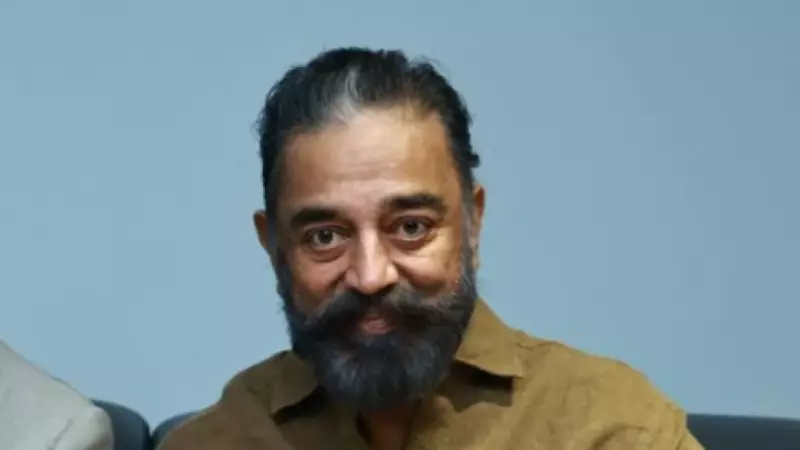
Rajya Sabha member and Makkal Needhi Maiam (MNM) founder-president Kamal Haasan has issued a strong call for reforming India's film certification process, advocating for greater transparency and defined timelines. The veteran actor-politician's statement comes at a critical juncture, as the release of Tamil superstar Vijay's film 'Jana Nayagan' remains stalled, entangled in legal issues and awaiting clearance from the Central Board of Film Certification (CBFC).
A Constitutional Right and an Economic Imperative
Expressing his views on social media platform X on Saturday, Kamal Haasan framed the issue as one of fundamental rights and economic necessity. He emphasized that India's Constitution guarantees freedom of expression, a principle he believes is undermined by opaque processes. The MNM leader stressed that the current moment transcends the fate of any single movie. "This moment is larger than any one film; it reflects the space we accord art and artists in a constitutional democracy," he stated.
Haasan highlighted the extensive ecosystem that depends on a smooth and fair certification process. He pointed out that cinema is a collective effort involving writers, technicians, performers, exhibitors, and numerous small businesses. Delays and unclear directives disrupt livelihoods and economic activity across this entire chain, he argued.

Key Demands for a Reformed CBFC
In his post, Kamal Haasan outlined specific pillars for a reformed certification system. His call is not for the abolition of certification but for its transformation into a more accountable and efficient mechanism. The core demands include:
- Defined Timelines: A clear and mandatory schedule for the certification process to prevent indefinite delays.
- Transparent Evaluation: An open and clear procedure for reviewing film content.
- Reasoned Justification: Written explanations for every suggested cut or edit, moving away from arbitrary decisions.
He warned that "when clarity is absent, creativity is constrained, economic activity is disrupted, and public trust is weakened."
A Unifying Moment for Indian Cinema
Kamal Haasan positioned this as a pivotal moment for the entire Indian film industry to unite. He urged stakeholders to engage in meaningful and constructive dialogue with government institutions. Such a collaborative effort, he believes, would lead to reforms that safeguard creative freedom while upholding constitutional values.
"Such reform will safeguard creative freedom, uphold constitutional values and strengthen India’s democratic institutions by affirming trust in its artists and its people," he asserted. He concluded by expressing faith in the audience, stating that Tamil Nadu and India's cinema lovers bring passion, discernment, and maturity to the arts, and they deserve openness and respect from the certification bodies.
The intervention by a prominent figure like Kamal Haasan adds significant weight to the ongoing debate about censorship and creative expression in Indian cinema, spotlighting the practical and financial hurdles created by procedural delays.