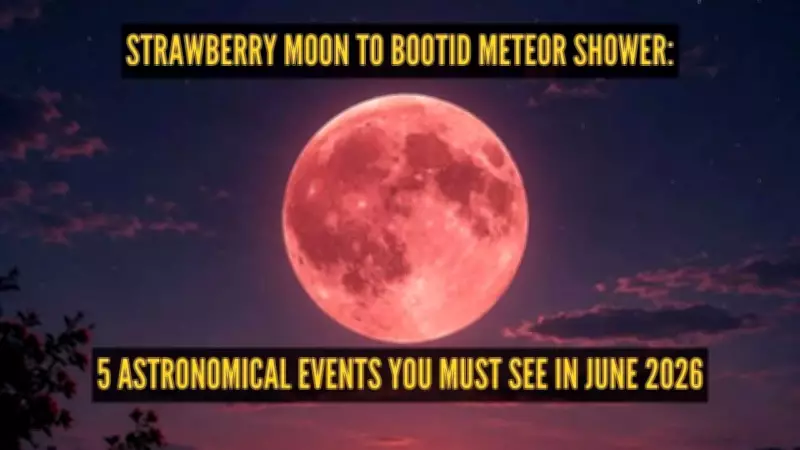
Summer is upon us, and with it comes the opportunity to spend warm nights stargazing with friends and family, awaiting celestial miracles. From a strawberry moon to the Bootid meteor shower, June brings spectacular astronomical events that will have astronomy enthusiasts eagerly anticipating the nights. Here are five astronomical events you must watch out for this month.
Mars, Moon, and Saturn Alignment: June 11
An hour before sunrise on June 11, Mars, the moon, and Saturn will form a diagonal line above the east horizon. Viewers excited to see the conjunction will need clear views over a large lake or grassland with minimal horizontal obstructions.
New Moon: June 15
Summer is one of the best times to admire the Milky Way, with clear skies all around. The new moon, which restarts the lunar cycle, is the prime time for spotting it. The lack of lunar light helps the cluster of millions of stars pop into view for the naked eye. This month, the new moon arrives on June 15, offering the best night to stargaze.

Bootid Meteor Shower: June 27
Caused by lingering debris from a passing comet, the Bootid meteor shower features a few shooting stars per hour. It peaks on June 27 and could bring up to 100 or so meteors in a given hour. While it is not the most exciting shower, if you find yourself with clear skies outside, watch for streaking meteors near the Bootes constellation in the northern sky.
Strawberry Moon: June 29
The first official moon of summer is known as the "strawberry moon." It will occur around 8 p.m. ET on June 29. Native American communities gave the title due to the sweet strawberries harvested in early summer. While the moon might not take a reddish hue, it may appear with a tint. During moonrise and moonset, it can turn a brilliant orange, due to the way light travels through Earth's atmosphere at that angle.
Mars and Pleiades: Late June
Two of the most colorful members of the night sky will meet up in late June. An orange-tinged Mars and the pale-blue Pleiades star cluster, known for its seven easily visible stars, will appear about 4 to 5 degrees or three finger widths apart. The prime dates for viewing are around June 27 to 30, above the eastern horizon for about 90 minutes before sunrise.
Celestial events present an anomaly that enthralls many. The separation or meet-up, appearance or disappearance of objects due to an enigmatic cycle or power has many eyes hooked to the skies, all in the hopes of catching miracles live.