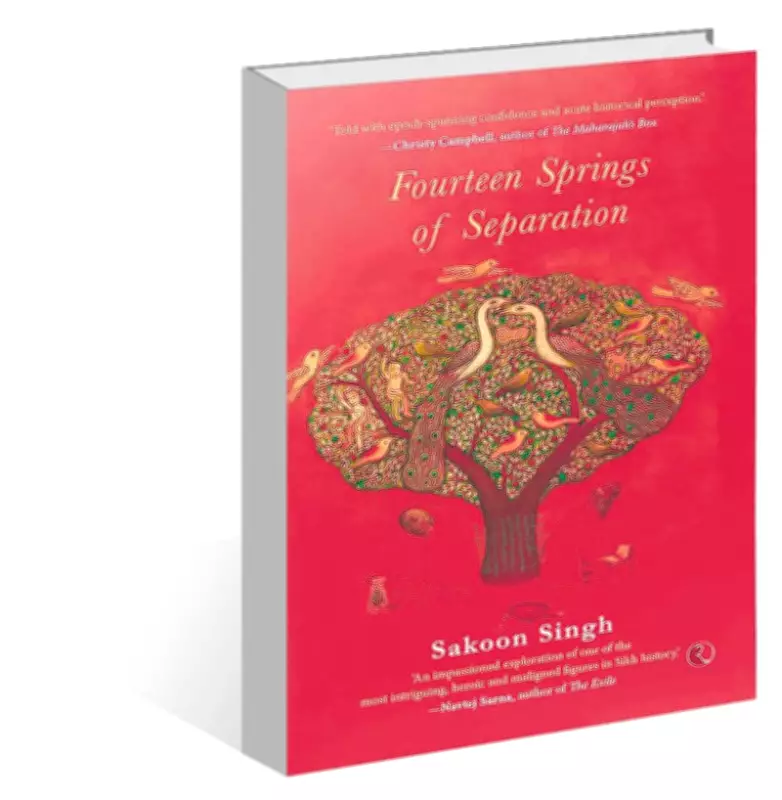
Sakoon Singh's novel 'Fourteen Springs of Separation' brings the legendary queen Rani Jind Kaur back into public memory. Published by Rupa, the 326-page book is priced at Rs 395. Written as fiction, it draws on meticulous academic research and pays homage to the oral traditions of Punjab's dhadhi folk singers, who have long preserved the queen's story.
Multi-Narrator Structure
The novel unfolds through four protagonists—Sam, Mehr, Angad, and Shaminder—each from different walks of life, united by their interest in Jind Kaur. Their perspectives allow readers to see her story unfold like an investigative thriller. The narrative leaps across centuries, weaving Jind Kaur's life with contemporary issues facing Punjab and the world.
Characterization and Historical Accuracy
Jind Kaur emerges vividly, her legendary spunk blazing across the pages as she restlessly seeks to reconnect with her son, Duleep Singh, and avenge the wrongdoings of the British Empire. In one striking scene, while being served tea in Queen Victoria's presence, she recognizes the teacup as part of the loot taken from the Sikh empire's toshakhana. This happens as she is expected to curry favor with Victoria. The characterization is admirable.

Singh fleshes out all characters, ensuring no one is lost in the polyphony. Readers may recall Dan Brown's 'The Da Vinci Code' or Amitav Ghosh's 'Ibis Trilogy' and 'Gun Island' while reading.
Balancing Fiction and History
The author maintains a careful balance between fictional narrative and historical authenticity, an ethical approach that retains historicity while reminding readers of the novel's fictionality. Singh draws attention to how women with strong personalities are often painted as immoral or power-hungry to delegitimize their stories or justify their exclusion from history.
The novel is written with a clear sense of purpose, balancing passion and calm, fervent love and scholarly detachment. It is history with a gaze fixed firmly on the present. This control over chronicling the past while maintaining creativity is enviable.
Multilingual and Cultural Richness
The book is brilliantly multilingual, incorporating dhadhi ballads in praise of Jind Kaur and the cadences of Punjabi as characters slip in and out of languages. According to reviewer Sonya J Nair, who teaches at All Saints' College, Thiruvananthapuram, reading the novel felt like being in the presence of a dhadhi bard.
Themes and Impact
Jind Kaur's story raises urgent questions about bodily autonomy, gender bias, maternal rights, colonial scarring, and alternate ways of reading history—not just from books but from the rhythms of the land and its people. The title 'Fourteen Springs of Separation' acknowledges the fourteen years Jind Kaur was separated from her son.
The novel loves its queen, and thanks to it, the tale of one of India's strongest queens storms back into public consciousness.