

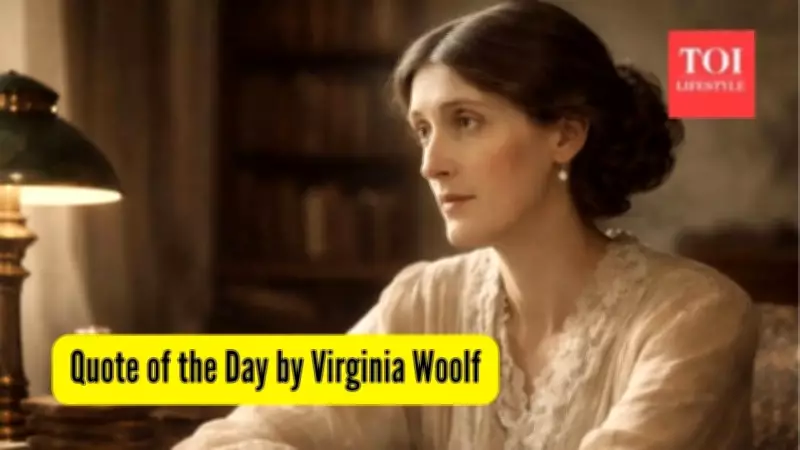
Virginia Woolf: The Modernist Pioneer Who Redefined Literature
Virginia Woolf stands as one of the most influential writers of the 20th century, celebrated for her innovative narrative techniques and profound exploration of human consciousness. As a central figure in the development of modernist literature, her fiction and essays continue to be widely read and studied, offering timeless insights into the complexities of the mind and society.
Early Life and Intellectual Foundations
Born on January 25, 1882, in London, England, Woolf grew up in a family renowned for its intellectual prowess. Her father, Leslie Stephen, was a distinguished writer and critic, whose extensive library and frequent gatherings with leading thinkers of the era provided a rich educational environment. Unlike her brothers, Woolf did not attend university, but her home schooling and access to her father's vast collection of books significantly shaped her intellectual development.
Tragedy and Mental Health Struggles
Woolf's early years were marked by profound loss and emotional turmoil. The death of her mother when she was 13, followed by the passing of her father and brother, deeply impacted her mental well-being. Throughout her life, she experienced recurring episodes of what would likely be diagnosed today as severe depression or bipolar disorder. These personal challenges profoundly influenced her writing, often manifesting in her nuanced depictions of psychological states and inner turmoil.

The Bloomsbury Group and Literary Ventures
As an adult, Woolf became a key member of the Bloomsbury Group, a collective of writers, artists, and intellectuals who challenged Victorian conventions and embraced progressive ideas about art, society, and relationships. In 1912, she married Leonard Woolf, and together they founded the Hogarth Press. This publishing house not only released her own works but also published significant authors such as T. S. Eliot and Sigmund Freud, fostering literary innovation.
Major Works and Narrative Innovations
Woolf's most acclaimed novels include:
- Mrs. Dalloway (1925)
- To the Lighthouse (1927)
- Orlando (1928)
These works are renowned for their departure from traditional storytelling, emphasizing experimental styles that prioritize character introspection over plot-driven narratives. A hallmark of Woolf's contribution to literature is her mastery of the stream of consciousness technique. This approach captures the fluid, often unstructured flow of thoughts, emotions, and perceptions within a character's mind, as exemplified in Mrs. Dalloway, where a single day unfolds through multiple perspectives, blending past and present seamlessly.
Lyrical Language and Feminist Contributions
Woolf's writing is distinguished by its lyrical and poetic use of language, blurring the boundaries between external events and internal experiences. Beyond fiction, she was a prolific essayist and critic. Her seminal work, A Room of One's Own (1929), argues that women require financial independence and personal space to create art, making it a cornerstone of feminist literary criticism. In this essay, Woolf critiques historical barriers faced by women writers, using the fictional example of Shakespeare's sister to illustrate societal constraints on female talent.
Enduring Legacy and Influence
Woolf's impact on literature is immense, as she helped shift the novel's focus from external action to internal experience, influencing later writers like James Joyce and William Faulkner. Alongside figures such as Marcel Proust, she is recognized as a pioneer of modernist literature. Her exploration of themes like identity, gender, time, and memory remains relevant today, resonating with contemporary readers. Woolf's advocacy for women's experiences and her critique of societal norms challenged traditional gender roles, adding depth to her literary legacy.

Personal Struggles and Final Years
Despite her literary success, Woolf continued to grapple with mental health issues throughout her life. The pressures of World War II and fears of another breakdown overwhelmed her, leading to her tragic suicide in 1941. In a note to her husband, she expressed her inability to continue fighting her illness, marking a somber end to a brilliant career.
Iconic Quote and Literary Philosophy
One of Woolf's most iconic statements, from her essay Modern Fiction, encapsulates her revolutionary view on literature: "Life is not a series of gig lamps symmetrically arranged; life is a luminous halo, a semi-transparent envelope surrounding us from the beginning of consciousness to the end." This metaphor critiques traditional novelists who focused on external details and structured plots, arguing instead that life is a fluid, subjective experience of thoughts and sensations. Woolf championed a literature that captures this inner flow, moving away from rigid narratives to embrace the complexities of human consciousness.
In summary, Virginia Woolf's contributions to modernist literature, through her innovative techniques and feminist insights, have left an indelible mark on the literary world. Her works continue to inspire and challenge readers, affirming her status as a visionary writer who redefined the art of storytelling.
