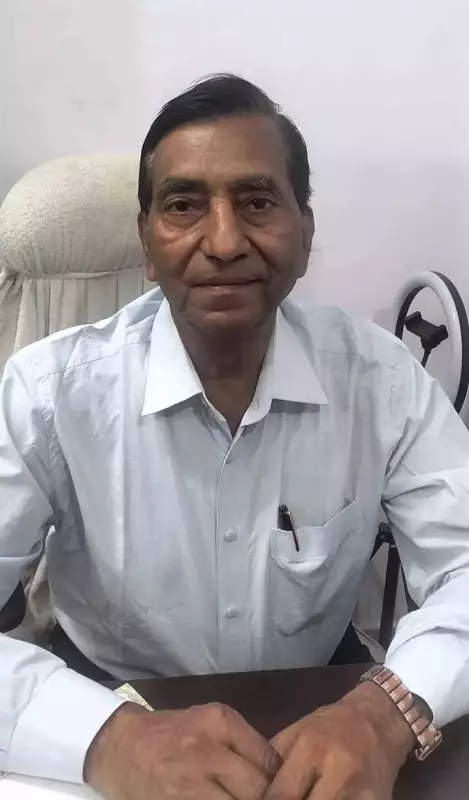
Despite a significant surge in the popularity of Ayush medicines, particularly after the Covid-19 pandemic, the state of government Ayush hospitals and health centres in Bihar remains dismal. This critical gap between public demand and institutional support has been highlighted by Dr Dineshwar Prasad, the former principal of Govt Ayurvedic College, Patna, and Maharani Rameshwari Bhartiya Chikitsya Vigyan Sansthan in Darbhanga.
Patient Trust High, But Infrastructure Lags
Dr Prasad, drawing from his long experience, expressed satisfaction with the public's response to Ayurvedic treatment. He noted that most patients with common seasonal ailments and chronic diseases were quite satisfied. Many suffering from chronic conditions were completely cured, showing patience and adhering to precautions during their treatment.
However, he pointed out practical hurdles. Procuring rare herbs for medicines is sometimes difficult due to depleting forests, forcing practitioners to source them from remote locations within or outside Bihar. While industries now manufacture various Ayush drugs, the core institutional support is missing.

Holistic Appeal vs. Systemic Neglect
Explaining the preference for Ayush, Dr Prasad emphasised that Ayurveda is a holistic way of life focused on prevention and harmony with nature. It offers sustainable solutions for rising lifestyle disorders, stress, and environmental health challenges, making it highly relevant today.
Contrasting this growing appeal is the stark reality of Bihar's Ayush infrastructure. The Bihar State Ayush Society, the nodal agency for the National Ayush Mission, is tasked with co-locating facilities, upgrading hospitals, and establishing new ones. It has provided financial aid for integrated hospitals in Patna, Gopalganj, Darbhanga, and Khagaria districts and agreed to supply essential drugs.
Yet, there has been no perceptible change in the functioning of these hospitals so far, laments Dr Prasad. The state has five government Ayurvedic college hospitals, but only two—in Patna and Begusarai—are fully operational. All suffer from a severe lack of basic infrastructure and a shortage of teachers and doctors.
A Call for a Separate Ayush Ministry and University
To address these systemic failures, Dr Prasad proposes concrete steps. He strongly advocates for the creation of a separate Ayush ministry in Bihar to provide focused governance and resource allocation.
Furthermore, he suggests that Bihar should establish a separate Ayush university, following the successful models implemented in states like Uttar Pradesh, Uttarakhand, Rajasthan, and Kerala. Such an institution would centralise education, standardise practices, and foster research, potentially revitalising the entire Ayush ecosystem in the state.
The interview underscores a pressing need for the Bihar government to bridge the gap between the rising public faith in traditional medicine and the crumbling public infrastructure meant to deliver it.