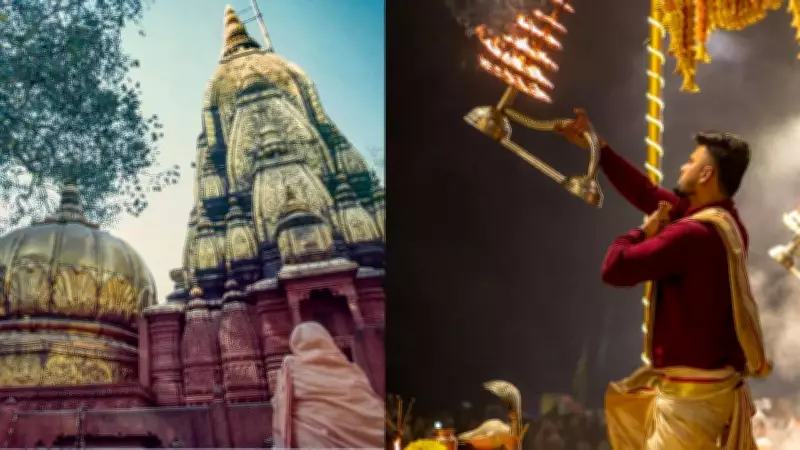
5 Mystical Facts About Kashi Vishwanath Temple: Unveiling Ancient Secrets
Nestled in the vibrant bylanes of Varanasi, the Kashi Vishwanath Temple stands as a timeless symbol of divine devotion to Lord Shiva. Revered as one of Hinduism's holiest sites, this temple attracts millions of devotees annually who seek blessings and spiritual liberation. According to the Skanda Purana, Kashi is believed to be the oldest city, established on the Trishul of Lord Shiva, and it miraculously survived cosmic dissolution (Pralaya) by resting on Shiva's trident, untouched as the world cycled through endings and rebirths. This sacred Jyotirlinga shrine, dedicated to Vishwanath, the Lord of the Universe, is steeped in millennia of myths, miracles, and enigmatic events. Here, we delve into five fascinating and mystical facts that illuminate the temple's profound legacy.
First Jyotirlinga Manifestation: The Pillar of Light
As per Vedic beliefs, the Kashi Vishwanath Temple houses a swayambhu Shiva linga, which first manifested as a radiant pillar of light, marking it as the inaugural Jyotirlinga. Ancient scriptures and Puranas recount a pivotal event where Lord Brahma and Lord Vishnu debated their superiority. In response, Shiva emerged as this self-manifested linga to humble them. Brahma falsely claimed to have found its end, incurring a curse from Shiva, while Vishnu's honesty earned him eternal worship. This divine episode underscores Kashi's role as the ultimate destination for achieving moksha, or liberation from the cycle of life and death.
The Door to Liberation: Spiritual Vortex of Kashi
Vedic traditions hold that merely entering Kashi is believed to incinerate karmic debts accumulated over countless lifetimes. A single glimpse of the Vishwanath linga is considered equivalent to completing all pilgrimages. The unique spiritual trinity—comprising Kashi's eternal light, the crescent flow of the Ganga River bowing to Shiva, and the sacred lingam—creates a powerful vortex for total transformation. Legends further state that Lord Shiva personally grants moksha to the deceased at the adjacent Manikarnika Ghat, earning the temple the revered title of Moksha dwar, or the gateway to liberation.

Time and Destruction: Resilience Through Centuries
The Kashi Vishwanath Temple has faced destruction an astonishing 17 times, from the era of Qutb-ud-din Aibak in 1194 to the reign of Aurangzeb. Despite these repeated devastations, its core spiritual essence has endured, with each reconstruction emerging stronger than before. Devotees firmly believe that Shiva's divine protection renders the temple timeless. It is said that dying in Kashi ensures moksha, as the city's 108 crore lingams whisper salvation to wandering souls, solidifying the temple's status as an eternal symbol of Shiva's omnipresence.
Gyan Vapi Well's Hidden Idol: Wisdom and Protection
The Gyan Vapi well, filled with what is known as "wisdom water," is believed to have been drawn by Shiva himself and conceals the original Shiva lingam. In 1669, when Aurangzeb's forces threatened the temple, the head priest courageously leaped into the well with the idol to safeguard it from desecration. Today, the well's waters are said to shimmer with unseen mystical power, and gazing into them is thought to sharpen a seeker's insight, offering a profound connection to the temple's hidden depths.
Avimukteshwar: Ancient Archaeological Proof
Archaeological discoveries near the temple include an Avimukteshwar seal dating back to 1000 BCE, providing tangible evidence of a sacred structure that existed over 3,000 years ago. This finding aligns with mentions in the Skanda Purana's Kashi Khanda, which describes Kashi as a city pulsating with spiritual energy capable of granting instant moksha to the devoted. This ancient seal reinforces the temple's historical and religious significance, bridging myth with verifiable history.