

Study Finds 10.3% Drug Resistance in Andhra Pradesh Tuberculosis Cases
A recent study conducted in Andhra Pradesh has uncovered significant drug resistance among tuberculosis (TB) patients, with 10.3% of nearly 5,700 confirmed cases showing resistance to at least one key anti-TB medication. This finding underscores the persistent threat posed by drug-resistant strains, even as the majority of infections remain treatable with standard therapies.
Research Methodology and Key Findings
The study, published in the IP International Journal of Medical Microbiology and Tropical Diseases, analyzed 5,759 patient samples collected in 2024, of which 5,699 yielded valid results. Researchers used molecular diagnostic tests to assess resistance to first-line drugs like isoniazid (INH) and rifampicin (RIF), as well as second-line medications including fluoroquinolones and injectable agents such as kanamycin and amikacin.
Among the valid samples, 585 cases (10.26%) exhibited resistance to at least one anti-TB drug. INH resistance was the most common, detected in nearly 8% of patients, while RIF resistance was less frequent, observed in about 0.7% of cases.

Multidrug-Resistant and Pre-XDR/XDR TB Cases
Of particular concern were 94 cases identified as multidrug-resistant TB (MDR-TB), defined by resistance to both INH and RIF. Within this group, 9 patients had pre-extensively drug-resistant TB (pre-XDR TB), showing additional resistance to fluoroquinolones, and two patients were diagnosed with extensively drug-resistant TB (XDR TB), resistant to INH, RIF, fluoroquinolones, and at least one injectable drug.
The remaining 83 MDR-TB cases retained susceptibility to second-line treatments, offering potential for effective clinical management. However, pre-XDR and XDR TB cases, though rare, represent the most severe forms due to limited, more toxic, and often less effective treatment options.
Genetic Mutations and Patient Demographics
The study also examined genetic mutations in TB bacteria responsible for drug resistance. INH resistance was primarily linked to the katG S315T1 mutation, while RIF resistance was commonly associated with the rpoB S531L mutation. Fluoroquinolone resistance was attributed to mutations in the gyrA gene, particularly at positions D94 and A90, with all pre-XDR and XDR cases exhibiting these mutations.
Patients with pre-XDR or XDR TB were predominantly men aged between 20 and 63 years, from both rural and urban areas, and most had high bacterial loads, complicating treatment efforts.
Implications for Public Health and TB Management
TB is an infectious disease that mainly affects the lungs and spreads through the air when an infected person coughs or sneezes. While treatable with medicines, the rise of drug-resistant forms poses a serious global challenge, including in India.
The findings indicate that while 89.7% of TB cases in Andhra Pradesh remain fully susceptible to first-line medications, drug-resistant forms are an emerging concern. Widespread INH resistance may lead to treatment failure if not detected early, and MDR-TB cases, though relatively few, are more complex and costly to treat.
This retrospective study was conducted at a tertiary care centre in Nellore, a referral hub under the national TB elimination programme. The research team included Gajjala Suvarna, Venkata Giri Prasad Polu, Kogila Sreeja Vamsi, Benson Wesly Buraga, Basireddy Sreekanth Reddy, Kota Neela Manikanta, Gundi Vijaya Ananda Kumar Babu, Gujjula Mary Sandeepa, Mugudalabetta Shiva Kumar, and Uday Sankar Allam, affiliated with institutions in Nellore and Mahabubnagar.
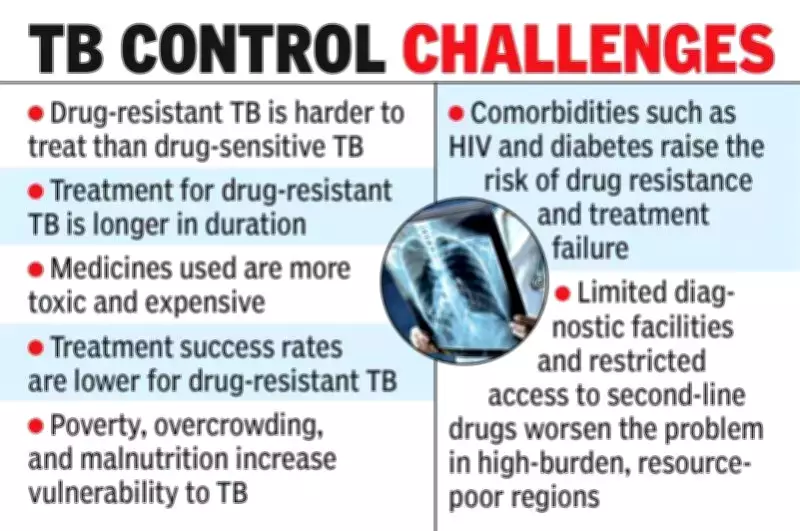
The study highlights the critical need for enhanced surveillance, early diagnosis, and tailored treatment strategies to combat drug-resistant TB and safeguard public health in Andhra Pradesh and beyond.






