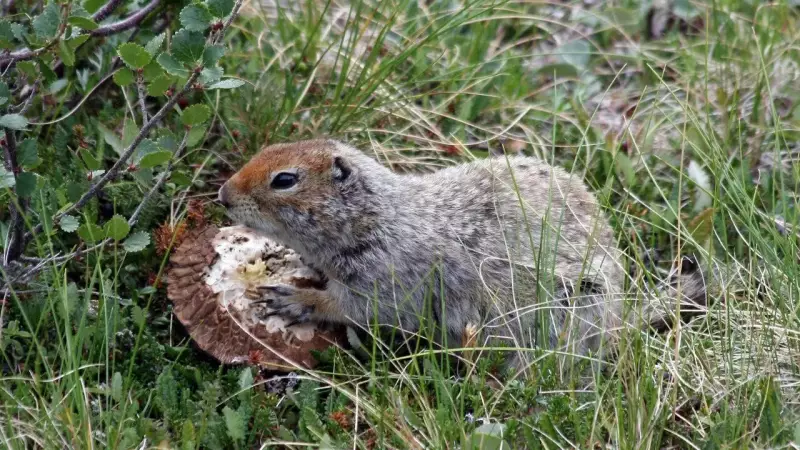
The Arctic Ground Squirrel: Master of Extreme Hibernation
Imagine a mammal that can deliberately shut down most of its brain functions for the majority of the year, only to awaken in spring with memories and intellectual capabilities completely preserved. This remarkable feat is not science fiction but the annual reality for the Arctic ground squirrel (Urocitellus parryii). Inhabiting some of the planet's coldest regions where winter can persist for up to eight months, this fascinating creature does not merely endure the cold—it embraces it through one of the most extreme hibernation states documented in mammals.
Physiological Marvels During Hibernation
During its deep hibernation, the Arctic ground squirrel undergoes astonishing physiological transformations:
- Body temperature plummets below the freezing point of water, reaching as low as −2.9°C (26.8°F)—the lowest recorded in any mammal.
- Heart rate dramatically slows from approximately 200 beats per minute to fewer than ten.
- Breathing rate decreases significantly, and metabolic activity reduces to a mere fraction of normal levels.
- The squirrel survives extended periods without food or water by utilizing stored fat reserves and meticulously regulating fluid balance.
Periodically, the squirrel briefly warms its body to normal temperatures, a process believed to repair any cellular damage and consuming much of the energy conserved during hibernation.

Brain Survival in Deep Torpor
What truly distinguishes the Arctic ground squirrel is its brain's resilience. In humans, even minor reductions in brain temperature or oxygen levels can cause irreversible damage or cell death, often linked to conditions like strokes. However, this squirrel reduces brain activity, blood flow, and temperature to such extremes that neuronal firing nearly stops, yet the neurons remain viable.
This survival is enabled by controlled physiological processes that deactivate synaptic communication and slow metabolism, a state known as torpor. Research, such as the study "The Arctic Ground Squirrel Brain Is Resistant to Injury From Cardiac Arrest During Euthermia" published in the journal Stroke, highlights the stark contrast between human brain sensitivity and the squirrel's endurance.
The Secret: Cellular Activity Reduction
The key to this deep torpor lies in the drastic reduction of cellular activities essential for life. Studies, including one in the American Journal of Physiology titled "Effects of ambient temperature on metabolic rate, respiratory quotient, and torpor in an arctic hibernator", reveal that protein synthesis—a critical cellular process—drops to nearly undetectable levels during hibernation.
This reduction is part of a strategic adaptation to protect cells under low oxygen and nutrient conditions. The squirrel's brain enters a low-power mode, minimizing protein synthesis, blood flow, and oxygen consumption. This shields brain cells from the toxic effects of hypoxia and energy deficiency, which would typically lead to cell death in humans.
Scientific and Medical Implications
Beyond its biological intrigue, the Arctic ground squirrel serves as a vital model organism for understanding survival under extreme physiological stress. Its neuroprotective mechanisms during torpor have significant applications in several fields:
- Stroke and Neuroprotection Research: Insights into brain resilience could inform treatments for stroke victims.
- Emergency Medicine: Techniques for preserving brain function during trauma or cardiac arrest.
- Long-Duration Space Travel: Potential strategies for human hibernation in space missions.
- Therapeutic Hypothermia and Organ Preservation: Enhancing methods for cooling bodies or organs to prevent damage.
By studying this extreme hibernator, scientists aim to unlock new ways to safeguard human brains, turning nature's marvel into a beacon for medical advancement.