

Deadly LPG Blast in Chennai's Navalur Claims Lives of Two Children
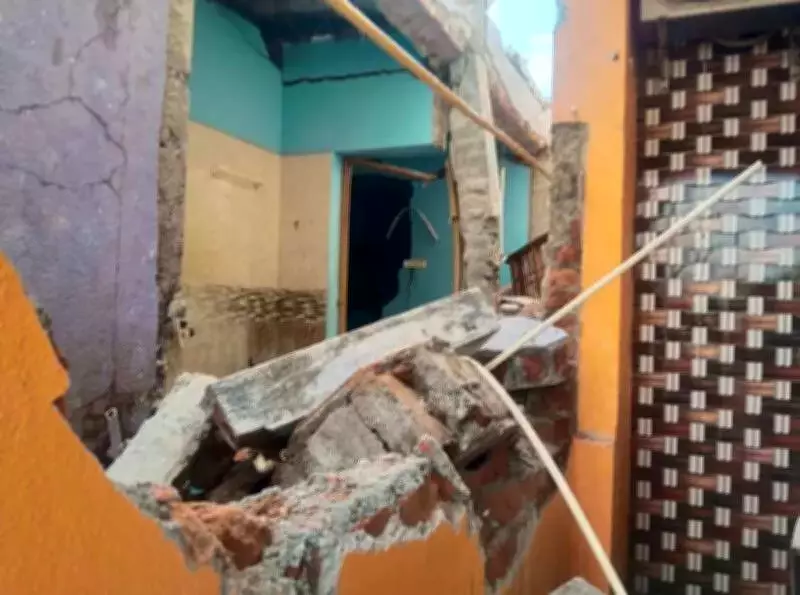
A catastrophic LPG cylinder explosion ripped through a residential house in Navalur along the Old Mahabalipuram Road (OMR) on Sunday morning, resulting in the tragic deaths of two young children and leaving seven others with severe injuries. The incident has sent shockwaves through the community and raised urgent questions about safety protocols in residential areas.
Details of the Fatal Incident
The blast occurred around 7:40 AM at a house located on Chamundeshwari Nagar 2nd Street near Navalur, close to Thiruporur. According to eyewitness accounts, a powerful explosion tore through the street, sending flames and debris soaring into the air and triggering panic among residents who fled their homes in fear.
The deceased have been identified as four-year-old Krishika and one-and-a-half-year-old Dheeran, children of Sudha. Sudha had come to visit a relative living in a portion of the house and had stepped out shortly before the explosion, escaping unharmed. Tragically, the two children were trapped under the debris and pronounced dead at the scene.

Injured Victims and Rescue Efforts
The injured include Sudha's relatives: Sanjeevi, 31, his wife Sonia, 27, and Chitra, 46. Additionally, Vairamuthu, 40, his wife Selvi, 38, and their seven-year-old son Pradeep, who resided in the portion where the blast originated, suffered severe burn injuries. An auditor named Murugan, living in the first portion of the house, was also injured when the structure collapsed.
Teams from the Tamil Nadu Fire and Rescue Services swiftly responded to the emergency, battling the flames and initiating rescue operations. The injured were initially taken to a private hospital in Padur. Due to the severity of their conditions—Vairamuthu, Selvi, and Pradeep sustained over 80% burn injuries—they were later transferred to the Government Kilpauk Medical College and Hospital, where they remain in serious condition.
Investigation Unveils Unauthorized Commercial Activities
Police from the Thazhambur police station have registered a case and launched an investigation into the incident. Preliminary findings reveal that the house, owned by Shankar, contained three rental portions. Vairamuthu, who lived in the second portion with his family, worked at a fast-food shop and had been preparing food at home for commercial distribution to canteens, eateries, and private customers for the past three months.
Authorities discovered that Vairamuthu was using domestic LPG cylinders for commercial purposes, with three cylinders reportedly purchased from the black market stored inside the house for bulk cooking. Investigators noted that Vairamuthu and his family were sleeping in the hall when the explosion occurred. The back-to-back blasts were so powerful that they reduced all three portions of the house to rubble.
Officials from the revenue department and LPG distribution authorities are also probing the incident. Enquiries indicate that food was prepared for commercial distribution without proper permission or safety measures, and multiple gas cylinders were in use. A fire official stated that commercial cylinder regulators, tubes, and stoves appeared to be improperly used with domestic cylinders, likely contributing to the disaster.
Broader Safety Concerns and Inspections
In response to this tragedy, officials have initiated inspections across the OMR and ECR corridors. There are concerns that similar unauthorized food preparation units may be operating in residential areas, posing significant safety risks. The bodies of the two children have been sent to the Chengalpet Government Headquarters Hospital for postmortem examinations as the investigation continues.
This heartbreaking event underscores the critical need for stricter enforcement of safety regulations and heightened awareness about the dangers of misusing domestic gas cylinders for commercial activities in residential settings.






