Doctors in Gurgaon are raising an alarm over a new and disturbing health trend this winter. Beyond the well-known respiratory issues, the city's toxic air is now being directly linked to a sharp increase in complaints of joint pain, swelling, and stiffness, even among individuals with no prior history of arthritis.
The Invisible Culprit: How PM2.5 Attacks Your Joints
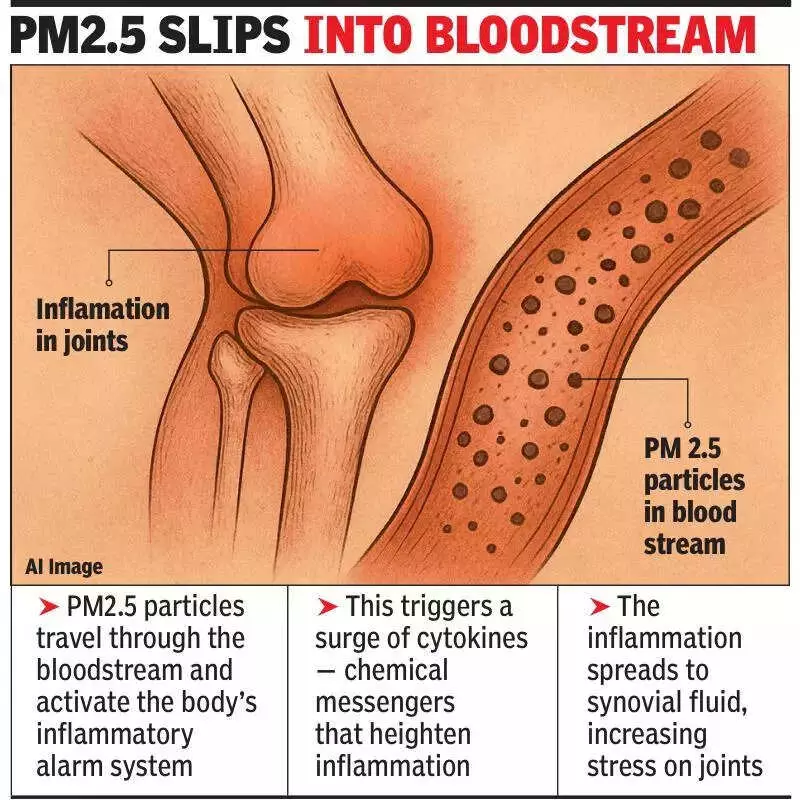
The primary cause, according to medical experts, is the fine particulate matter known as PM2.5. These microscopic particles, which are a dangerous mix of heavy metals, industrial toxins, and vehicular emissions, do not stop at damaging the lungs. They enter the bloodstream and travel throughout the body, triggering a chain reaction of systemic inflammation.
Once in the blood, PM2.5 prompts the immune system to release an excess of cytokines, which are chemical messengers for inflammation. During periods of high pollution, cytokine levels surge. This heightened inflammatory response then affects the synovial fluid that cushions our joints. The inflammation irritates the synovial lining, causing stiffness and hindering smooth movement. Furthermore, cartilage, which has a slow regeneration rate, becomes significantly more vulnerable to damage.

A Sharper, Earlier Spike Affecting Vulnerable Groups
Rheumatologists note that this season's spike in such cases is both sharper and has started earlier than typical winter aches, correlating directly with persistently high pollution levels. Dr. Rajiv Ranjan Kumar, a rheumatologist at CK Birla Hospital in Gurgaon, confirms that pollution spikes are causing widespread musculoskeletal inflammation in ways usually reserved for the coldest months.
Certain demographics are being hit hardest. Older adults and women are particularly susceptible due to their naturally thinner and less elastic cartilage. Women may experience more frequent flare-ups, partly because hormonal fluctuations can make their immune systems more reactive during pollution episodes.
Real-Life Cases: From Teachers to Construction Workers
The clinical observations are backed by patient stories from across the National Capital Region:
- A 37-year-old teacher from Sector 48 in Gurgaon developed stiffness in her fingers and knee pain after two weeks of 'poor' air quality. Blood tests showed elevated inflammatory markers, despite no arthritis history.
- A 58-year-old Delhi resident, who had managed arthritis with medication for years, found it difficult to get out of bed after consecutive smoggy weeks. Her rheumatologist linked the severe symptom exacerbation directly to rising PM2.5 levels. Using an air purifier and limiting outdoor activity helped stabilize her condition.
- A 45-year-old construction supervisor from Faridabad reported swelling in his ankles and wrists after prolonged on-site exposure to dust and smog. Doctors attributed this to constant contact with PM2.5 mixed with construction dust and cement particles.
Long-Term Risks and a Call for New Risk Factors
Dr. Piyush Goel, a specialist from Narayana Hospital in Gurgaon, emphasizes that once in the bloodstream, these particles target organs with existing vulnerabilities, including joints. Prolonged exposure leads to persistent inflammation.
The medical mechanism is now clear: PM2.5 infiltrates the blood, heightens the body's inflammatory response, and disrupts the delicate balance within joints. Over time, repeated exposure can accelerate cartilage wear and may lead to chronic joint disease in susceptible individuals.
With pollution episodes now lasting longer each winter, rheumatologists are advocating for a paradigm shift. They assert that environmental exposure to toxic air should be considered a formal risk factor for persistent joint pain, akin to age, weight, or past injury. This highlights the expanding and severe footprint of urban air pollution on public health.