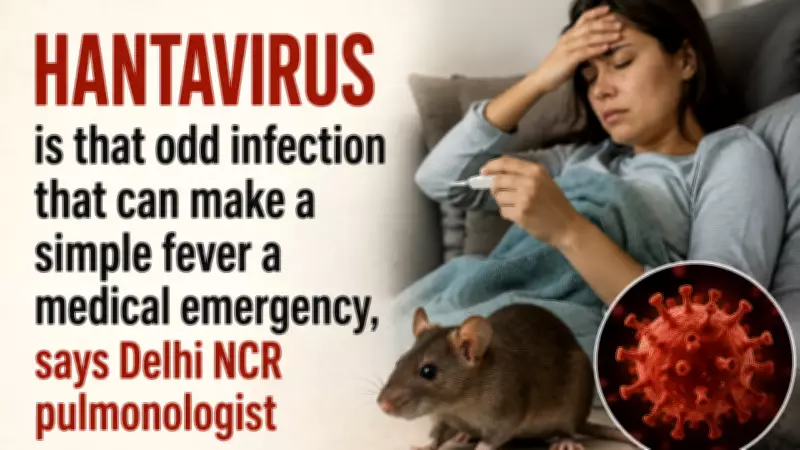
Hantavirus is that odd infection that can turn a simple fever into a medical emergency, according to a Delhi NCR pulmonologist. It is rare, which makes people ignore it. It is deadly, which makes people wish they had not. And it arrives looking so ordinary that by the time you realize something is seriously wrong, the virus has already started damaging your lungs.
The Deceptive Beginning
When fever and body ache start, most people worry about dengue, swine flu, or Covid. Hantavirus is a rare but potentially deadly infection that can quietly damage the lungs within days, and very few people have heard of it, said Dr. Pradeep Bajad, Senior Consultant Pulmonologist and Sleep Medicine specialist at Amrita Hospital in Faridabad, in an interview with TOI Health.
The early symptoms are generic enough that you could have almost any viral illness. Most patients have an initial presentation of fever, fatigue, headache, muscle pain, chills, nausea, vomiting, or abdominal discomfort. In many cases, people think it is seasonal flu or food poisoning. You think you have a stomach bug. You rest, hydrate, and wait for it to pass. For the first few days, it seems like a normal illness. Your fever comes and goes. You feel weak, but not dangerously so. Nothing about these symptoms screams emergency.

How You Actually Get It
The virus does not come from another person. You will not catch hantavirus from someone coughing on you or shaking your hand. That is part of why it flies under the radar. We are conditioned to worry about person-to-person transmission, but hantavirus does not work that way. According to Dr. Bajad, hantavirus is primarily spread by infected rodents, particularly rats and mice. The virus is found in their urine, saliva, and feces. Humans are usually infected by inhaling contaminated particles in the air during sweeping of dusty storerooms, cleaning of enclosed spaces, warehouses, farms, or old buildings that may have been inhabited by rodents.
So you are cleaning out a storage room. You are sweeping dust in a warehouse. You are dealing with accumulated grime in a place that has been closed for a while. The dust you are stirring up contains particles from rodent droppings infected with hantavirus. You breathe it in. And nobody even knows you have been exposed until you get sick.
The Rapid Deterioration
This is where it becomes a crisis. Patients may develop severe shortness of breath, chest tightness, dry cough, rapid heart rate, and decreasing oxygen levels. Fluid starts to leak into the air sacs of the lungs, and breathing becomes more and more difficult. Some get so sick so fast they need to be in the ICU and on a ventilator within a few hours.
The most severe form of hantavirus is called Hantavirus Pulmonary Syndrome, or HPS. Research published in journals like The Lancet and Clinical Microbiology Reviews has documented how hantavirus infections can trigger a severe inflammatory response in the lungs and blood vessels. The death rate for HPS in severe cases is around 35 to 40 percent, according to information from the US Centers for Disease Control and Prevention.
The Real Warning
The biggest problem with hantavirus is not the infection itself, but the false sense of normalcy in the first few days, Dr. Bajad says. In lung medicine, sometimes those lost days can be the difference between recovery and crisis. Think about that. The actual illness is not the biggest problem. The problem is that you do not know you are in danger. You are at home, feeling gradually worse, thinking you will bounce back like you always do. Meanwhile, your lungs are flooding with fluid and your oxygen levels are dropping. By the time you realize this is serious, you are already in critical condition.
Basic measures such as controlling rodent infestation, safe disposal of rodent waste, covering food, improving ventilation in closed rooms, and wearing gloves and masks while cleaning dusty areas can sharply reduce the risk of exposure, says the doctor.