

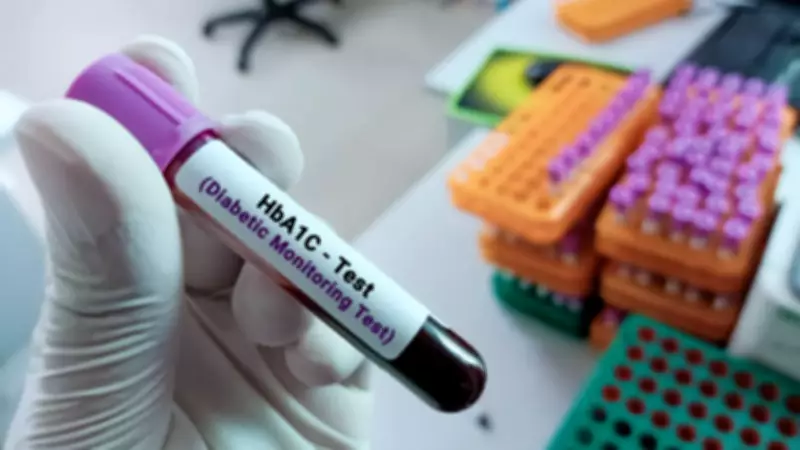
HbA1c Test May Mislead Diabetes Diagnosis in India, Lancet Review Warns
A groundbreaking evidence-based perspective published online in Lancet Regional Health: Southeast Asia has raised significant concerns about the reliability of the widely utilized glycated hemoglobin (HbA1c) test across India. The review underscores that this common diagnostic tool may fail to accurately represent blood glucose levels for millions of Indians, particularly in regions with high prevalence of anemia, hemoglobinopathies, and red blood cell enzyme deficiencies such as G6PD deficiency.
Questioning Reliance on HbA1c for Diabetes Management
The review critically questions the dependence on HbA1c as a sole diagnostic or monitoring instrument for type 2 diabetes in South Asia. HbA1c measurements primarily indicate the glycation of hemoglobin, but any condition impacting hemoglobin's quantity, structure, or lifespan—like anemia or inherited blood disorders—can distort HbA1c values, leading to misleading estimates of average blood glucose.
"Relying exclusively on HbA1c can result in misclassification of diabetes status," emphasized Professor Anoop Misra, corresponding author and Chairman of Fortis C-DOC Center of Excellence for Diabetes. "Some individuals may be diagnosed later than appropriate, while others could be misdiagnosed, which may affect timely diagnosis and management. Similarly, monitoring of blood sugar status may be compromised."

Shashank Joshi, co-author from Joshi Clinic in Mumbai, added: "Even in well-resourced urban hospitals, HbA1c readings can be influenced by red blood cell variations and inherited hemoglobin disorders. In rural and tribal areas, where anemia and red cell abnormalities are common, the discrepancies may be greater."
Key Findings and Public Health Implications
The review highlights several critical findings:
- HbA1c may under- or overestimate blood glucose in populations with high rates of anemia, hemoglobinopathies, or G6PD deficiency.
- In some Indian regions, over 50% of the population faces nutritional challenges like widespread iron deficiency anemia, which can distort HbA1c readings.
- This inaccuracy affects both diagnosis and monitoring, potentially misleading clinicians.
- Reliance on HbA1c alone could delay diagnosis by up to four years in men with undetected G6PD deficiency, increasing complication risks.
- Inconsistent quality control across laboratories further compromises HbA1c accuracy, making interpretation challenging.
- Public health surveys based solely on HbA1c may misrepresent India's diabetes burden.
Dr. Shambho Samrat Samajdar, co-author from Kolkata, advocated for a comprehensive approach: "Combining oral glucose tolerance test, self-monitoring of blood glucose, and hematologic assessments provides a more accurate picture of diabetes risk. This approach can help refine public health estimates and guide resource allocation."
Recommended Framework for Glycemic Monitoring
The authors propose a resource-adapted framework for India:
- In low-resource settings, use oral glucose tolerance test for diagnosis and self-monitoring of blood glucose combined with basic hematologic screening for monitoring.
- In tertiary care settings, combine HbA1c with oral glucose tolerance test for diagnosis and utilize continuous glucose monitoring with alternative markers like fructosamine for monitoring.
- When necessary, comprehensive iron studies, hemoglobin electrophoresis, and quantitative G6PD testing are advised.
This framework emphasizes tailoring monitoring intensity and biomarker selection to healthcare resources and patient risk factors, with special attention to populations where anemia, hemoglobinopathies, and G6PD deficiency are prevalent.

Diabetes: A Growing Health Crisis in India
Diabetes has evolved into one of India's most pressing health challenges, no longer confined to affluent or elderly populations. It now affects younger adults, working professionals, and even teenagers, with over 100 million Indians estimated to be living with diabetes and many more undiagnosed. Urban lifestyles, characterized by sedentary habits, stress, poor sleep, and processed food consumption, contribute significantly, but the issue is rapidly spreading to small towns and rural areas where awareness and access to care are limited.
Common misconceptions about blood sugar testing exacerbate the problem. Many individuals rely on isolated normal readings, such as fasting sugar or HbA1c, without understanding that these can mask post-meal spikes or extreme glucose fluctuations. Inaccurate testing habits, like skipping meals before tests or over-restricting carbs, further hinder effective management.
Blood sugar control requires a holistic approach focused on patterns, timing, and consistency rather than single metrics. Enhanced awareness and comprehensive testing strategies are crucial to prevent delayed diagnoses, poor control, and avoidable complications in India's battle against diabetes.





