

Kolkata Hospitals Grapple with Nipah Screening Difficulties
Hospitals in Kolkata face a significant challenge in screening and identifying potential Nipah virus patients. The problem stems from symptoms that closely mimic common respiratory diseases. This overlap makes accurate detection particularly difficult for medical teams across the city.
Symptom Overlap Creates Screening Complexities
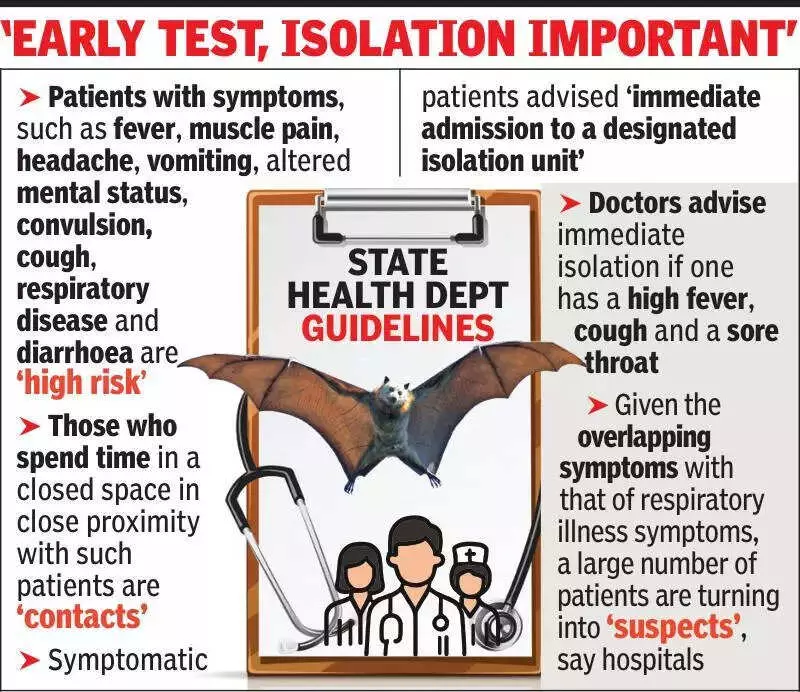
Doctors now advise immediate isolation for anyone presenting with high fever, persistent cough, and sore throat. Many hospitals have responded by forming dedicated screening teams and committees. However, the current season brings a surge of respiratory illness cases, dramatically increasing the number of potential suspects.
State health guidelines classify several symptoms as high risk indicators. These include fever, muscle pain, headache, vomiting, altered mental status, convulsions, cough, respiratory distress, and diarrhea. Individuals who spend time in close proximity with symptomatic patients in enclosed spaces are officially listed as contacts. The protocol mandates immediate admission to designated isolation units for anyone showing these symptoms.

Hospital Responses and Screening Protocols
Raja Dhar, Director of Pulmonology at CMRI Hospital, confirms a substantial increase in symptomatic patients who could potentially be Nipah suspects. "We are seeing a continuous stream of patients with overlapping symptoms, which is typical for this time of year," Dhar explains. "Our approach involves initiating screening tests through our laboratory, but we restrict testing to individuals who display symptoms and have a relevant contact history."
Dhar emphasizes practical considerations, noting that their respiratory intensive care unit operates at full capacity with severe pneumonia patients requiring regular admission. "It would be inappropriate to occupy critical beds unless there is strong evidence suggesting a high probability of Nipah infection," he states.
Nishant Agarwal, Head of Emergency at Charnock Hospital, highlights distinguishing features of Nipah infection. "Beyond typical respiratory symptoms like cough, fever, and breathlessness, Nipah patients often exhibit neurological symptoms leading to altered mental status," Agarwal points out. "Additionally, respiratory distress can escalate rapidly within a very short timeframe, unlike most other respiratory illnesses."
Charnock Hospital has implemented screening for such patients. When a potential case is detected, serological samples undergo PCR testing at their laboratory. Depending on the patient's condition, they are either admitted to an isolation unit or advised home quarantine.
Diagnostic Challenges and Red Flags
Tanmay Banerjee, Head of Critical Care at Manipal Hospital on EM Bypass, describes the diagnostic dilemma. Nipah infection typically begins with high fever, headache, and vomiting, closely resembling common respiratory or viral illnesses, including other forms of viral encephalitis. This similarity makes early identification exceptionally challenging.
"A crucial red flag is the presence of neurological symptoms alongside respiratory distress," Banerjee emphasizes. "This becomes particularly significant when no clear alternative diagnosis exists or when cases appear in clusters. In such scenarios, doctors recommend immediate patient isolation until a definitive diagnosis and management plan can be established."
Banerjee stresses that early screening, prompt isolation, and vigilant monitoring form the essential foundation for preventing further virus spread.
Varied Presentations and Clinical Vigilance
Raja Dhar offers an important caveat, noting that Nipah might present without neurological symptoms. "Patients displaying both respiratory symptoms and signs of encephalitis are prime suspects," Dhar clarifies. "However, there could be numerous individuals without encephalitis who exhibit common respiratory symptoms."
Rajdeep Sen, Consultant Physician at BP Poddar Hospital, describes the infection's potential severity. In critical cases, Nipah can rapidly progress to acute encephalitis, leading to serious neurological complications including seizures and coma.

"We maintain a low threshold for clinical suspicion, especially for patients with relevant exposure history," Sen states. "Our protocol involves immediate isolation, strict adherence to infection prevention and control measures, and close patient monitoring. A significant proportion of patients may eventually require life support systems."
Sen concludes by reinforcing that early clinical vigilance and prompt isolation remain the cornerstone strategies for preventing further virus transmission within the community.
