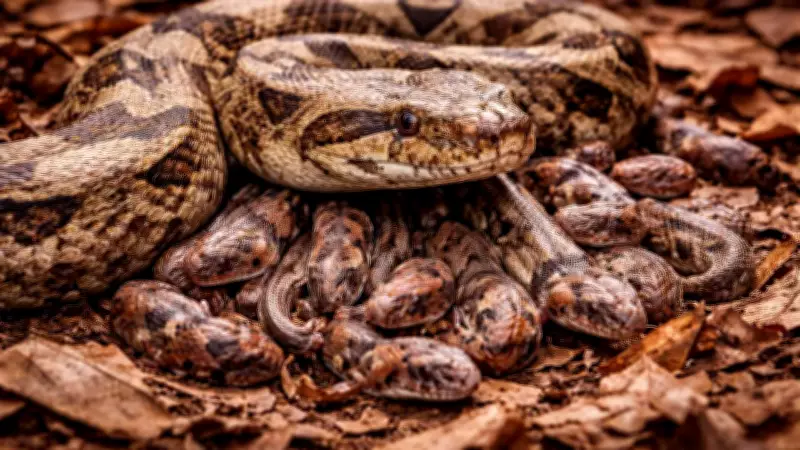
Beyond Egg-Laying: The Fascinating World of Live-Bearing Snakes
Snakes are commonly associated with egg-laying reproduction, and while this assumption holds true for many species, it does not fully capture the remarkable diversity of snake biology. In reality, snakes exhibit various reproductive strategies, including some that give birth to live young without ever laying eggs. This phenomenon, known as ovoviviparity or viviparity, represents a significant evolutionary adaptation that challenges simplistic notions about reptile reproduction.
The Science Behind Live Birth in Snakes
Ovoviviparity and viviparity involve developing embryos remaining within the mother's body until they are ready to emerge as fully formed young snakes. This reproductive method offers substantial advantages, particularly for species inhabiting challenging environments. The developing offspring benefit from protection against adverse weather conditions, predation threats, and temperature fluctuations that would otherwise jeopardize eggs laid externally.
According to the study "Monitoring of the Reproductive Cycle in Captive-Bred Female Boa constrictor: Preliminary Ultrasound Observations," viviparity has emerged as an adaptive mechanism that significantly improves survival rates in harsh environments. The research demonstrates how this reproductive strategy provides developing snakes with a protected, regulated environment during their most vulnerable developmental stages.

Furthermore, maternal thermoregulation plays a crucial role in this process. As detailed in the study "Maternal behavioral thermoregulation facilitated evolutionary transitions from egg laying to live birth," the mother's ability to maintain optimal body temperature directly benefits the developing embryos. This thermal regulation ensures proper development and increases the likelihood of successful births, particularly in cooler climates where external eggs might struggle to maintain adequate warmth.
Why Some Snakes Give Live Birth
The evolutionary shift toward live birth represents a strategic adaptation that enhances offspring survival. By retaining embryos internally, female snakes provide multiple protective benefits:
- Predation Protection: Embryos develop safely within the mother's body, shielded from predators that might consume exposed eggs
- Climate Adaptation: Internal development protects against temperature extremes and adverse weather conditions
- Immediate Survival: Live-born snakes emerge fully developed and ready to fend for themselves immediately after birth
- Thermal Regulation: The mother's body maintains optimal temperature conditions for embryonic development
Notable Live-Bearing Snake Species
Boa Constrictor
The Boa Constrictor stands as one of the most recognizable live-bearing snake species. Native to Central and South America, this non-venomous constrictor gives birth to fully formed offspring capable of independent survival immediately after birth. Remarkably, a single female Boa Constrictor can deliver more than fifty baby snakes in one reproductive cycle, demonstrating the efficiency of this reproductive strategy.
Green Anaconda
As the world's largest snake species, the Green Anaconda practices ovoviviparous reproduction. These massive snakes can give birth to more than twenty offspring simultaneously, with the young emerging well-developed and prepared for immediate independence. This reproductive method proves particularly advantageous for a species inhabiting the challenging aquatic environments of South America.
Garter Snake
Common throughout North America, Garter Snakes represent some of the most widespread ovoviviparous reptiles. Unlike many other snake species, these adaptable creatures give birth to live young rather than laying eggs. Female Garter Snakes typically produce between ten and forty offspring per reproductive cycle, with the young snakes immediately capable of hunting and survival.

Rinkhals
The Rinkhals presents a fascinating exception among venomous snakes, particularly within the cobra family. While most cobras reproduce through egg-laying, this southern African species gives live birth. The Rinkhals develops eggs internally that hatch within the mother's body before live young emerge, representing a unique evolutionary path among venomous snakes.
Gaboon Viper
Among Africa's heaviest and most venomous snakes, the Gaboon Viper practices viviparous reproduction. A female Gaboon Viper can give birth to up to forty offspring, with the young possessing the same distinctive characteristics as their parents and demonstrating immediate survival capabilities from the moment of birth.
Red-Bellied Black Snake
This Australian species exemplifies how live birth facilitates adaptation to cooler environments. The Red-Bellied Black Snake gives birth to between five and eighteen live young, bypassing the egg stage entirely. This reproductive strategy proves particularly beneficial in the variable Australian climate, where temperature fluctuations might compromise externally laid eggs.
Conclusion: Rethinking Snake Reproduction
The diversity of reproductive strategies among snakes reveals a far more complex biological reality than the common assumption of universal egg-laying. Live birth represents a sophisticated evolutionary adaptation that provides multiple survival advantages, including enhanced protection, improved thermal regulation, and increased offspring viability. From the massive Green Anaconda to the common Garter Snake, numerous species have evolved this reproductive method to thrive in diverse environments worldwide.
This exploration of snake reproduction underscores the importance of looking beyond simplistic biological generalizations. The existence of both egg-laying and live-bearing snakes within the same biological order demonstrates nature's remarkable capacity for evolutionary innovation and adaptation to environmental challenges.