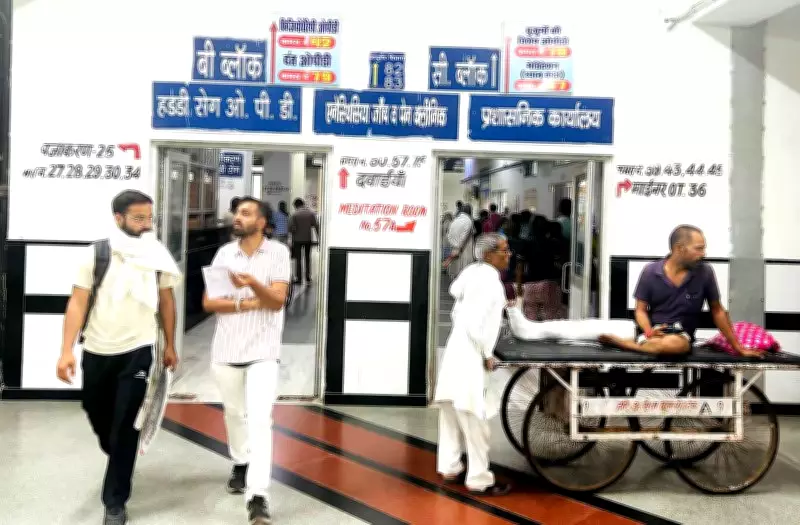
Low enrolment under the Ayushman Bharat scheme at the Post Graduate Institute of Medical Sciences (PGIMS) in Rohtak has raised serious concerns about healthcare access for beneficiaries in Haryana. The scheme, which aims to provide health coverage to economically vulnerable families, has seen a significant shortfall in registration at the premier medical institute.
Current Scenario at PGIMS Rohtak
According to hospital authorities, only a fraction of eligible patients are enrolled under the Ayushman Bharat Pradhan Mantri Jan Arogya Yojana (AB-PMJAY). This has led to many patients either paying out-of-pocket or missing out on treatment. The low enrolment is attributed to a lack of awareness among patients and administrative bottlenecks.
Reasons Behind Low Enrolment
Several factors have contributed to the low uptake. First, many patients are unaware of the scheme's benefits and the process to avail them. Second, the verification process for eligibility is cumbersome, often requiring multiple documents. Third, there is a shortage of dedicated staff to handle enrolment at the hospital. Additionally, some private hospitals in the region are not empanelled under the scheme, limiting options for patients.

Impact on Patients
The low enrolment has a direct impact on patient care. Those without insurance often delay treatment or opt for less expensive alternatives. In critical cases, this can lead to worsening health outcomes. The hospital has reported that many patients from low-income families are unable to afford treatments for chronic diseases like cancer, heart disease, and kidney failure.
Government Response
The Haryana government has acknowledged the issue and is taking steps to improve enrolment. Officials are conducting awareness camps in rural areas and simplifying the registration process. The state health department has also directed PGIMS to set up a dedicated Ayushman desk to assist patients. However, progress has been slow, and the number of enrolments remains low.
Way Forward
To address the challenge, experts recommend a multi-pronged approach. This includes leveraging technology for easy registration, training frontline health workers, and increasing the number of empanelled hospitals. Regular monitoring and feedback mechanisms can also help identify and resolve bottlenecks. The success of Ayushman Bharat hinges on such grassroots-level improvements.
The situation at PGIMS Rohtak highlights the broader challenges in implementing large-scale health insurance schemes in India. While the intent is noble, execution gaps need to be bridged to ensure that the benefits reach the intended beneficiaries. With concerted efforts, the low enrolment trend can be reversed, ensuring that no one is denied healthcare due to lack of insurance.