The Surprising Evolutionary Connection Between Snakes and Lizards
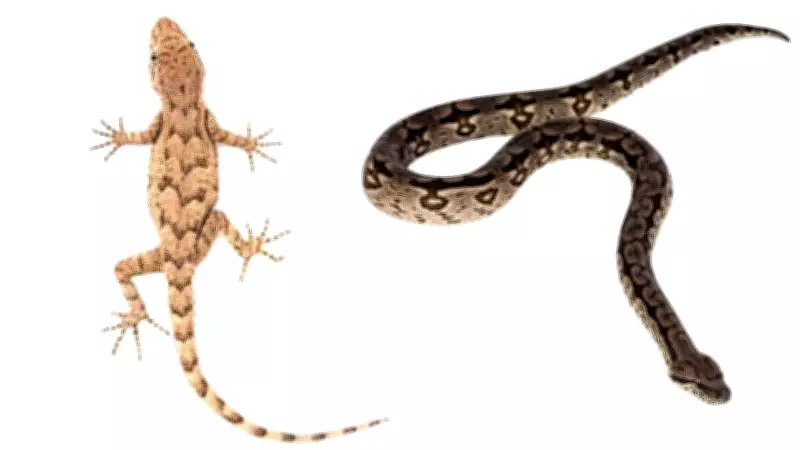
At first glance, snakes and lizards appear to be completely different creatures. Lizards typically possess visible legs, movable eyelids, and external ear openings. Snakes, in contrast, display elongated, limbless bodies and employ unique methods of locomotion. These obvious physical distinctions have led many to assume these reptiles are unrelated. However, extensive scientific investigation reveals a profound evolutionary relationship between these two animal groups.
Shared Ancestry in the Squamata Order
Both snakes and lizards belong to the same taxonomic order called Squamata, which represents the largest group of reptiles on Earth. According to research published in the Encyclopaedia Britannica, this order encompasses thousands of species inhabiting diverse environments worldwide. The classification within Squamata indicates that snakes and lizards share a common evolutionary ancestor that lived millions of years ago.
This ancestral connection explains why some lizard species exhibit snake-like characteristics and why both groups maintain certain biological traits despite their divergent appearances. The evolutionary relationship demonstrates how natural selection can produce dramatically different body forms from the same ancestral lineage.

Key Biological Similarities
Despite their visual differences, snakes and lizards share numerous fundamental biological characteristics:
- Scaled Skin: Both possess protective scales that minimize water loss and provide physical defense
- Skin Shedding: Regular shedding of the outer skin layer facilitates growth and parasite removal
- Ectothermic Nature: As cold-blooded animals, both rely on external heat sources to regulate body temperature
- Structural Similarities: Their skeletal and muscular systems show significant evolutionary parallels
Evolutionary Divergence and Differences
Over millions of years, environmental adaptations have created the distinct features we observe today:
- Limbs: Most lizards retain functional legs while snakes have completely lost their limbs through evolution
- Eyelids: Lizards possess movable eyelids whereas snakes have developed transparent protective scales
- Ears: Lizards typically have visible external ear openings while snakes lack externally apparent ears
These differences represent specialized adaptations to specific ecological niches and survival strategies developed over evolutionary time.
The Evolutionary Origin of Snakes
Scientific evidence strongly indicates that snakes evolved from lizard-like reptiles. Research published by the Environmental Literacy Council reveals that fossil records and anatomical studies demonstrate early snake ancestors possessed small, lizard-like limbs that gradually disappeared through evolutionary processes. This gradual transformation explains how modern snakes developed their characteristic elongated, limbless bodies while maintaining their fundamental reptilian characteristics.
Legless Lizards: Nature's Imposters
Some lizard species have evolved to resemble snakes so closely that they're commonly called "legless lizards." According to the Encyclopaedia Britannica, certain lizard species have lost their limbs through evolutionary adaptation to specific environments. Despite their snake-like appearance, these creatures remain true lizards, retaining characteristic features such as eyelids and ear openings that distinguish them from actual snakes.
Genetic Confirmation of Relationship
Modern genetic research has provided definitive confirmation of the evolutionary connection between snakes and lizards. DNA analysis conducted by researchers and published by the Environmental Literacy Council demonstrates that snakes and lizards belong to the same evolutionary group and share a common ancestor. This genetic evidence confirms that these reptiles are not separate evolutionary lines but closely related branches of the same family tree.

Environmental Influences on Evolution
Environmental changes over millions of years have significantly influenced the evolutionary paths of these reptiles. Snakes developed specialized adaptations for efficient limbless movement, while various lizard species evolved capabilities for climbing, rapid running, or arboreal lifestyles. The Encyclopaedia Britannica notes that these diverse adaptations represent the results of natural selection operating over extended geological time periods.
Scientific Implications
The evolutionary relationship between snakes and lizards illustrates how dramatic morphological differences can emerge from common ancestry. This connection underscores why scientists classify animals based on evolutionary relationships rather than superficial appearances alone. Understanding these connections provides valuable insights into evolutionary processes and the remarkable adaptability of life on Earth.