

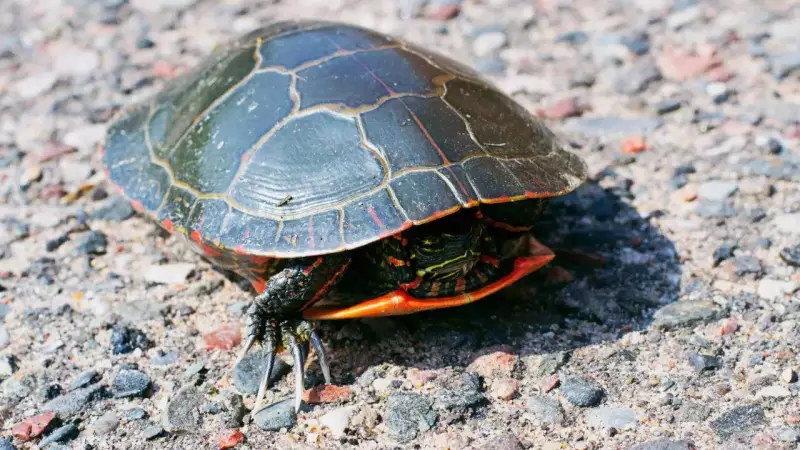
The Science of Turtle Head Retraction: More Than Just a Cartoon
Have you ever wondered if turtles can truly pull their heads into their shells, as often depicted in cartoons and children's stories? The answer is far more complex than a simple yes or no, involving a fascinating interplay of biology, evolution, and survival strategies that vary across different turtle species.
The Shell: A Biological Marvel Beyond Protection
As highlighted in a study titled "Positive or negative? The shell alters the relationship among behavioural defence strategy, energy metabolic levels and antioxidant capacity in freshwater turtles", published in PubMed Central, the turtle's shell is not merely a protective covering. It is an integral part of the skeletal system, composed of actual ribs, vertebrae, and dermal bone that have evolved over hundreds of millions of years. This unique structure serves multiple functions beyond defense, influencing behavior and physiology.
Contrary to popular belief, not all turtles can retract their heads into their shells. Some species pull their necks straight back, others bend them sideways under the shell's rim, and a few lack this ability entirely. These variations stem from adaptations to specific living conditions and predator threats, showcasing the diversity within the turtle family.

How Turtles Retract Their Heads: Straight or Sideways
Turtle neck retraction relies on distinctive cervical features, leading to classification into two main categories:
- Cryptodira: These turtles, including most land tortoises and aquatic species, retract their heads straight backwards. Their neck vertebrae are widely spaced, allowing them to form an S-shaped curve as they withdraw into the shell. This "Vertical Tucking" enables complete concealment within the bony plates of their protective shell.
- Pleurodira: Known as side-necked turtles, these species pull their heads sideways under the shell rim. This lateral retraction provides an alternative defense mechanism that, like straight retraction, offers protection without relying on speed to evade predators.
Both methods exemplify elegant evolutionary solutions for survival, demonstrating how form follows function in the natural world.
Why Some Turtles Cannot Fully Retract Their Heads
Interestingly, not all turtles possess the ability to fully retract their heads. For instance, sea turtles have streamlined, lightweight shells optimized for aquatic movement, which compromises their retraction capability. Similarly, other turtle species may lack the necessary flexibility or shell structure to hide within their shells, highlighting how adaptations for specific environments can trade off defensive traits.
Did Head Retraction Evolve Solely for Protection?
While it might seem logical that head retraction evolved primarily for protection, scientific research reveals a more nuanced story. Fossil studies and developmental research indicate that the evolution of the shell and neck retraction occurred long before these features were perfected for defense. For example, a study in Current Biology illustrates how early turtles developed ribcage and spinal column structures that later facilitated shell formation and neck retraction.
Further investigations into shell mechanics show that head-neck retraction influences the stresses a shell endures when faced with predator attacks. This suggests that the evolution of neck retraction and the shell progressed in tandem, driven by survival needs but also potentially linked to other factors like habitat shifts or dietary changes.
Evolutionary Insights from Turtle Anatomy
Research into turtle anatomy and evolution offers valuable insights into how these reptiles have thrived for millions of years. Studies reveal that early turtle precursors had expanded ribs and shoulder regions well before the modern neck retraction mechanism developed. These innovations may have been associated with more than just predator avoidance, possibly relating to lifestyle adaptations such as moving to new habitats or adopting different diets.

This adaptability underscores the dynamic nature of turtle evolution, where traits like head retraction emerged as part of a broader suite of characteristics enabling survival and diversification. By understanding these evolutionary pathways, we gain a deeper appreciation for the complexity and resilience of turtles in the face of environmental challenges.
