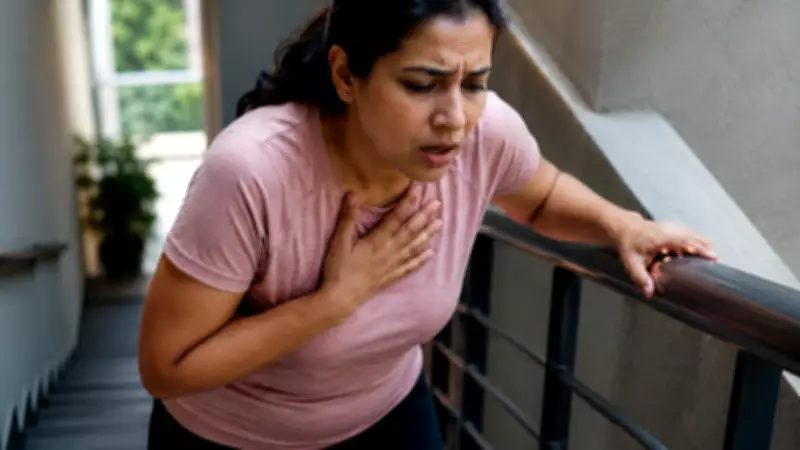
You are walking up the stairs like you have done a thousand times before, and suddenly you are winded. Really winded. The kind that makes you pause at the landing. You tell yourself you are just tired, maybe you need to exercise more. Everyone gets out of breath sometimes, right?
Here is the problem: that thinking can cost you. According to Dr. Rajesh Rajani, Consultant Interventional Cardiologist and Structural Heart Interventions Specialist at P.D. Hinduja Hospital and Medical Research Centre in Mumbai, breathlessness is often dismissed early on as tiredness, stress, getting older, weight gain, or lack of fitness. But persistent breathlessness during everyday tasks should not be ignored, especially in older people.
This is where most people get it wrong. We normalize the gradual erosion of our own capability and convince ourselves it is just part of aging. But that is dangerous thinking.

The Slow Decline You Do Not Notice
The insidious part about breathlessness as a warning sign is how slowly it creeps up on you. Your body does not suddenly stop working. Dr. Rajani explains that many people slowly get used to these changes, not realizing that their body might already be flagging an underlying heart problem. Someone who used to walk up stairs easily might start avoiding them, walking shorter distances, or stopping often to catch their breath. Because these changes happen slowly over time, diagnosis is often delayed.
Think about that. You used to take the stairs. Now you do not. But you do not think it is a sign of illness—you just think you are choosing to take the elevator. You walk shorter distances on your weekend strolls. Not because your body is telling you something is wrong, but because that is how far you feel like walking today. These tiny behavioral shifts are actually your heart trying to communicate with you through your lungs.
Here is what makes it worse: individuals reporting dyspnea (breathlessness) were 2 to 9-fold more likely to die of diseases that involve the heart and/or lungs relative to those without dyspnea. That is not a small number. That is your body potentially waving a massive red flag that you are missing.
The Heart Conditions Behind Shortness of Breath
Dr. Rajani specifies what kind of heart problems can show up as breathlessness: blocked arteries, heart valve disease, irregular heart rhythms, or weakening of the heart muscles. Each of these is serious. Coronary artery disease develops when plaque builds up inside the heart's arteries, narrowing vessels and limiting blood flow to the heart muscle. When the heart receives less oxygenated blood, it cannot pump efficiently, and you may feel short of breath during exertion. You might not even feel chest pain—for many people, especially women, breathlessness is the only symptom.
Heart valve disease occurs when valves do not open or close properly, struggling to maintain circulation and leading to symptoms like breathlessness, fatigue, or lightheadedness. Irregular heart rhythms, also called arrhythmias, can reduce the heart's efficiency and affect how blood is pumped throughout the body. Weakening of the heart muscle means your heart simply cannot do the work anymore.
Chest pain and dyspnea are mainly linked to future heart attack, atrial fibrillation, and heart failure. Even mild chest symptoms are linked to long-term risk of heart problems, although less so than moderate to severe symptoms.
The Waiting Game Nobody Should Play
Dr. Rajani makes a crucial point that most people ignore: often the patient only presents when discomfort starts affecting daily life. But early recognition of these symptoms and evaluation can help identify underlying health risks earlier and prevent more serious complications later.
If you are short of breath going up just a few stairs, that may indicate a heart problem. Not maybe. May indicate. That is medical speak for you should take this seriously and get it checked out. There is a difference between occasional breathlessness and a pattern. One is normal. The other is your body asking for help.

What You Should Actually Do
Stop making excuses for your symptoms. If you find yourself getting winded doing things that did not used to wind you, that is not a sign you are getting older. That is a sign you should call your doctor. Heart disease symptoms for women can vary from those experienced by men, with women being more likely to have shortness of breath and nausea.
If you experience increasing shortness of breath and are tolerating less and less activity, contact your doctor or nurse for advice. If it is sudden and severe—if you wake up gasping, cannot breathe lying down, or your lips or fingertips turn blue—that is emergency room time, not appointment time.
The bottom line from Dr. Rajani: early identification of these symptoms and their assessment may lead to earlier detection of underlying health risks and prevention of more serious complications later.
Your breathlessness is not something to normalize or ignore. It is your heart talking. You just have to be willing to listen.