Nature does not always follow the same rulebook. While many animals rely on a brain to think, sense danger, or move, some creatures survive perfectly well without a centralised brain. Instead, they use strategies such as cellular-level coordination, diffuse nerve nets, nerve rings and radial nerves, or colony-level cooperation. These fascinating animals show that survival in the natural world can depend on efficiency, not complexity. Here are seven such animals that survive without a brain:
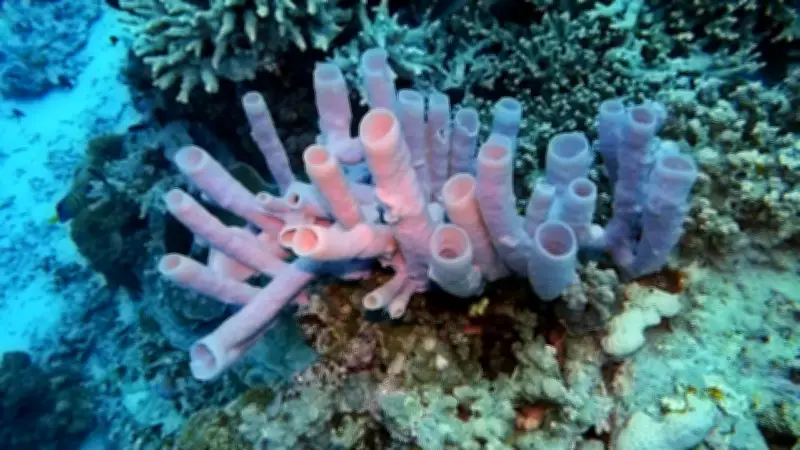
Sea Sponge
Sea sponges are among the simplest animals on Earth. Adult sponges (Porifera) lack nerve cells and a nervous system, meaning they have no brain and rely on cellular-level processes and water flow for feeding and gas exchange. They survive by filtering water through their bodies to collect food and oxygen. Even without a brain, sponges serve an important task as they help clean water and support marine ecosystems.
Jellyfish
Jellyfish are among the most popular examples of brainless organisms. Jellyfish lack a centralised brain but rely on a diffuse nerve net that detects light, touch and motion. This rather simple mechanism enables jellyfish to swim, sting their prey, and avoid predators. The soft and buoyant body of these organisms shows how well a simple nervous system can help with survival in the water.

Hydra
The tiny hydras represent one more example of brainless organisms. Hydras lack a centralised brain and use a nerve net for simple sensing and coordinated contractions. They capture prey with tentacles and can regenerate lost parts, allowing small fragments to regrow into complete animals.
Coral
Corals are living animals, not rocks and they survive without a brain. Like other cnidarians, they have a diffuse nervous system rather than a centralised one. Coral polyps use this simple system to respond to light, water movement and food. In large colonies, corals build reefs that shelter countless marine species showing how teamwork can replace individual intelligence.
Sea Anemone
Sea anemones may look like underwater flowers, but they are active predators. They do not have brains; instead, they rely on a nerve net that helps them detect nearby prey and danger. Their tentacles carry stinging cells that paralyse small animals. Many sea anemones also form useful partnerships with other species, including clownfish which helps them survive in the wild.
Comb Jelly
Comb jellies are delicate, shimmering ocean animals that also lack a brain. They have a diffuse nervous system rather than a centralised brain. Their bodies are built for drifting and gentle movement and their nerve network helps them react to their surroundings. Though they look simple, comb jellies are ancient animals with a very successful survival strategy.
Starfish
Starfish or sea stars also survive without a brain. They have no head, but they do have a nerve ring and nerves extending into each arm, which help them move and respond to their surroundings. Some species can even regenerate a lost arm, and in certain cases, grow an entirely new sea star from part of a limb. These seven creatures show that life does not always need a brain to survive. Some depend on nerve nets, some on nerve rings, and some on colony cooperation. Their survival shows how nature can build many different solutions for the same challenge. In the animal world, adaptability often matters more than complexity.