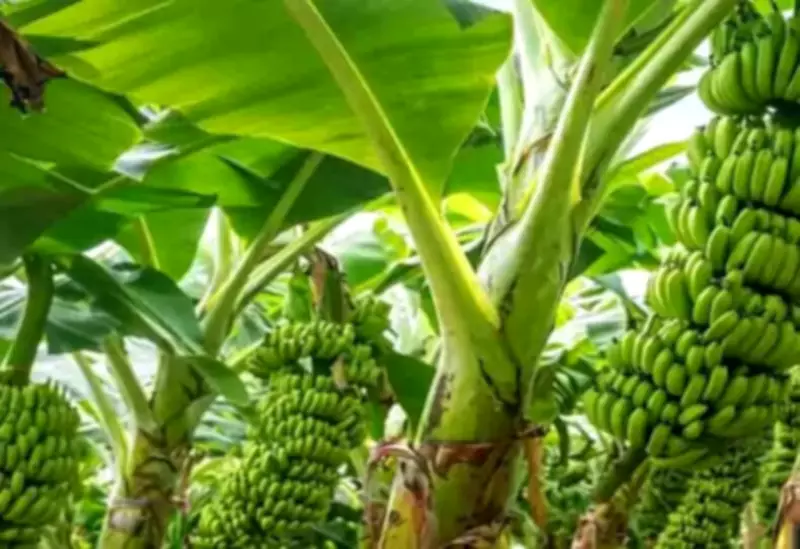
Prayagraj: Farmers in Kaushambi are increasingly turning to organic farming methods for banana cultivation, particularly in the riverbank areas along the Ganges. This shift is part of the broader 'Namami Gange' initiative, which aims to discourage the excessive use of chemicals and pesticides in agriculture.
Growing Inclination Towards Organic Practices
Dayaram Maurya, a member of the Banana Growers' Association, highlighted that the overuse of chemical fertilizers in fields near the Ganga has been steadily depleting soil fertility. In response, farmers in these riverbank zones are progressively transitioning to organic banana cultivation. The state government is also making persistent efforts to promote banana farming along both banks of the river, covering a zone of approximately five kilometers, as part of its mission to make the Ganga pollution-free.
Positive Outcomes and Expansion
District Horticulture Officer (Kaushambi) Awadhesh Mishra reported that these efforts are yielding positive results. This year alone, farmers have initiated organic banana cultivation across about 50 hectares within the Ganga basin. Kaushambi, known as 'Mini Bhusawal', is home to over 2,500 farmers who earn substantial income through banana cultivation. Mishra added that banana farming currently spans 5,800 hectares in the district. The expansion of banana cultivation in the alluvial floodplains of the Ganga is expected to offer dual benefits: increasing the total area under banana farming and significantly improving soil health.

Role of Tissue Culture Laboratory
A state-of-the-art tissue culture laboratory established in Chilla Sahwaji village at a cost exceeding Rs 2 crore is poised to play a pivotal role in supporting these initiatives. Previously, banana growers faced significant challenges in procuring tissue-culture-raised saplings. Frequent delays in the arrival of saplings from Maharashtra, West Bengal, and other states often led to crop losses worth lakhs of rupees. With the new laboratory, farmers in Kaushambi and neighboring districts now receive high-quality tissue-culture banana saplings in a timely manner, ensuring better crop yields and reduced losses.
This development marks a significant step forward for sustainable agriculture in the region, aligning environmental goals with economic benefits for local farmers.