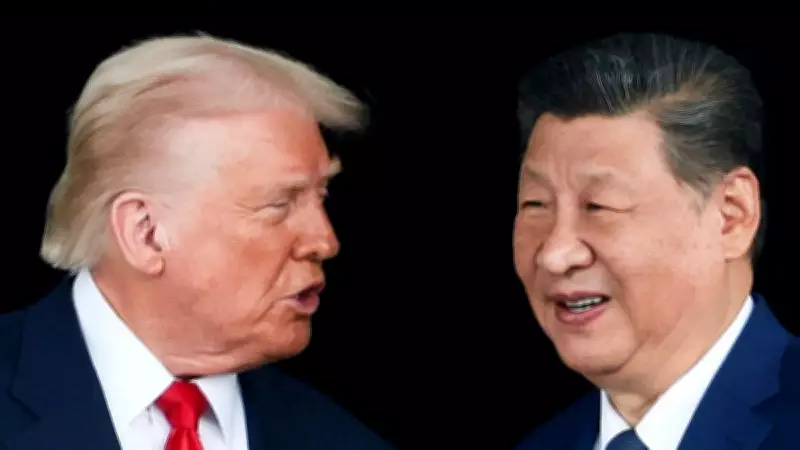
The ongoing tensions between the United States and China have drawn comparisons to the Cold War era, particularly the period when trade between the US and the Soviet Union was heavily restricted. This historical parallel raises a critical question: Can Washington and Beijing escape the Thucydides Trap?
The Thucydides Trap Explained
The term "Thucydides Trap" refers to the likelihood of conflict when a rising power challenges an established one. Coined by political scientist Graham Allison, the concept draws from the ancient Greek historian Thucydides' account of the Peloponnesian War between Athens and Sparta. According to Allison, in 12 of 16 historical cases, such power transitions have led to war.
Current US-China Dynamics
Today, the US-China relationship is characterized by intense competition in trade, technology, and military influence. The Trump and Biden administrations have imposed tariffs and export controls on Chinese goods, while China has retaliated with its own restrictions. This economic decoupling mirrors the Cold War's division of global markets into capitalist and communist blocs.

However, there are key differences. Unlike the Soviet Union, China is deeply integrated into the global economy, with extensive trade ties to the US and its allies. This interdependence complicates the narrative of an inevitable conflict. Both nations have incentives to avoid a full-scale confrontation, given the potential for catastrophic economic and military consequences.
Historical Precedents
Examining past power transitions offers insights. The peaceful rise of the United States as a global power in the early 20th century is one example of avoiding the trap. Similarly, the end of the Cold War saw the Soviet Union collapse without direct war with the US. These cases suggest that diplomacy, institutional frameworks, and mutual recognition of interests can prevent conflict.
Pathways to Peace
To escape the Thucydides Trap, both Washington and Beijing must prioritize dialogue and cooperation. Key areas include climate change, global health, and nuclear non-proliferation. Establishing clear communication channels and crisis management mechanisms can reduce the risk of miscalculation. Additionally, promoting people-to-people exchanges and academic collaboration can foster mutual understanding.
The world watches as these two giants navigate their relationship. While historical patterns offer cautionary tales, the future is not predetermined. With strategic foresight and a commitment to peaceful coexistence, the US and China can write a new chapter in global history.