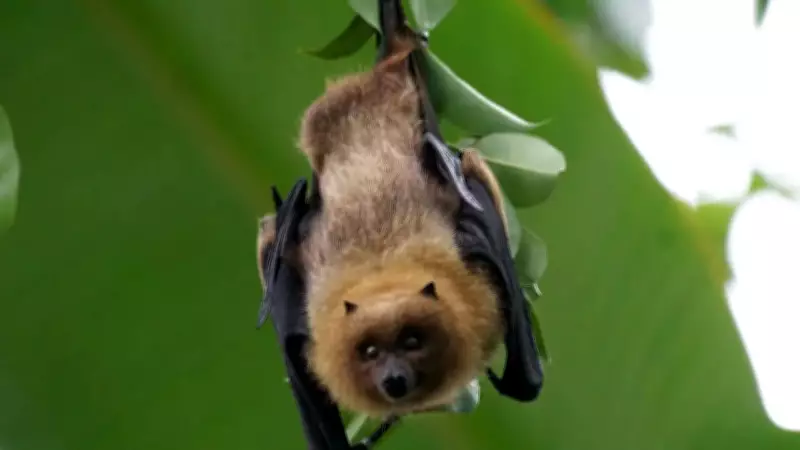
The animal kingdom is filled with species that perceive sound in ways far beyond human capability. While humans rely heavily on sight, many animals depend on hearing for survival. A forest at night, for example, carries layers of sound that humans barely notice: insect vibrations, shifting bark, distant movement underground, and echoes bouncing through branches. Hearing warns of danger, guides migration, helps locate food, and keeps social groups connected across enormous distances. The range of hearing varies wildly. Some species detect high ultrasonic frequencies completely beyond human hearing, while others specialize in deep vibrations traveling through land or water. According to the International Fund for Animal Welfare (IFAW), here is a list of animals with extraordinary hearing abilities.
1. Bats
Bats are among the best-known examples of advanced hearing because of echolocation. They release high-frequency calls and interpret the returning echoes to navigate and hunt in darkness. The level of detail is remarkably precise. Tiny insects, narrow branches, and moving obstacles can all be mapped through sound alone. Many bat calls sit far above the human hearing range, which is why large colonies often seem silent to nearby people.
2. Elephants
Elephants rely heavily on low-frequency sound. Their deep rumbles can travel across several kilometers, both through the air and along the ground itself. Other elephants may detect these vibrations through sensitive structures in their feet before the sound becomes audible. This long-distance hearing plays a major role in herd communication and movement across wide landscapes.

3. Owls
Owls are built for directional hearing. Their ears are positioned unevenly on the skull, allowing them to detect slight differences in timing between sounds reaching each ear. That small adjustment helps them pinpoint prey hidden beneath snow, leaves, or grass, often in complete darkness. Some owls can strike accurately using sound almost alone.
4. Dogs
Dogs hear frequencies much higher than humans can. Sharp electronic noises, faint whistles, and distant movement often catch their attention long before people notice anything unusual. Ear shape also changes how sound is collected. Breeds with upright ears tend to track direction differently from breeds with hanging ears.
5. Dolphins
Visibility underwater is limited, so dolphins depend heavily on sound. They use echolocation by producing clicking noises and reading the returning echoes. This allows them to judge distance, shape, and movement beneath the surface. Their hearing system is adapted specifically for water, with sound traveling partly through the jaw toward the inner ear.
6. Whales
Whales communicate across extraordinary distances using low-frequency calls that can travel through entire stretches of ocean under suitable conditions. Different species use different frequency ranges. Some vocalizations fall below normal human hearing entirely. In deep water, sound becomes more reliable than vision.
7. Cats
Cats possess extremely sensitive hearing, especially at higher frequencies. This helps them locate small prey such as rodents, whose movements create tiny noises in grass or walls. Their ears rotate independently, allowing rapid sound tracking from multiple directions at once.
8. Horses
Horses depend on hearing as an early warning system. Their large movable ears constantly shift position to monitor surroundings, often reacting to distant movement before visual confirmation appears. Because horses are prey animals, quick sound detection remains closely tied to survival instincts.
9. Rats
Rats communicate using ultrasonic sounds that humans cannot hear naturally. Young rats produce high-pitched calls when distressed, while adults use different vocal patterns during social interaction. Their hearing sensitivity also helps them navigate dark or confined environments where vision is limited.
10. Moths
Certain moth species evolved ears mainly to detect hunting bats. Since bats use ultrasonic calls, moths capable of hearing those frequencies gain a brief chance to escape. Some moths suddenly drop from the air after detecting bat calls. Others attempt erratic flight patterns to avoid capture.