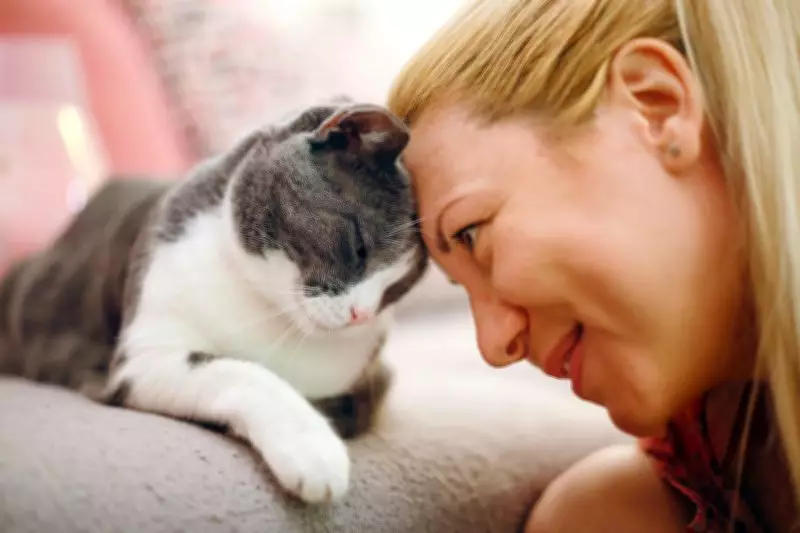
A new study reveals that domestic cats exhibit age-related brain deterioration patterns comparable to those in humans, potentially providing a valuable model for studying human ageing and associated diseases. The research, published in the journal Biology Open, suggests that a 15-year-old cat corresponds biologically to a human in their 80s in terms of brain ageing.
Study Methodology and Data
Scientists from the University of Bath in the UK, Auburn College of Veterinary Medicine in the US, and the National Veterinary School of Toulouse in France analyzed 3,754 data points across humans, cats, and other mammalian species. These data included brain imaging, blood chemistry, disease-related patterns, and behavioural milestones such as eye opening and onset of playful behaviour.
The team used structural magnetic resonance scans from pet and colony cats to quantify age-related brain metrics, including overall shrinkage, expansion of the ventricles (hollow spaces inside the brain filled with fluid), and other alterations.

Key Findings on Brain Ageing
“Cat and human brains exhibit similar age-related patterns of brain atrophy. We used common patterns of brain change and other health-related metrics to generate age alignments across the lifespan to late stages of life (e.g. an 80-year-old human equates to a 15-year-old cat),” the authors wrote.
These brain changes are associated with conditions commonly linked to ageing. Both humans and older cats can develop age-related neurodegenerative changes later in life.
Lead researcher Brier Rigby Dames from the University of Bath stated, “It was interesting to see that cats show patterns of age-related brain atrophy similar to those observed in humans. These findings add to growing evidence that companion animals can provide valuable insights into ageing.”
Implications for Ageing Research
The researchers developed a biological model based on measurable age-related changes, revealing that ageing in both species does not progress at a constant rate but instead speeds up or slows down at different life stages. They found that a cat in its mid-teens corresponds to a human in their 80s, and ageing patterns later in life align particularly closely between the two species.
Co-author Dr. Ryan Gibson, a veterinary neurologist at Auburn University’s College of Veterinary Medicine, noted that cat owners are increasingly requesting advanced brain imaging for pets to diagnose disease, providing an opportunity to study ageing animals living alongside humans in real-world environments.
Rigby Dames added, “There’s potential to develop large-scale veterinary health databases for companion animals, analogous to human health databases such as the UK Biobank. These kinds of resources could enhance our ability to study ageing and disease using real-world clinical and owner-reported data collected across species.”
The study highlights that shorter lifespans of cats allow factors affecting ageing to be studied at a much faster rate than in humans, offering a practical alternative to laboratory animals where diseases are artificially induced.