Film as a Scalable Facilitator for Life-Skills Education
After two decades of designing life-skills curricula for schools, Syed Sultan Ahmed faced a challenge familiar to educators worldwide: a great facilitator could transform a classroom, but scaling that same quality across thousands of schools was difficult. The experience of a child often depended on who walked into the classroom that day. Finding a way to deliver the same emotional connection, regardless of location or language, became the challenge. The answer was cinema.
Founder of School Cinema, Ahmed has spent the last 15 years turning film into pedagogy. His belief is simple: a well-made film can deliver the warmth, timing and emotional honesty of an excellent facilitator every single time it plays — whether in a metropolitan school or a small-town classroom. Cinema also creates a safe distance for difficult conversations. A child who may not say “I feel alone” may speak openly about a character experiencing loneliness. Through that conversation, children often begin reflecting on their own lives.
From Entertainment to Reflection: The Core Shift
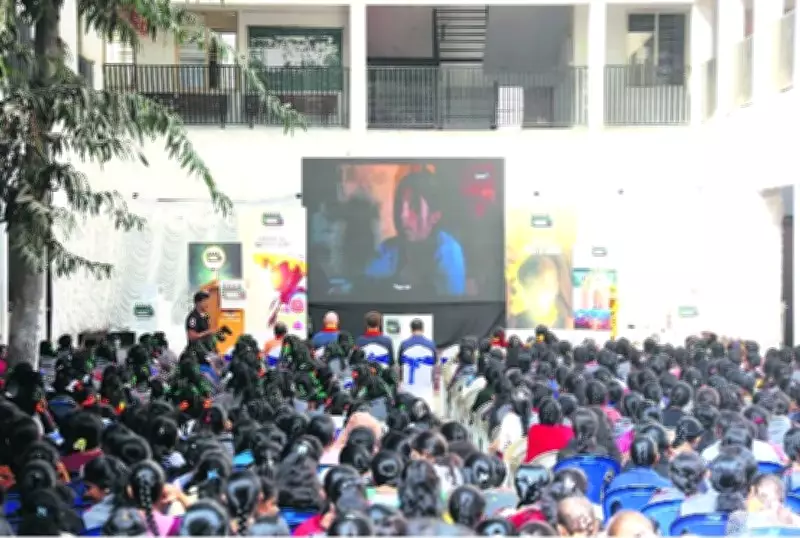
Today, School Cinema has reached millions of students across 16+ countries, built an original library of films for children, parents and teachers, and earned national and international recognition. But Ahmed says the most important achievement is not the numbers. “We moved film from entertainment to reflection, from the auditorium to the classroom,” he says.

In this conversation with The Tribune, Syed Sultan Ahmed talks about why cinema became his most reliable teacher, how he convinced schools to give films a place in the timetable, and why future generations will need empathy and ethical judgement as much as academic knowledge.
Consistency Across Classrooms: The Original Problem
Ahmed explained the problem he was trying to solve. The idea did not begin as a theory. It came from more than 20 years of working directly with schools. He was building life-skills curricula and delivering them through trained facilitators. The approach worked when the right facilitator was present. A skilled person could create a powerful classroom experience, encourage reflection and connect with students. But when they expanded to thousands of schools, they faced a major challenge: consistency. The same curriculum could create completely different outcomes depending on who delivered it.
“The question was: how do we ensure that a child in a metro city and a child in a small town receive the same quality of learning?” Ahmed said. “I needed something that carried the strengths of a great facilitator — empathy, timing, emotional connection and the ability to open difficult conversations. Film became that medium. A good film performs consistently. It does not depend on the mood, confidence or experience of the person presenting it. Cinema became a facilitator that could scale.”
Beyond scale, there was another challenge. Children often find it difficult to talk directly about fear, bullying, body image, family issues or insecurity. A film provides a layer of comfort. They may not talk about themselves immediately, but they will discuss a character going through a similar experience. That discussion becomes an entry point for self-awareness.
Why Cinema Surpasses Textbooks
Ahmed elaborated on what a film can do that a textbook cannot. “Cinema speaks to children in a language they already understand — the language of stories. My work has always been at the intersection of education, storytelling and human development. Across more than 60 countries, I have seen how naturally children respond to stories. A film captures attention, but more importantly, it creates emotional engagement. A textbook can explain empathy. A film can help a child experience it.”

Cinema allows children to watch choices, emotions and consequences unfold. A child may not want to discuss personal fears or struggles, but they will often discuss a character facing similar challenges. Slowly, that conversation becomes a reflection of their own experiences. “That is the difference between instruction and education. Cinema does not preach; it invites children to think,” Ahmed said. Film brings together visuals, sound, emotions and narrative. Values such as honesty, courage, responsibility and compassion are difficult to teach through instruction alone. But when children see them represented on screen, the learning becomes deeper and more lasting.
Convincing Schools to Take Film Seriously
Creating the model was one challenge. Convincing schools that film belonged in education was another. For many schools, cinema meant entertainment — a reward, a break or a special activity. The idea that a film could become part of serious classroom learning was new. The question from principals was straightforward: why should 25 minutes of watching a film replace 25 minutes of syllabus? The answer was that a carefully selected film, supported by discussion, could influence how children think and feel in ways a textbook often cannot.
Parents also wanted to know whether it would improve marks. Over time, they realised that a child who is emotionally secure and self-aware is better prepared to handle academic pressure. Teacher readiness was another important factor. Teachers are trained to provide answers, but life-skills conversations require them to create space for children to explore their own thoughts. Many teachers told Ahmed that discussing emotions felt more challenging than teaching formulas. So teacher orientation became a key part of their work — not just how to show a film, but how to ask questions, listen carefully and allow meaningful conversations to develop.
The biggest shift happened when schools saw the impact themselves: a quiet student speaking up, a difficult issue being discussed safely, or a classroom becoming more open. After that, the question changed from “Why should we do this?” to “How can we do more?”
Success Measured in Better Conversations
Ahmed defined success in the classroom. “For me, success is better conversations. We have seen students discuss issues they would rarely raise otherwise — bullying, self-esteem, peer pressure, honesty, failure, relationships and emotional wellbeing. Education should create spaces where children can think, question and express themselves. That is what every child needs.”
Teachers also tell Ahmed that they learn from these conversations. By observing how students respond to films, they understand what children value, fear and carry silently. No test score can provide that insight. School Cinema has reached millions of students across thousands of schools, created an original film library and received national and international recognition. But the achievement Ahmed values most is changing the perception of film: “We moved it from entertainment to reflection, from the auditorium to the classroom.”
Expanding to Government Schools and Regional Languages
Ahmed has visited classrooms from Bengaluru to Sochi to Dubai and across 16+ countries. One thing is clear: the future of education requires more than academic knowledge. Children today are growing up with artificial intelligence, social media, climate concerns and constant information overload. Marks will matter, but they will not be enough. Future generations will need empathy, critical thinking, adaptability, communication skills, ethical judgement and emotional strength. These qualities cannot be developed through textbooks alone. The National Education Policy 2020 has created space for experiential and competency-based learning. The challenge now is taking that vision into classrooms.
The next priority for School Cinema is government schools. Much of their work so far has been in private CBSE and ICSE schools, but the need exists everywhere. A child who needs a safe way to discuss fear or bullying is not only in a well-resourced school. That child is also in a government school in a small town. “A good story does not ask what fee a parent pays,” Ahmed said. “Our vision is to take School Cinema into government schools and regional languages because film can cross language barriers while preserving emotional truth. A child learning in Kannada, Tamil, Marathi or Assamese deserves the same opportunity as any other child.”
At the same time, Ahmed believes film pedagogy is an Indian innovation ready for global classrooms. “We built it, tested it and refined it here over 15 years. Now it can travel to the world.”