

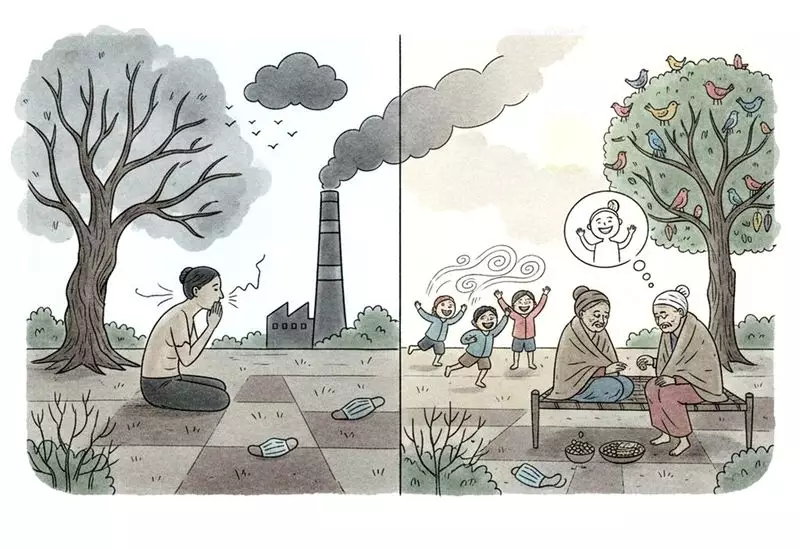
Delhi's Air Pollution Crisis: A Struggle for Breath in the Capital
Delhi, a city historically revered as a land of 'prana' or life force, now faces a grim reality. Residents are gasping for breath amid dangerously high levels of air pollution. This environmental crisis has turned daily life into a health hazard for millions.
The Historical Irony of Prana
In ancient traditions, Delhi was often associated with prana, symbolizing vitality and well-being. Today, that image stands in stark contrast to the choking smog that blankets the city. The air quality index frequently hits hazardous levels, making it difficult for people to breathe freely.
Many residents report persistent coughing, eye irritation, and respiratory problems. Children and the elderly are particularly vulnerable to these conditions. The situation has forced schools to close and outdoor activities to be limited on bad air days.

Key Factors Behind the Pollution
Several factors contribute to Delhi's severe air pollution. Vehicle emissions from the city's dense traffic play a major role. Industrial activities in and around the capital release harmful pollutants into the atmosphere.
Agricultural burning in neighboring states during certain seasons worsens the problem. Construction dust and waste burning add to the toxic mix. Weather conditions, such as low wind speeds, often trap pollutants close to the ground.
Health Impacts and Public Response
The health consequences of this pollution are alarming. Doctors note a rise in cases of asthma, bronchitis, and other respiratory diseases. Long-term exposure increases the risk of heart conditions and lung cancer.
Public response has included widespread use of air purifiers and masks. Many citizens advocate for stricter environmental policies. The government has implemented measures like the odd-even vehicle rule and promoted public transport.
However, these efforts often fall short during peak pollution periods. Experts call for more sustainable solutions to tackle the root causes.
Looking Ahead: Challenges and Hopes
Addressing Delhi's air pollution requires coordinated action. Reducing dependency on fossil fuels is crucial. Promoting renewable energy sources can help cut emissions from power plants.
Improving waste management systems may reduce burning practices. Encouraging green cover through tree plantation drives could aid in filtering the air. Public awareness campaigns emphasize individual actions like using public transport.
The journey to cleaner air is long, but essential for restoring Delhi's connection to prana. Residents hope for a future where breathing easy becomes the norm again in the capital.






