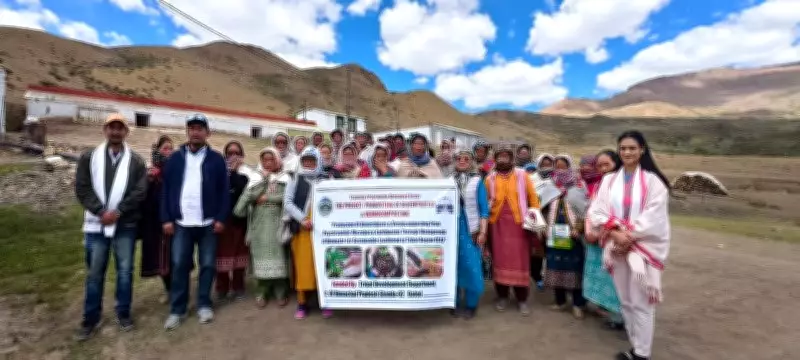
Himachal Pradesh University (HPU), Shimla, recently concluded a six-day training-cum-workshop programme on biofertiliser and vermicompost production at Komic village in Spiti Valley, Lahaul-Spiti district, one of the world's highest inhabited villages. The initiative, funded by the Tribal Development Board of the Himachal Pradesh government, aims to promote sustainable agriculture and livelihood opportunities in tribal regions through innovative biotechnology.
Workshop Leadership and Project Focus
The workshop was led by Neelam Kumari, Assistant Professor at HPU's Department of Biosciences and Principal Investigator of the project titled “Production of biofertilisers and vermicompost from psychrophilic microbes and earthworms through management of biowaste for sustainable livelihood in tribal regions of Himachal Pradesh.” Ravi Kant, Assistant Professor at the Department of Biotechnology, served as Co-Principal Investigator.
Kumari explained that the project focuses on developing cold-tolerant microbial biofertilisers and earthworm-based vermicomposting technologies suited to the harsh climatic conditions of high-altitude areas like Spiti. She noted that conventional microbial formulations often fail in sub-zero temperatures, making locally adapted biological solutions essential for sustainable farming.

Participants and Practical Training
The training attracted local farmers, members of women's self-help groups, rural youth, and representatives of agricultural extension agencies. Participants received hands-on training in biodegradable waste management, vermicompost pit preparation, inoculation of cold-adapted microbial cultures, production of biofertilisers for high-altitude farming, maintenance of compost units during extreme winters, and techniques to improve soil health and organic crop production.
Experts guided participants on establishing vermicomposting units in their villages and highlighted the role of psychrophilic microorganisms isolated from Himalayan ecosystems in ensuring year-round composting under freezing conditions.
Expected Impact and Benefits
The technology is expected to support organic farming, sustainable waste management, and climate-resilient agriculture while reducing dependence on chemical fertilisers. By leveraging locally adapted biological solutions, the project aims to enhance soil fertility and crop yields in one of the most challenging agricultural environments on Earth.