The Shiromani Gurdwara Parbandhak Committee (SGPC) has stated that it follows a robust and secure system to manage daily cash offerings and donations at Sikh shrines under its control. This statement comes amid concerns over allegations of theft and financial irregularities at Ayodhya’s Ram Temple.
Legal Framework and Scope
Under the Sikh Gurdwaras Act, 1925, gurdwaras generating an annual income exceeding Rs 25,000 fall under the SGPC’s administrative jurisdiction. The SGPC currently manages 83 historic gurdwaras under Section 85 and another 200 shrines under Section 87 of the Act. Offerings from devotees form the backbone of the SGPC’s finances.
Financial Overview
According to the SGPC, during the 2025-26 financial year, the total income was approximately Rs 1,480 crore. The major share—nearly Rs 632 crore, or 42.5 percent—came from offerings and donations in cash by devotees. Apart from physical donations, devotees also contribute through the SGPC’s online donation portal and Dasvandh platform. Foreign contributions are accepted through designated channels in compliance with the Foreign Contribution Regulation Act (FCRA).

Handling Allegations of Fund Misuse
The SGPC has faced allegations of misusing donation funds for political purposes, specifically for its extended political arm, the Shiromani Akali Dal (SAD). Bibi Jagir Kaur, the first woman to serve as SGPC president, stated that the mechanism to manage funds is flawless, yet funds were misused on a couple of occasions. She cited the 2015 instance when the SGPC spent over Rs 90 lakh on advertisements to justify the Akal Takht’s exoneration of the controversial Dera Sacha Sauda head, Gurmeet Ram Rahim. The pardon was revoked within a month, and on December 2, 2024, Akali Dal leaders were penalised and made to return the money. Similarly, in June 2026, the SGPC drew condemnation for installing hoardings across gurdwaras in support of an Akal Takht edict declaring Chief Minister Bhagwant Singh Mann as “Guru Dokhi” and “Khalsa Panth Virodhi”.
Bibi Jagir Kaur refuted allegations that SGPC funds were used for organising political rallies, stating that if an Akali Dal meeting was held in a gurdwara and langar was served, it cannot be termed misuse as it aligns with Sikh principles. She added that there is a “foolproof” mechanism for fund approval through the SGPC House, routed through several administrative layers, and funds are used for social causes like Covid-19 relief and scholarships.
Scale of Offerings
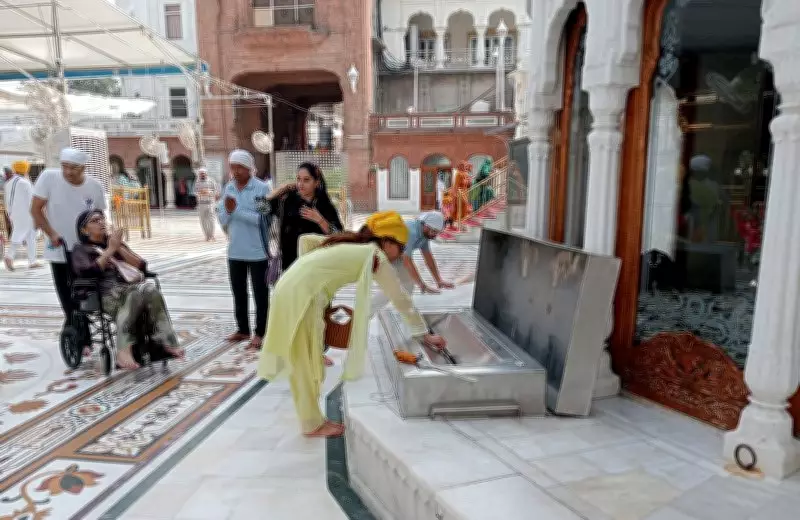
The scale of offerings varies by footfall, festivals, and shrine prominence. The Golden Temple in Amritsar receives an estimated Rs 20 lakh to Rs 25 lakh daily in its golaks (donation boxes), amounting to a monthly collection of around Rs 6 crore to Rs 7.5 crore. At Takht Sri Kesgarh Sahib in Anandpur Sahib, monthly collections average over Rs 1 crore, while Takht Sri Damdama Sahib in Talwandi Sabo receives approximately Rs 35-40 lakh per month. Other shrines generate enough income to independently support their religious activities and langar services.
Elaborate Security Setup
SGPC Additional Secretary Bhagwant Singh Dhangera explained that donation boxes in the sanctum sanctorum and parikrama areas are secured with three-level locking systems and special seals. The opening of donation boxes is carried out under strict supervision of authorised SGPC officials, shrine management representatives, inspectors, and flying squad personnel. One set of keys remains at the shrine with the SGPC seal, while another set remains with the SGPC with the shrine’s seal. Whenever a golak is to be opened, the SGPC deputes an inspector-level officer from Amritsar to break the seals and supervise counting.

Monitored Counting Process
At the Golden Temple, counting takes place five days a week, while at other shrines, it is done weekly or fortnightly. Counting is conducted by designated teams under continuous CCTV surveillance, with an online monitoring system allowing officials in Amritsar to oversee operations in real time. Cash and valuables are transported to designated counting centres where trained staff, supervisors, and committee members jointly undertake the exercise. Currency-counting machines are used for notes, while coins are segregated and counted separately. After counting, every bundle of currency is signed by authorised staff. Personnel engaged in counting are not permitted to carry personal belongings, cash, purses, or jewellery inside the counting area.
Handling Gold and Silver
Offerings are separated into categories: cash, coins, foreign currency, and precious metals like gold and silver. Precious metals are evaluated daily by empanelled jewellers under official supervision, then weighed, documented, and securely stored in gurdwara treasuries for further processing.
Public Disclosure
The SGPC maintains transparency by publishing a monthly Gurdwara Gazette detailing income and expenditure of SGPC-managed shrines, available at a nominal cost within the Golden Temple complex. Dhangera emphasised that the Gazette carries comprehensive details of receipts and expenditure across all SGPC-controlled shrines.
No Shortage of Funds During Pandemic
During the Covid-19 pandemic, offerings fell sharply due to lockdowns and travel restrictions. An anonymous official noted that the average daily collection at the Golden Temple complex dropped to Rs 15,000-Rs 20,000, down from the usual Rs 20-25 lakh. Despite this, the SGPC provided subsidised treatment for Covid-19 patients at Sri Guru Ram Das Charitable Hospital in Amritsar, arranged extra ventilators, and established additional Covid care centres and oxygen generators, offering shelter to patients in its hospitals and serais.