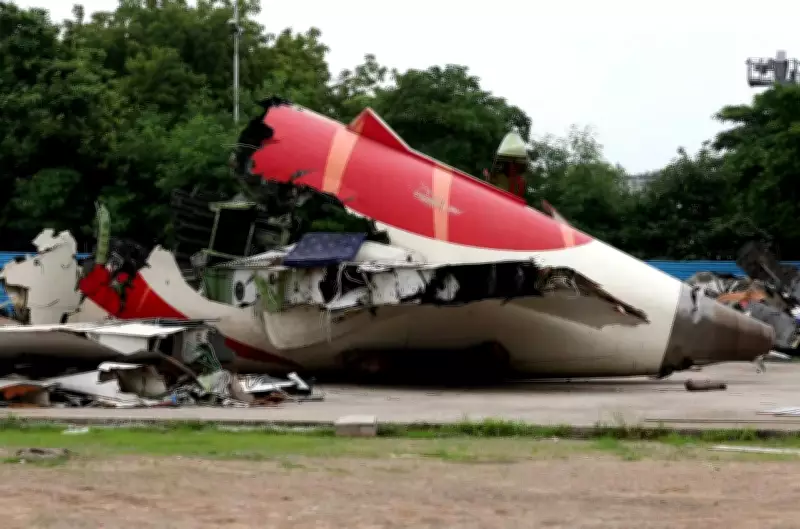
Mumbai: The Aircraft Accident Investigation Bureau (AAIB) is expected to release either an interim or final report on Friday, marking the first anniversary of the Air India Boeing 787 accident in Ahmedabad that claimed 260 lives. The report, even if interim, is anticipated to address critical questions, including the reason behind the movement of fuel cutoff switches seconds after lift-off.
ICAO Guidelines and Interim Report
According to the International Civil Aviation Organisation’s Annex 13, which outlines accident investigation protocols, if a final report cannot be made public within 12 months of an accident, the country must release an interim statement on each anniversary, detailing investigation progress and any safety issues raised. Air safety experts note that even an interim report adhering to ICAO norms should share black box data, answering core questions.
Preliminary Findings and Theories
The AAIB’s preliminary report, released a month after the accident, revealed that both engine fuel control switches moved from ‘RUN’ to ‘CUTOFF’ seconds after lift-off, cutting fuel supply to both engines. A brief exchange between pilots was recorded, with one asking the other why he cut off, and the other denying it. This led to two theories: deliberate pilot action or a technical malfunction triggering the switch movement.

Key Evidence: Ram Air Turbine Deployment
A crucial piece of evidence is the timestamp for the aircraft’s Ram Air Turbine (RAT) deployment, the Boeing 787’s last-resort emergency power source. The preliminary report cited CCTV footage showing the RAT deployed during initial climb immediately after lift-off. Pilot groups argue the next report must establish precisely when the RAT deployment sequence began. If the RAT deployed before the fuel switches moved, it would suggest a total electrical failure causing the switches to move, potentially absolving the pilot. The AAIB already has timestamps from black box data, but it remains unclear if they will be made public.
Black Box Condition and Electrical System
Another issue is the condition of the aircraft’s tail-mounted black box. While data was recovered from the forward Enhanced Airborne Flight Recorder, the tail-mounted recorder suffered extensive impact and thermal damage, preventing conventional data download. The AAIB noted severe damage to its memory components. Aviation specialists believe a detailed explanation of the aft recorder’s damage could provide important clues. Unlike the forward recorder, the tail unit relies entirely on the aircraft’s main electrical system for power, and recoverable data might have clarified possible electrical-system failure.
Other Investigation Points
Investigators are also expected to explain why the Emergency Locator Transmitter failed to activate. The report may provide greater clarity on open maintenance items before departure, including an active Minimum Equipment List item involving the aircraft’s core network. The examiner noted that investigators should address whether this deferred defect had relevance to events after take-off.
Accident Details
On June 12, 2025, London-bound Air India flight AI-171 crashed into the hostel complex of BJ Medical College moments after taking off from Sardar Vallabhbhai Patel International Airport in Ahmedabad, killing 241 persons on board and 19 on the ground. Only one passenger survived.