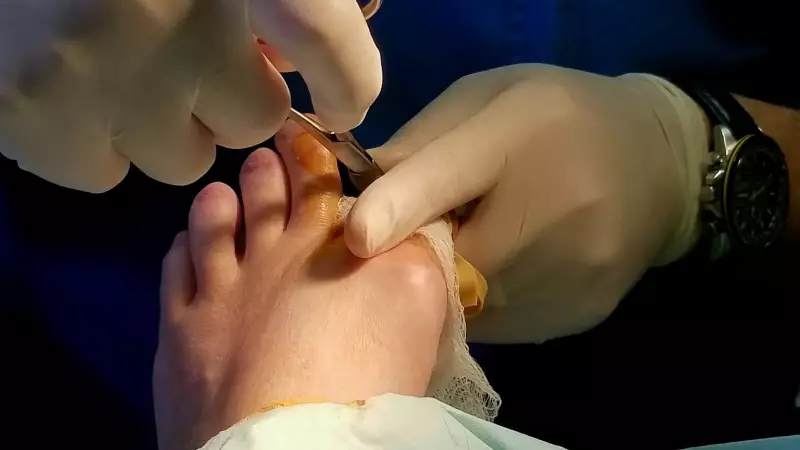
A seemingly minor injury, like a shoe bite, can have catastrophic consequences for individuals with diabetes, as highlighted by a recent alarming case shared by medical experts. The incident underscores the critical, non-negotiable importance of daily foot care for diabetic patients.
A Small Cut, A Life-Altering Consequence
Diabetologist Dr Mohammed Saqlain, Founder of TrueCare Hospitals, detailed a shocking case on social media. A 56-year-old diabetic man developed a small cut on his toe from new shoes. Viewing it as a trivial shoe bite and not wanting to worry his family, he concealed the wound for three weeks. "I didn't want to burden them. They already worry too much about my sugar," the patient told the doctor.
This decision proved devastating. By the time his family discovered the injury, the foot had turned black, swollen, and severely infected. The infection had spread so aggressively that by the time Dr. Saqlain's team saw him, the only course of action was a below-the-knee amputation to save his life.

Why Diabetic Wounds Are a Silent Threat
"This is the exact reason why we, doctors, constantly remind diabetic patients not to neglect foot care," emphasizes Dr Narendra BS, Lead Consultant in Endocrinology & Diabetology at Aster Whitefield Hospital. He explains the dual physiological challenges that make diabetics vulnerable.
First, neuropathy—nerve damage—reduces sensation in the feet. A patient may not feel the pain of a cut or blister, leading them to underestimate its severity. Second, reduced blood flow (poor circulation) drastically slows the body's natural healing process.
"A tiny cut that a non-diabetic person heals from in days can stay open for weeks in a diabetic," Dr. Narendra states. This open wound becomes a perfect entry point for bacteria. If the infection penetrates deeper into tissue or bone and is left untreated, it can lead to gangrene and, ultimately, amputation.
Rapid Progression and Essential Precautions
The speed at which infection can escalate is frightening. "In diabetic patients with bad sugar control, infection may develop rapidly within 24–48 hours if it is not noticed or treated," warns Dr. Narendra. Initial signs like redness or swelling can quickly be followed by pus, high fever, and even life-threatening sepsis.
He urges that every wound, no matter how small, must be cleaned, monitored, and shown to a doctor if it doesn't improve within 48-72 hours.
Warning signs requiring immediate medical attention include:
- Redness spreading around the wound
- Increasing swelling or warmth over the area
- Pus or a foul smell
- Darkening of the skin (a critical danger sign)
- Increasing pain or, conversely, no pain (due to neuropathy)
- Fever or a general feeling of weakness
Dr. Narendra's advice is unequivocal: "Early intervention saves limbs."
Footwear: The First Line of Defence
Both experts stress that proper footwear is a diabetic patient's essential protective gear. Dr. Narendra recommends the following when choosing shoes:
- Opt for soft, cushioned, and well-fitting shoes from the start—avoid those that "will loosen later."
- Choose a wide toe box (no pointed toes) and ensure there are no rough internal seams or hard edges.
- Look for good arch support and breathable materials.
- Always inspect the inside of new footwear and break them in slowly, wearing them for only 1-2 hours initially.
- Consider special diabetic footwear, especially for those with diagnosed neuropathy.
The tragic case from December 2025 serves as a powerful reminder. While diabetes can be managed effectively with lifestyle choices, complications can spiral out of control with just a moment of carelessness. Sincere, daily attention to foot health is not an option but a necessity for every person living with diabetes.