

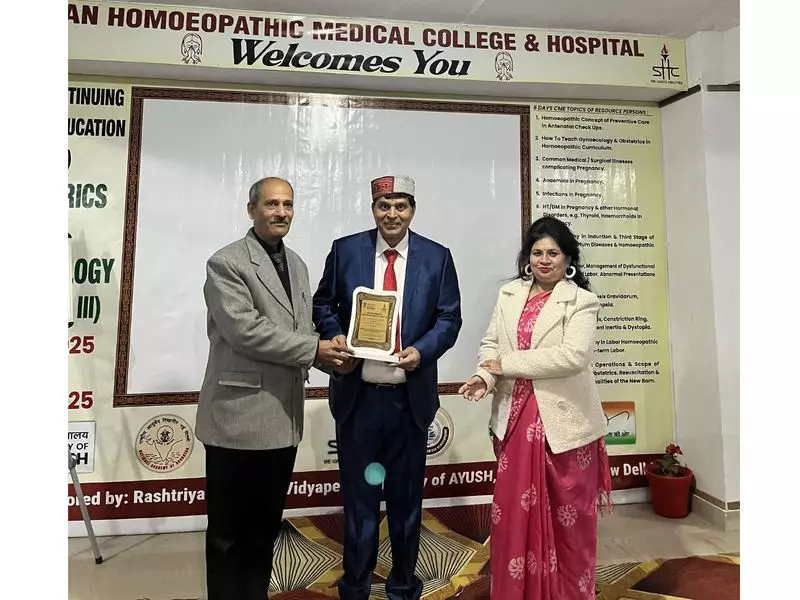
The dedicated, evidence-based work of Dr Alok Kumar Dwivedi on the complex blood disorder aplastic anemia has earned significant national recognition, marking a pivotal moment in hematology research in India. His comprehensive study, which meticulously analyzes treatment outcomes and patient responses, is being hailed for its potential to refine clinical approaches and improve survival rates for those battling this serious condition.
A Deep Dive into Groundbreaking Hematology Research
Dr A.K. Dwivedi, serving as a senior resident in the Department of Medicine at the prestigious King George's Medical University (KGMU) in Lucknow, conducted this influential research. His work focused on a rigorous, evidence-based analysis of aplastic anemia, a rare but life-threatening disorder where the body's bone marrow fails to produce sufficient new blood cells. The study's significance was formally acknowledged when it was presented at the 49th Annual Conference of the Indian Society of Hematology & Blood Transfusion (ISHBT) held in Ghaziabad from November 3rd to 5th, 2023.
At this premier national forum, Dr Dwivedi's research poster was awarded second prize in the highly competitive 'Free Paper' category. This accolade is not merely a personal achievement but a testament to the quality and impact of the investigative work being carried out at KGMU. The conference saw participation from leading hematologists and researchers across the country, making the recognition particularly noteworthy.

Methodology and Impactful Findings
The core of Dr Dwivedi's study involved a detailed retrospective analysis of patient data. He examined the treatment journeys and outcomes of individuals diagnosed with aplastic anemia, with a special focus on their response to standard immunosuppressive therapy. By leveraging this evidence-based approach, the research aims to identify patterns, prognostic factors, and therapeutic efficacies that can guide future medical decisions.
The primary objective is to move towards more personalized and effective treatment protocols for aplastic anemia patients in India. His work sheds light on the real-world application of therapies, providing valuable insights that go beyond theoretical models. This is crucial for a disease where timely and appropriate intervention can mean the difference between life and death.
Broader Implications for Patient Care and Medical Practice
The national recognition of Dr Dwivedi's research has several important implications. Firstly, it highlights the critical role of systematic, data-driven research in advancing the understanding of complex hematological diseases within the Indian patient demographic. Secondly, it brings well-deserved attention to the clinical and academic excellence fostered at institutions like King George's Medical University.
For patients suffering from aplastic anemia and their families, this work represents a beacon of hope. It signifies a continuous effort by the medical community to unravel the complexities of the disease and to improve long-term outcomes. The findings are expected to contribute to the evolving national guidelines on aplastic anemia management, ensuring that treatment strategies are rooted in robust empirical evidence.
In conclusion, Dr Alok Kumar Dwivedi's award-winning research stands as a significant contribution to the field of hematology. By securing national acclaim, it not only validates his scientific rigor but also paves the way for enhanced, evidence-based clinical practices that promise better care and improved quality of life for patients across the nation battling bone marrow failure disorders.






