

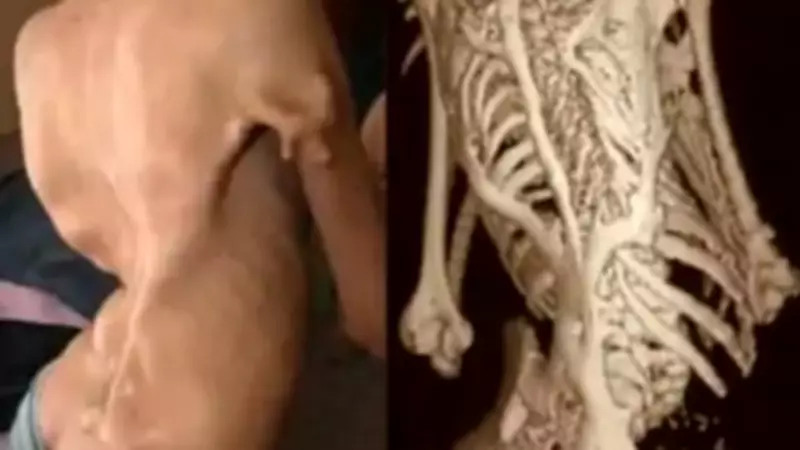
First Case of Extremely Rare 'Stone Man Syndrome' Identified in Rajasthan
In a significant medical development, Rajasthan has recorded its first-ever case of Fibrodysplasia Ossificans Progressiva (FOP), commonly known as "Stone Man Syndrome," one of the rarest diseases in the world. The case involves a 9-year-old child in Jaisalmer, whose body is gradually turning "stone-like" as muscles, ligaments, and soft tissues slowly transform into bone.
Understanding the Rare Condition
FOP is a genetic disorder that occurs in approximately one out of 1.5 to 2 million people globally, with only about 700–800 confirmed cases reported worldwide. In India, documented cases are exceptionally scarce, mostly emerging from medical research or hospital reports. The disease typically manifests during childhood, with early signs sometimes visible at birth, such as abnormal bending of the big toe.
Senior pediatric specialist Dr. Dinesh Jangid from Jaisalmer explained: "FOP causes a second bone-like structure to form inside the body, hardening muscles and tissues over time. This leads to increasing stiffness and restricted movement, earning it the nickname 'Stone Man Syndrome.'"

Challenges in Diagnosis and Treatment
Diagnosing FOP poses significant challenges, as early symptoms like swelling, pain, and lumps can mimic common ailments, often delaying accurate identification. Dr. Jangid warned that misdiagnosis can have severe consequences: "If doctors perform surgery or biopsy assuming it's a normal lump, it can accelerate bone formation. Patients must avoid intramuscular injections and protect themselves from injuries, as even minor trauma can trigger new bone growth."
Currently, there is no permanent cure for FOP. Medical interventions focus on symptom management and helping patients live cautiously to prevent complications.
Workshop on Rare Diseases in Jaisalmer
In light of this case, a rare diseases awareness workshop was organized at Government Medical College in Jaisalmer by the Centre of Excellence for Rare Diseases at AIIMS Jodhpur. The event, aligned with the National Policy for Rare Diseases 2021, aimed to:
- Explain the background and functioning of Centres of Excellence.
- Discuss availability of medicines, screening, and accurate diagnosis.
- Highlight advanced facilities like fetal diagnosis.
The workshop attracted 143 participants, including faculty, pediatricians, gynecologists, medical officers, nursing students, and patients with rare diseases who shared their experiences. Discussions revealed that many patients in border regions like Jaisalmer may remain undiagnosed, necessitating deeper evaluation.
Moving Forward: Awareness and Policy
Medical experts stress that awareness, accurate diagnosis, and specialist consultation are crucial for improving the quality of life for rare disease patients. The Jaisalmer case is considered significant as it highlights the need for enhanced medical coordination in remote areas.
Doctors at the workshop suggested:
- Creating a communication network among medical professionals to improve coordination.
- Including FOP in the official notification list of rare diseases under national policy.
- Ensuring timely advice and better care through increased awareness.
Efforts are underway to write to the ministry to formally recognize FOP, potentially paving the way for better support and resources for affected individuals in Rajasthan and beyond.






