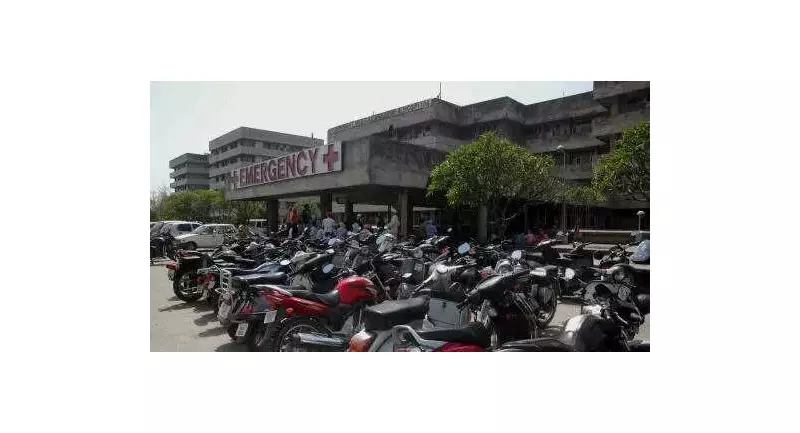
A critical shortage of senior medical faculty at the Government Medical College and Hospital (GMCH) in Sector 32, Chandigarh, is creating a dual crisis, severely compromising patient care while simultaneously putting the future of crucial postgraduate medical training programs in jeopardy.
ENT Department in Deep Crisis
The situation is particularly dire in the Department of Otorhinolaryngology (ENT). For the past two years, this department has been managing an overwhelming workload of outpatient services and surgeries with a skeletal staff of just two consultants. This severe understaffing is now directly threatening its postgraduate teaching seats.
According to the stringent regulations of the National Medical Commission (NMC), a postgraduate program in a clinical specialty cannot function effectively or even be allowed to continue with only two consultants. The NMC mandates a sufficient number of faculty to ensure quality training and proper supervision for resident doctors. The current scenario at GMCH-32 risks halting the pipeline for training future ENT specialists at the institution.

Widespread Scarcity Across Specialties
The crisis, however, is not confined to the ENT department. Acknowledging the overall scarcity, the Director Principal of GMCH-32, Prof G P Thami, stated that shortages exist in other specializations as well. The administration is awaiting new recruitment rules and has, in the interim, sent requirements for hiring contractual staff to bridge the gap.
Internal sources from the hospital confirm that other key departments, including Medicine and Radiotherapy, are also struggling with serious deficits of both consultants and resident doctors.
Surgical Specialties Operating on a Razor's Edge
The scale of the emergency was starkly highlighted just last month. The Head of the Department of Surgery was compelled to issue a notification announcing that, due to an acute shortage of residents, postgraduate residents would be withdrawn from highly specialized surgical units. These include Neurosurgery, Urology, Plastic Surgery, and Cardio-Thoracic Vascular Surgery (CTVS).
Compounding the problem, some of these high-stakes surgical departments are functioning with dangerously thin margins. Currently, both the CTVS and Plastic Surgery departments are operating with only one consultant each.
A GMCH faculty member, speaking on the condition of anonymity, warned that this level of understaffing in critical surgical fields places an unsustainable burden on individual consultants. It also severely restricts the number and complexity of surgeries that can be performed, which directly compromises patient safety and limits access to essential, life-saving care.
The persistent staffing deficit at one of the region's premier government medical institutions poses a significant threat to both the quality of healthcare delivery and the education of the next generation of medical specialists.