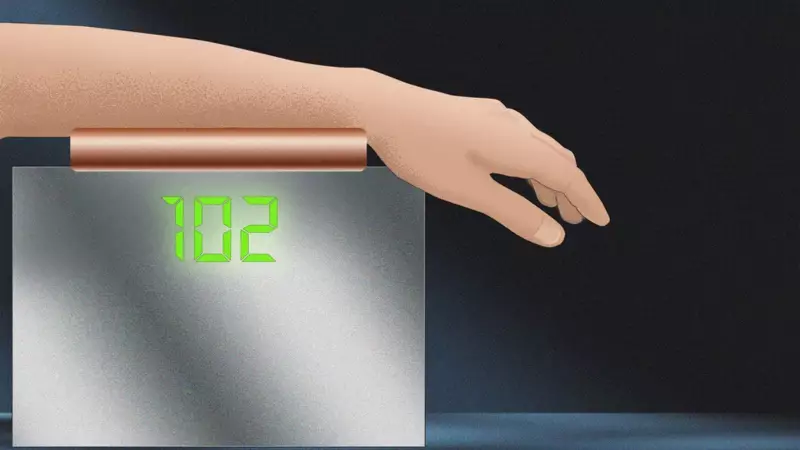
For millions of people living with diabetes in India and worldwide, the daily ritual of painful finger pricks to check blood sugar levels may soon become a relic of the past. Researchers at the Massachusetts Institute of Technology (MIT) have unveiled a groundbreaking sensor that uses light waves instead of needles, promising a future free from this invasive and uncomfortable procedure.
From Printer to Shoebox: The Journey of a Painless Monitor
The journey of this revolutionary device began over 15 years ago. In 2010, engineers at MIT's Laser Biomedical Research Centre first demonstrated the potential of using a technique called Raman spectroscopy to measure glucose non-invasively. This method works by shining near-infrared and visible light onto the skin and analysing the unique way glucose molecules scatter the light. However, the initial system was far too large and cumbersome for practical, everyday use.
A significant breakthrough came in 2020, when the research team discovered they could dramatically improve the signal clarity by combining Raman light with near-infrared light from a different angle. This clever trick helped filter out interfering "noise" from other molecules in the skin, making the glucose reading much more accurate.

Through persistent refinement, the team has successfully shrunk the device. The first version was as large as a desktop printer, but the latest prototype is now about the size of a standard shoebox. The researchers are confident the technology can be miniaturised further, potentially down to the size of a smartwatch.
Streamlining Technology for Real-World Use
A key innovation that enabled this size reduction was a strategic simplification of the data collection process. Earlier versions analysed over a thousand spectral bands. "Rather than capturing over a thousand data bands, we now focus on just three," explained study co-author Arianna Bresci. This focused approach on only the essential bands for glucose measurement has drastically reduced the device's complexity, component count, and cost.
The current system delivers a full reading in just over 30 seconds. Crucially, tests have shown its accuracy is comparable to existing continuous glucose monitors (CGMs) that require a tiny wire to be inserted under the skin. While CGMs have reduced the need for frequent finger pricks, they still involve skin penetration, can cause irritation, and need replacement every couple of weeks.
A Potential Transformation for Diabetes Management
The implications of a reliable, truly non-invasive monitor are profound, especially for a country like India, which is often termed the "diabetes capital of the world." Jeon Woong Kang, an MIT research scientist and co-author of the study, highlighted the human impact: "No one wants to puncture their finger multiple times every day. This isn't just about discomfort — many people end up testing far less often than recommended, which increases the risk of serious health complications."
The research, published in the journal Analytical Chemistry, represents a major step forward. The team is now focused on two critical next steps: further miniaturisation of the scanner and conducting extensive clinical trials. A vital part of this testing will be to ensure the device performs with consistent accuracy across all skin tones—a fundamental requirement for equitable global access.
"If we can deliver a truly non-invasive glucose monitor with reliable accuracy, it could transform daily life for nearly everyone living with diabetes," Kang stated. For India's vast diabetic population, this light-based technology shines a hopeful beacon towards a future of painless and more manageable diabetes care.