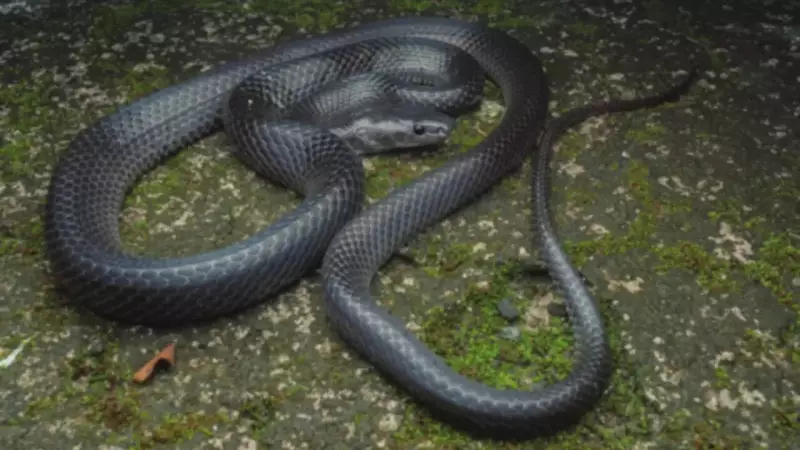
In a thrilling discovery for herpetology, a new species of wolf snake has been identified in India's remote Nicobar Archipelago. The snake has been given a playful and poignant name: Lycodon irwini, in honour of the late Australian conservationist and wildlife educator Steve Irwin.
A Fitting Tribute to a Wildlife Legend
The naming of the species captures the excitement of the find and pays tribute to Irwin's enduring legacy. Known for his infectious enthusiasm and iconic catchphrase "Crikey!" when encountering remarkable animals, Irwin's spirit is now linked to this elusive serpent. The discovery, published in the journal Evolutionary Systematics, underscores that nature still holds surprises, even in regions studied by scientists for decades.
What Makes the Crikey Wolf Snake Unique?
Lycodon irwini boasts a distinct set of physical traits that separate it from its mainland relatives. It has a slender, elongated body covered in smooth, glossy scales, which can appear sleek under low light. Its coloration ranges from light brown to darker earthy tones, often with faint banding or speckling. This provides perfect camouflage among leaf litter and forest undergrowth.

Detailed examination revealed unique scale patterns, head shape, and body proportions. The snake has a pointed snout and sharp, recurved teeth typical for gripping prey. It moves deliberately and silently, a behaviour combined with its cryptic colouration that makes it exceptionally elusive. Its modest size and nocturnal habits explain why it remained undocumented despite the Nicobar Islands' known biodiversity.
Why Is It Found Only in the Nicobar Islands?
This species is endemic to the Nicobar Islands, an isolated chain in the eastern Indian Ocean. The archipelago's dense tropical forests, coastal mangroves, and minimal human disturbance create ideal, isolated habitats. Field surveys indicate the snake lives on forest floors, sheltering under leaf litter, logs, and in rock crevices.
The geographic isolation has driven evolutionary divergence from continental wolf snake populations. With limited predation and competition, Lycodon irwini evolved distinct morphological and behavioural traits to occupy specific ecological niches. This specialisation illustrates how island isolation fosters unique biodiversity not seen on mainlands.
Diet and Role in the Ecosystem
Like other wolf snakes, the Crikey wolf snake is carnivorous. Its diet primarily consists of small vertebrates like lizards, amphibians, and occasionally smaller snakes. It is non-venomous, relying on precision strikes, a strong grip from its recurved teeth, and constriction to subdue prey.
Its nocturnal foraging allows it to target less alert prey, a strategy critical for survival in the islands' low-prey-density environment. By regulating populations of small reptiles and amphibians, Lycodon irwini plays a key role in maintaining the ecological balance of the Nicobar forest floor community.
Why This Discovery Matters for Science and Conservation
The identification of Lycodon irwini has broad significance. Scientifically, it enriches our understanding of reptile diversity and how isolation drives speciation. For conservation, it highlights the vulnerability of island species, which often have small ranges and populations, making them susceptible to habitat loss and climate change.
Documenting such species is vital for global biodiversity records and informs conservation priorities. Publicly, the engaging story and evocative name capture imagination, raising awareness about the hidden riches of India's remote regions. It reinforces that continued exploration and ecological stewardship are essential to protect our planet's remarkable natural heritage.