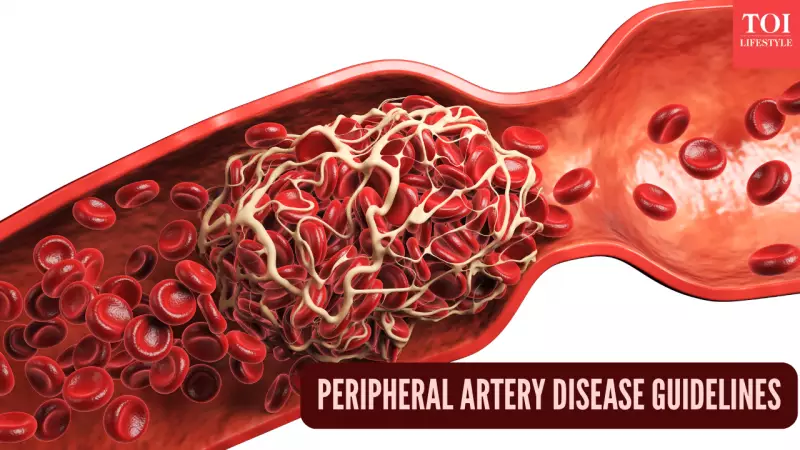
Peripheral artery disease (PAD) is far more than just a condition that causes leg pain or slow-healing foot sores. According to the team behind the newest United States medical guideline, it is a critical warning signal that a person's entire cardiovascular system is in grave danger. The Cleveland Clinic experts who helped craft the 2024 guideline from the American College of Cardiology and American Heart Association are urging doctors to treat PAD with renewed urgency.
PAD: A Powerful "Risk Enhancer" for Heart and Brain
The core message from the guideline is unambiguous: effectively treating PAD does not only save a patient's legs; it actively protects their heart and brain. In a recent Cardiac Consult podcast, Dr. Lee Kirksey, a vascular surgeon at Cleveland Clinic, clarified that PAD represents the end stage of a shared disease process that also leads to coronary artery disease and other structural heart issues.
The guideline firmly classifies anyone diagnosed with PAD into a high cardiovascular risk category. These individuals face a significantly greater likelihood of suffering heart attacks, strokes, and cardiovascular death compared to people without blocked leg arteries, even if their leg symptoms initially appear mild. Dr. Kirksey emphasises that when a patient with conditions like aortic stenosis also has PAD, every medical procedure becomes higher risk. Therefore, PAD must shape decisions about imaging and medical therapy from the outset, not be discovered as an afterthought.

The Imperative of a Team-Based Care Model
One of the strongest themes from the Cleveland Clinic discussion is that advanced PAD cannot be managed by a single medical specialty. Dr. Aravinda Nanjundappa, an interventional cardiologist, and Dr. G. Jay Bishop, a vascular medicine specialist, advocate for a collaborative care model. This model brings together vascular surgery, interventional cardiology, podiatry, and infectious disease expertise when necessary.
For patients with chronic limb-threatening ischemia, this coordinated approach can mean the difference between healing a wound and facing amputation. Dr. Nanjundappa stresses that time is of the essence when PAD progresses to non-healing sores. Without timely revascularisation, a small ulcer on a toe can become a gateway to severe infection and major tissue loss. The new guideline encourages clinicians to involve wound care specialists and podiatrists early in the process.
Smarter Testing, Tailored Treatment, and Foundational Therapy
The 2024 recommendations also refine how doctors should confirm and monitor PAD. While the ankle-brachial index remains a standard test, the experts highlight an important nuance. For patients with foot wounds, measuring pressures in the toes with a toe-brachial index can be more accurate in predicting whether a sore has enough blood flow to heal.
If tests show poor blood flow, imaging of the leg arteries helps plan the next step. In some complex cases, intervention may require creative access points, such as through the foot's pedal artery. The guideline supports this anatomy-specific decision-making over a one-size-fits-all approach.
Despite advances in procedures, the Cleveland Clinic team underscores that aggressive medical therapy is the non-negotiable foundation of PAD management. This includes:
- High-intensity statins
- Antiplatelet therapy
- Strict control of blood pressure and diabetes
- Complete smoking cessation
These measures slow disease progression in the legs and reduce the overall cardiovascular burden. For patients with claudication, structured exercise therapy, like supervised walking programs, remains a core recommendation to improve mobility and quality of life.
What This Means for Patients and Doctors in India
For patients, the guideline carries a message of both hope and urgency. Symptoms like leg pain when walking, changes in skin colour, slow-healing sores, or a suddenly cool foot are not minor issues to ignore. They may be early signs of a systemic vascular problem requiring prompt expert attention.

For clinicians, the document is a call to action: screen high-risk groups, recognise PAD as a marker of widespread atherosclerosis, and build strong referral relationships with vascular teams and wound care specialists. As Dr. Kirksey notes, PAD often represents the endpoint of a long cardiovascular journey. The goal of these new guidelines is to meet patients earlier on that path, slow the damage, and offer them a better chance at a healthier future.