

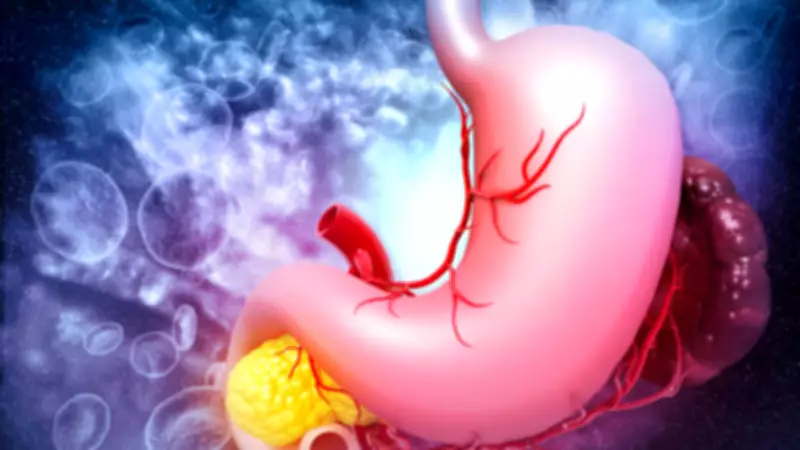
Robotic Surgery Saves Gurugram Man from Rare Stomach Tumor Bleed
Medical emergencies often strike without warning, transforming a normal day into a critical situation in moments. This was precisely the case for a young man from Gurugram, whose sudden weakness and dizziness escalated into a life-threatening crisis. Rushed to the emergency department, he presented with alarming symptoms: passing black stools, severe dizziness, and a dangerously low blood pressure reading of 80/40.
A Critical Diagnosis: Gastrointestinal Stromal Tumor
Dr. Vinay Samuel Gaikwad, Director of Surgical Oncology at Fortis Hospital Manesar, identified the cause as a gastrointestinal stromal tumor (GIST), a rare stomach tumor. These tumors are uncommon and can bleed silently yet aggressively, often remaining undetected until symptoms become severe. In this patient, the tumor had caused significant internal bleeding, dropping his hemoglobin levels to critical lows and pushing his blood pressure to a point where any delay could have been fatal.
The situation demanded immediate intervention rather than prolonged testing or conservative treatment, as the patient was hemodynamically unstable and at high risk.

The Robotic Surgical Solution
To address this emergency, surgeons employed the advanced Da Vinci Xi robotic system to perform a partial robotic gastrectomy. This procedure involved:
- Robotic Access: Making four to five small incisions (approximately 1-2 cm each) to insert a high-definition camera and wristed robotic instruments.
- Precision Resection: From a console, the surgeon directed the robot to meticulously separate the tumor and affected stomach portion from surrounding organs like the liver and pancreas.
- Stapling and Connection: Using specialized stapling devices or robotic sutures to seal the stomach and reconnect it to the digestive tract.
The robotic system provided superior visualization and dexterity, translating the surgeon's movements with extreme precision. This enabled an "organ-preserving" approach, removing only the tumor with a minimal margin of healthy tissue, which is crucial in such high-stakes scenarios.
Immediate and Remarkable Recovery
The outcome was swift and positive. The internal bleeding ceased immediately upon tumor resection. By the next morning, the patient's vital signs had stabilized without requiring further emergency measures. He resumed eating on the second day and was discharged on the third day, walking out with normal heart rate and blood pressure.
For this individual, robotic technology bridged the gap between a potential fatal emergency and a brief three-day hospital stay, showcasing how advanced surgical tools can revolutionize emergency care.






