

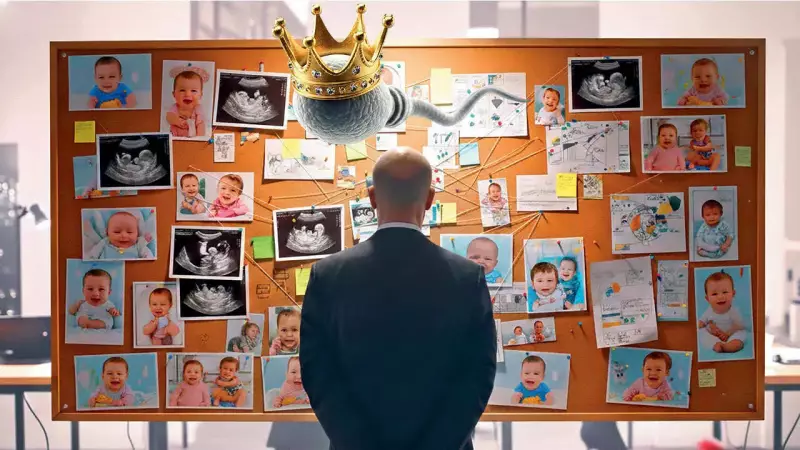
From Bollywood Comedy to Billionaire Baby-Making: The Global Sperm Donation Discourse
More than a decade after the Bollywood film Vicky Donor playfully highlighted the demand for high-quality sperm, the subject has transcended cinema screens to become part of serious global conversations. Today, the dialogue is being shaped not by romantic comedy but by some of the world's wealthiest entrepreneurs and the cautious questions emerging in IVF clinics worldwide.
The Billionaire Influence on Reproductive Conversations
Over the past five years, sperm donation has entered public discourse in unexpected ways through high-profile billionaires. Pavel Durov, founder of Telegram, revealed he began donating sperm in 2010, initially to help a friend conceive before moving to clinic-based donations in Moscow. Media reports suggest he has fathered more than 100 children across at least a dozen countries. In 2024, one clinic using his samples offered a compelling proposition: "You can undergo IVF for free using Pavel Durov's sperm – one of the most famous and successful entrepreneurs of our time."
Elon Musk, who frequently warns about demographic decline, has also been linked to sperm donation discussions despite publicly denying some claims. Meanwhile, Chinese tech billionaire Xu Bo spoke in a US courtroom about his intention to father multiple children through surrogacy so his sons could inherit and manage his business empire. These exceptional cases have helped bring sperm donation from the shadows into mainstream conversation, reshaping how society discusses reproduction, legacy, and choice across international borders.

India's Regulatory Landscape and Patient Concerns
In India, sperm donation remains discreet and tightly regulated under the Assisted Reproductive Technology (Regulation) Act, 2021. The law mandates donor confidentiality and prohibits importing sperm from foreign banks not registered with the Indian government.
Dr Mannan Gupta, HOD and Chairman of Obstetrics & Gynaecology at Elantis Healthcare, clarifies: "The law is very clear. Sperm obtained from foreign sperm banks will not be accepted in India for any IVF procedure. Donor anonymity is mandatory, and clinics cannot deviate from this under any circumstances."
This contrasts sharply with countries like the UK, Germany, Sweden, and parts of the US, where donor-conceived individuals can legally access identifying information about their sperm donors.
The Patient Experience in Indian Clinics
Despite legal clarity, patients often approach the subject with caution and uncertainty. Dr Rupali Goyal, Obstetrician and Gynaecologist at Indraprastha Apollo Hospitals, observes: "Couples do ask about donor profiling, but rarely in a direct manner. They may want to know about physical characteristics or background. Basic profile details like height, skin color, and eye color may be disclosed to recipient couples."
She explains that samples can be used after quarantine, and even non-Indian males can donate semen samples in India. However, donor anonymity remains absolute: "If someone on a business visa donates sperm in India, the donor is still anonymous. Patients can express preferences – for instance, asking for a foreign donor – but whether that's possible depends entirely on what samples an ART bank has. At no point can the donor's identity be disclosed."
Dr Manika Khanna, IVF specialist and Founder of Gaudium IVF, notes that more informed patients ask direct questions: "These questions usually come from patients who have lived abroad or are influenced by what they read online. They ask whether overseas sperm can be used or whether sperm from a known person is permitted."
Dr Geeta Jain, HOD (Obs, Gynae & IVF) and Co-founder of Maccure Hospital and Aastha Hospital, adds that patients often "test the waters" first: "Patients are often unsure about what is morally and legally acceptable in India. So questions are phrased very carefully, especially when they relate to donor background, genetics, or origin."

Social Stigma and Confidentiality Concerns
Doctors emphasize that stigma significantly impacts these conversations. Dr Jain explains: "In India, infertility, donor conception, and third-party reproduction still carry social shame."
Dr Goyal adds: "Fear of judgement, concerns about confidentiality, and uncertainty about the law discourage patients from discussing these possibilities openly. Strict confidentiality is maintained, and in most cases, couples do not wish to disclose it to other people."
Global Cases Reshaping the Conversation
The billionaire approach to reproduction has created unprecedented scenarios. Pavel Durov has pledged to fund IVF treatments for single women under 37 willing to conceive using his sperm, with all biological children inheriting equally from his estimated $17 billion fortune. On Lex Fridman's podcast, Durov explained inheritance would be conditional: "As long as they can establish their shared DNA with me, someday, maybe in 30 years from now, they will be entitled to a share of my estate after I'm gone."
Chinese billionaire Xu Bo's case revealed a different approach. In a Los Angeles courtroom in 2023, he sought parental rights to multiple unborn children through surrogacy, aiming to have around 20 US-born children – primarily boys, believing they were superior for inheriting his business empire. His surrogacy request was denied, but the case highlighted how Chinese elites pursue reproductive options abroad when barred domestically.
Elon Musk's reproductive ambitions have also drawn attention. According to The Wall Street Journal, the billionaire has been working to build what some call a "legion" of children, using social media to scout potential mothers and suggesting surrogacy to accelerate the process. Since 2002, Musk has officially welcomed 14 children with four different women, with reports suggesting he manages relationships through financial agreements and confidentiality clauses.
When Donation Crosses Ethical Boundaries
Not all cases involve billionaires. Dutch YouTuber Jonathan Meijer donated sperm globally through private arrangements and at least 11 sperm banks in the Netherlands. His actions became the subject of the Netflix documentary The Man With 1,000 Kids. While initially claiming to help only a few families, Meijer admitted in court to fathering nearly 600 children, with estimates suggesting the number could reach 3,000. A Dutch court ultimately barred him from further donations, imposing substantial fines for violations.
In the United States, fertility doctor Donald Cline committed what many consider ultimate betrayal. As documented in Netflix's Our Father, Cline replaced donor or partner sperm samples with his own, inseminating more than 100 women without their knowledge or consent. The deception remained hidden for decades until DNA testing and online forums helped biological children uncover the truth.
Global Models of Donor Identity Access
Several countries have established systems allowing donor-conceived individuals to access donor information:
- United Kingdom: Mandatory identity release since 2005, with full name, date of birth, and last known address available at age 18
- Netherlands: Mandatory open-identity donor system since 2004, with name and personal details via national register at age 16
- Sweden: Mandatory open-identity system since 1985, with identifying donor information at age 18
- Germany: Mandatory open-identity donor system since 2018, with name and birth details via national register at age 16
- Australia: Mandatory open-identity in several states since 2005, with information via state donor registers at age 18
As India continues to navigate its own regulatory path, the global conversation around sperm donation grows increasingly complex – blending medical ethics, personal choice, billionaire ambitions, and cultural norms into a discourse that shows no signs of slowing down.





