Youth Shift from AI Tools to Human Counsellors at Tele-MANAS Helpline
In a notable trend reversal, mental health professionals in Hyderabad report a growing number of youngsters abandoning AI-based emotional support tools like ChatGPT and returning to the government-run Tele-MANAS counselling service. This shift highlights the limitations of artificial intelligence in addressing complex human emotions and the enduring value of human connection in therapeutic settings.
Rising Call Volumes and Common Concerns
The Tele-MANAS helpline is currently managing approximately 120 to 130 calls each day, with a significant portion—nearly 60% to 70%—linked to pressing issues among students and young adults. These include:
- Relationship conflicts and breakups
- Academic stress and performance anxiety
- Emotional distress and feelings of isolation
Counsellors note that while AI tools initially gained traction as a free and easily accessible alternative to traditional therapy, many users have become disillusioned with their lack of emotional depth and genuine understanding.

Personal Experiences Highlight AI Shortcomings
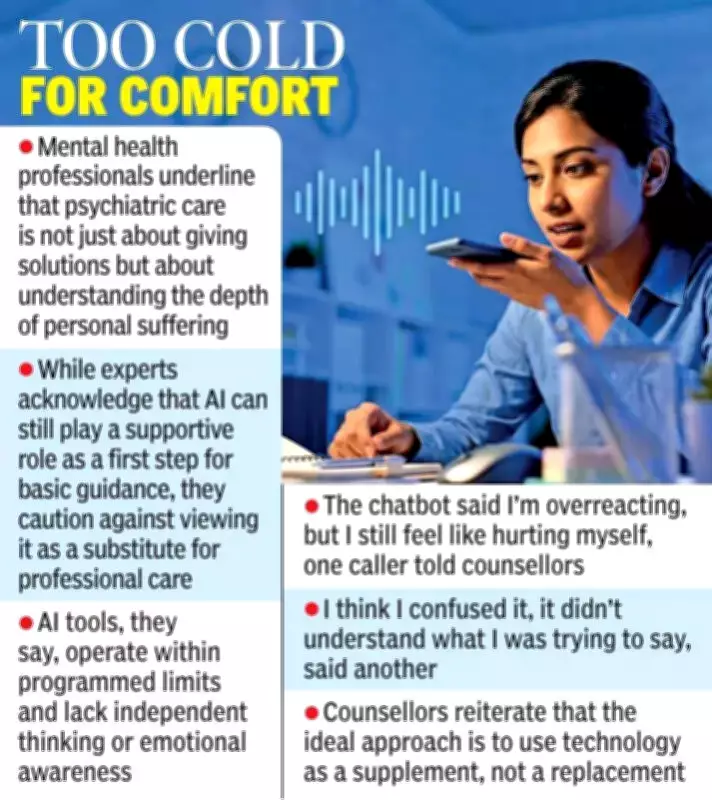
Disturbing anecdotes from callers underscore the gaps in AI-driven support. One individual shared, "The chatbot said I'm overreacting, but I still feel like hurting myself." Another recounted, "I think I confused it; it didn't understand what I was trying to say." Such experiences reveal how AI responses can be dismissive or misinterpret nuanced emotional states, potentially exacerbating distress.
Cost Factors and Accessibility Challenges
Financial constraints remain a primary driver pushing youth toward AI tools initially. A student explained, "I tried taking counselling outside, but one session cost ₹1,500 or more. I couldn't afford it, so I resorted to AI therapy." This economic barrier highlights the critical need for affordable mental health services like Tele-MANAS, which offers free support to callers across India.
Expert Insights on AI Limitations
Mental health experts caution against over-reliance on AI platforms. Dr. Jawaharlal Nehru P, a senior psychologist at Tele-MANAS, emphasized that AI lacks true emotional intelligence. "AI has very limited understanding of emotions. It reflects what you say but doesn't truly grasp the feeling behind it. It cannot guide behaviour in a meaningful or personalised way," he stated. He added that mental health issues require thorough assessment, which AI cannot provide due to its inability to understand context beyond typed input.
Dr. Vivaswan Boorla, a senior psychologist at the Institute of Mental Health, echoed these concerns. He noted that while AI can deliver structured responses, it fails to interpret human emotions and subtle cues. "The wavelength of human interaction is completely different. What you get from a trained professional—empathy, reassurance, and understanding—cannot be matched by a machine," he asserted.
Advantages of Human-Led Counselling
Experts highlight several key benefits of helplines like Tele-MANAS:
- Linguistic Flexibility: Callers can express themselves freely in their mother tongue, aiding clearer articulation of emotions.
- Active Listening and Trust Building: Counsellors go beyond offering advice; they create a safe space, listen attentively, and foster trust.
- Holistic Understanding: Psychiatric care involves comprehending the depth of personal suffering, not just providing solutions. Dr. Nehru remarked, "Sometimes people don't want treatment immediately; they just want someone to listen."
Balancing Technology and Human Care
While acknowledging that AI can serve as a supportive first step for basic guidance, professionals stress it should not replace professional care. AI tools operate within programmed limits, lacking independent thinking or emotional awareness. Dr. Boorla advised, "The ideal approach is to use technology as a supplement, not a replacement." This balanced perspective encourages leveraging AI for initial outreach while ensuring access to human counsellors for deeper emotional and psychological needs.

The resurgence in Tele-MANAS usage underscores a broader recognition among youth that genuine emotional support requires human empathy and nuanced understanding—qualities that AI, despite its advancements, cannot yet replicate.