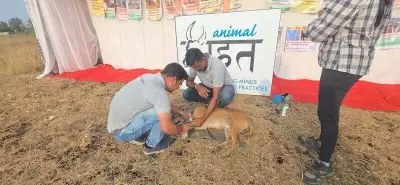
The Ahmedabad Municipal Corporation (AMC) has released data showing that its Cattle Nuisance Control Department sterilized 1,96,894 stray dogs over the past seven years at a total cost of Rs 18.8 crore. This initiative is part of the city's efforts to achieve the Zero by 30 target, which aims to eliminate rabies deaths among humans by 2030.
Sterilization Coverage and Impact
A random survey conducted in 2019 estimated the total stray dog population in Ahmedabad at 210,000. According to an official, more than 80% of the stray dog population has been sterilized. This high rate of sterilization, combined with anti-rabies vaccinations, is considered key to controlling the dog population and reducing rabies risk.
The AMC has reported a noticeable decline in the number of puppies seen in societies and neighborhoods as a direct result of the mass sterilization drive. An AMC release stated that the number of puppies has nearly halved, dropping from 6-7 to 2-3 per area. Officials noted that stray dogs typically live up to 13 years, and the dogs currently visible are mostly older ones.

Zero by 30 Initiative and Scientific Counting
Under the Zero by 30 initiative, the AMC has formulated long-term, medium-term, and short-term plans, which include a scientific count of stray dogs. On April 4, the AMC began a ward-wise counting process. The counting has been completed in the Behrampura ward, where 4,906 stray dogs were recorded. Among these, 3,019 were sterilized males and 1,467 were sterilized females. Additionally, the count identified 224 unsterilized males, 105 unsterilized females, 63 puppies, 23 lactating females, and five dogs categorized as 'unknown'. During the counting, AMC teams are also collecting vaccination status data for each dog.
Information about unsterilized stray dogs found during the count is being added to a mobile application along with location details. This will facilitate planning for their vaccination and sterilization. The norms require at least 70% annual vaccination coverage in dogs and adoption of the Centre's One Health approach, which links animal, human, and environmental health. This holistic approach is the larger goal behind the Zero by 30 target.