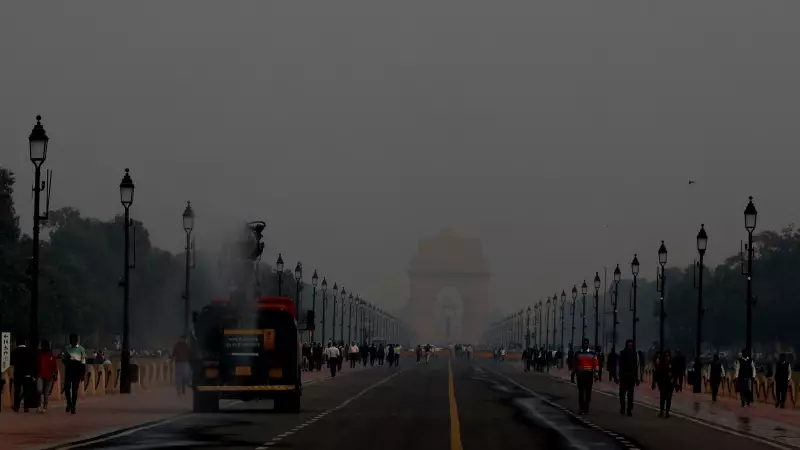
Step onto a Delhi street on a winter morning, and the air you breathe carries a toxic equivalence. Experts equate inhaling this haze to smoking several cigarettes. While the capital's pollution emergency is longstanding, the public response to it reveals a more insidious and socially divisive trend.
The False Promise of Personal Solutions
A recent viral social media clip celebrated a young entrepreneur for building a low-cost air purifier, praising him because "instead of protesting, he took matters into his own hands." This sentiment underscores a troubling narrative shift. Protesting systemic failure is framed as unproductive, while private, market-driven innovation is lauded as virtuous.
This reframes clean air from a fundamental shared public good into a personal responsibility, accessible primarily to those who can afford it. Water purifiers became essential for unsafe tap water; now, air purifiers are marketed as the answer to unbreathable cities. We applaud individual workarounds while quietly absolving governing institutions of their duty.

An Exclusionary Health Catastrophe
Air pollution is often discussed in environmental terms, but in India, it is a stark public health failure that disproportionately impacts the poor and vulnerable. Those with means can retreat to sealed homes with air filters, use private vehicles, or work remotely.
Millions without such resources have no escape. Street vendors, sanitation workers, construction labourers, traffic police, schoolchildren, and daily commuters breathe the most polluted air for hours each day. The crisis, therefore, is deeply linked to inclusion and equity.
The human cost is staggering. The Lancet Countdown on Health and Climate Change estimated that air pollution contributed to over 1.7 million deaths in India in 2022, marking a sharp rise over the decade. Despite this, the Union government recently told Parliament that no conclusive data directly links pollution to mortality, creating a policy vacuum as evidence mounts.
Why Purifiers Are Not the Answer
Public health authorities, including the World Health Organisation, are clear: the only effective long-term strategy is to control pollution at its source. This requires cleaner energy, strict industrial and vehicular norms, reliable public transport, and regulated construction and waste management.
Air purifiers, in contrast, are a limited, reactive tool. They only filter air in a single enclosed space, doing nothing for the roads, buses, schools, and open markets where people spend most of their time. They cannot purify an entire city shrouded in smog.
The claim of affordability also crumbles upon examination. With an average monthly income projected around Rs 28,000 for 2025, a purifier costing Rs 4,000 plus annual maintenance and electricity costs of Rs 1,500-2,000 is out of reach for a vast majority, especially for families earning between Rs 8,000 to Rs 15,000 monthly. When safe breathing depends on wealth, inequality becomes a direct health risk.
Survival Mistaken for Innovation
India is normalizing a dystopian adaptation. High-grade masks, indoor air quality monitors, sealed classrooms, and even oxygen bars are becoming commonplace. These are not symbols of progress but of adaptation to systemic failure.
Celebrating ingenuity is important, but it cannot replace public accountability. Achieving clean air demands robust regulation, stringent enforcement, interstate coordination, investment in clean mobility, and sustained civic pressure.
The inversion is complete when citizens are shamed for demanding action and applauded for purchasing devices. Delhi's pollution is a public health emergency and a profound policy failure. Clean air must be reclaimed as a non-negotiable, inclusive right for all, not a privilege for the few who can buy their way out of the crisis.