

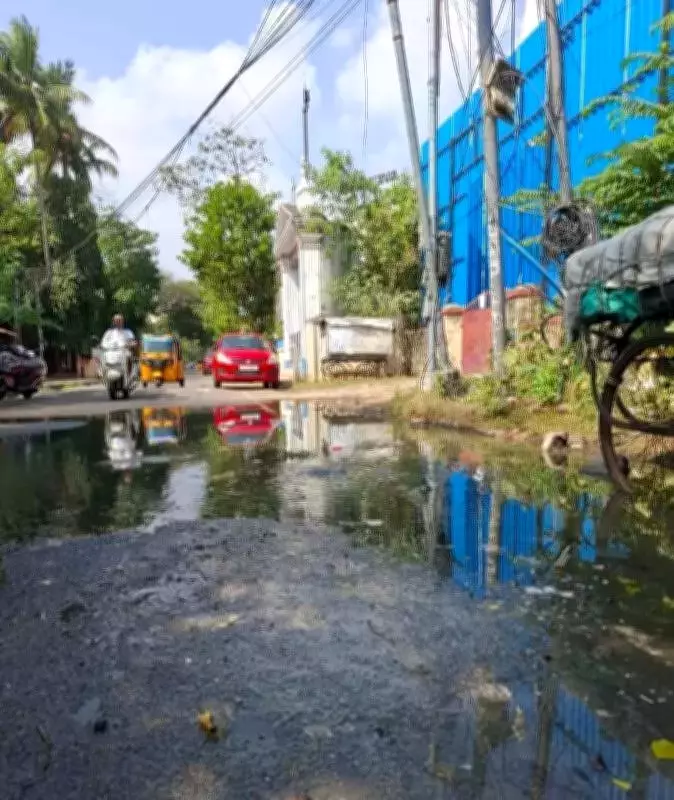
Chennai's Santhome Locality Grapples with Prolonged Sewage Overflow and Health Hazards
For more than a month, residents residing near Lazarus Church Road in the Santhome area of Chennai have been confronting a severe and persistent sewage stagnation problem. This issue not only raises an unbearable stench but also poses significant health risks to the community. Despite numerous complaints lodged with civic authorities, a permanent solution remains elusive, leaving locals in distress.
Unhygienic Conditions and Rising Health Concerns
The stretch along Lazarus Church Road is lined with several eateries and shops, making it a bustling area. However, it frequently experiences sewage overflow, particularly during the summer and monsoon seasons. Locals and daily commuters are often forced to navigate through filthy, contaminated water, exacerbating the unhygienic environment.
Residents have reported a noticeable surge in cases of fever and various infections, attributing these health issues directly to the stagnant sewage. The persistent stench coupled with a spike in mosquito populations has heightened worries about potential disease outbreaks. "The sewage overflow and stagnation have become a never-ending issue here," lamented S Sasikala, a concerned resident. She explained that the underground pipelines are not aligned at the same level, which obstructs the free flow of wastewater. Sasikala further claimed that while this is a perennial problem, Chennai Metrowater has failed to replace the damaged pipeline, opting instead for temporary measures like draining the stagnant water.

Official Response and Resident Skepticism
When contacted, C Suresh Kumar, the area engineer of Teynampet zone for Chennai Metrowater, provided an explanation for the crisis. He stated, "The sewage pipeline that carries wastewater from several areas, including Mylapore, Santhome, and Triplicane, to the Perungudi treatment plant was damaged. This damage led to a road cave-in in Taramani." Kumar added that as many as 10 pumping stations, including those in Mylapore and Triplicane, have been non-functional for the past three days, resulting in the current sewage overflow and stagnation. He assured that rectification work would be carried out immediately, noting that such issues are addressed on priority whenever road cave-ins occur.
However, residents remain skeptical of these explanations. T Joseph, another local, expressed frustration, saying, "This was not the first time we have faced this problem. It has been persisting for months. So, the reason cited by the officials doesn't make sense." Joseph's sentiment reflects a broader lack of confidence among the community in the authorities' ability to implement lasting solutions.
Broader Implications and Call for Action
The ongoing sewage crisis in Santhome underscores deeper issues related to Chennai's civic infrastructure and public health management. The situation highlights:
- Inadequate Maintenance: The failure to replace or properly maintain sewage pipelines has led to recurrent problems.
- Health Risks: Stagnant sewage creates breeding grounds for mosquitoes and pathogens, increasing the risk of waterborne diseases.
- Economic Impact: Local businesses, including eateries and shops, may suffer due to the unhygienic conditions deterring customers.
- Community Distress: Prolonged exposure to such environments affects the quality of life and well-being of residents.
As the monsoon season approaches, there is an urgent need for Chennai Metrowater and other civic bodies to not only address the immediate damage but also invest in long-term infrastructure upgrades. Residents continue to hope for a swift and effective resolution to this crisis, emphasizing that temporary fixes are no longer acceptable in the face of mounting health concerns.






